Greensboro
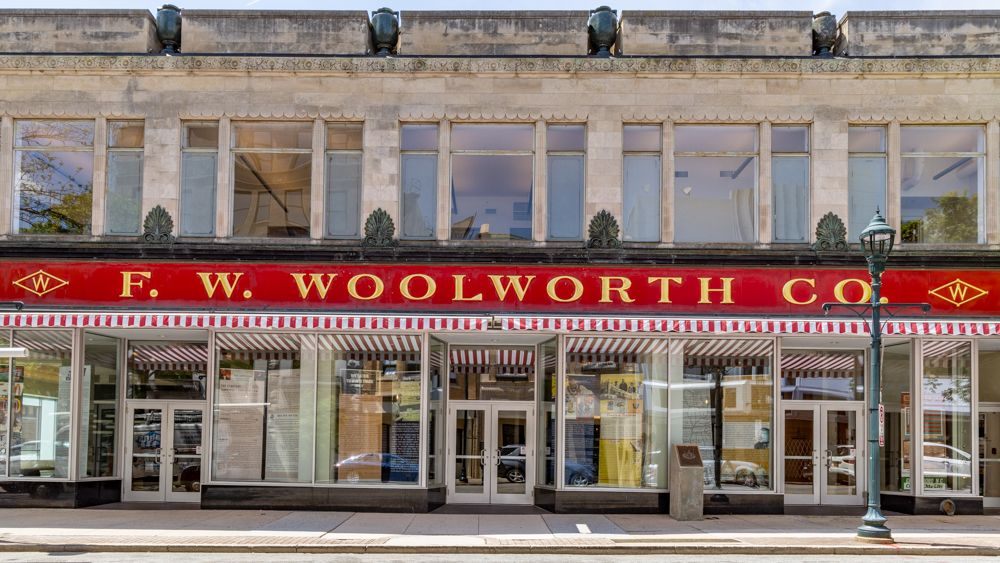
I started my day with a visit to the International Civil Rights Center & Museum in Greensboro. The significant event that happened here was the Woolworth lunch counter sit-ins initiated on February 1, 1960 by four students from North Carolina Agricultural and Technical State University, Ezell Blair Jr., David Richmond, Franklin McCain and Joseph McNeil. They became know as the Greensboro four. The store manager decided not to call the police on the students, which facilitated their peaceful protest. Interestingly, they were discouraged by African-American servers and employees, who were likely afraid for their jobs.
Their actions ultimately inspired many more students, both college students and high school students, to continue the sit-ins through the school year and through the summer. They are considered a catalyst to the subsequent sit-in movement, in which 70,000 people participated. The sit-ins spread to other public venues, including transport facilities, swimming pools, lunch counters, libraries, art galleries, parks and beaches and museums, primarily in the South.
Student-led boycotts of stores with segregated lunch counters resulted in serious financial consequences, which was what finally motivated desegregation of these venues. Interestingly, after making the decision to desegragate, the store manager of the original Woolworths, Clarence Harris, asked four black employees, Geneva Tisdale, Susie Morrison, Anetha Jones, and Charles Bess, to change out of their work clothes and order a meal at the counter. They were, quietly, the first to be served at a Woolworth lunch counter.
I was initially allowed to tag along with a school group to hear the docent-led tour, which was well worthwhile. We had a number of different docents, each explaining a different section of the museum. Our last docent was Iyanna, a knowledgeable and articulate young woman. After the school group left, she was able to spend some time with me one on one and we were able to have a much more in depth conversation about a number of issues.
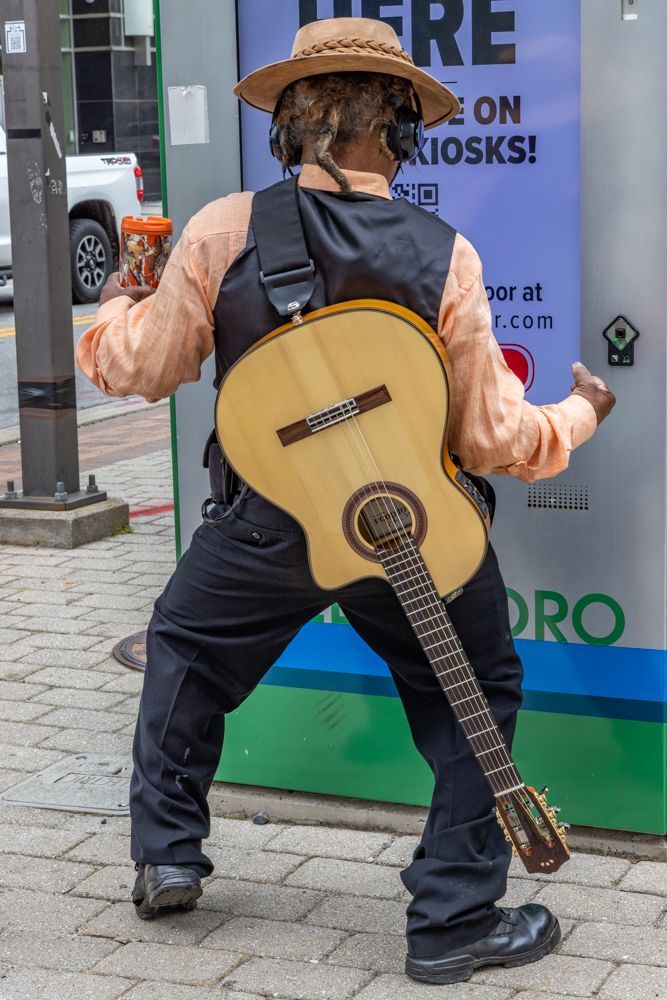
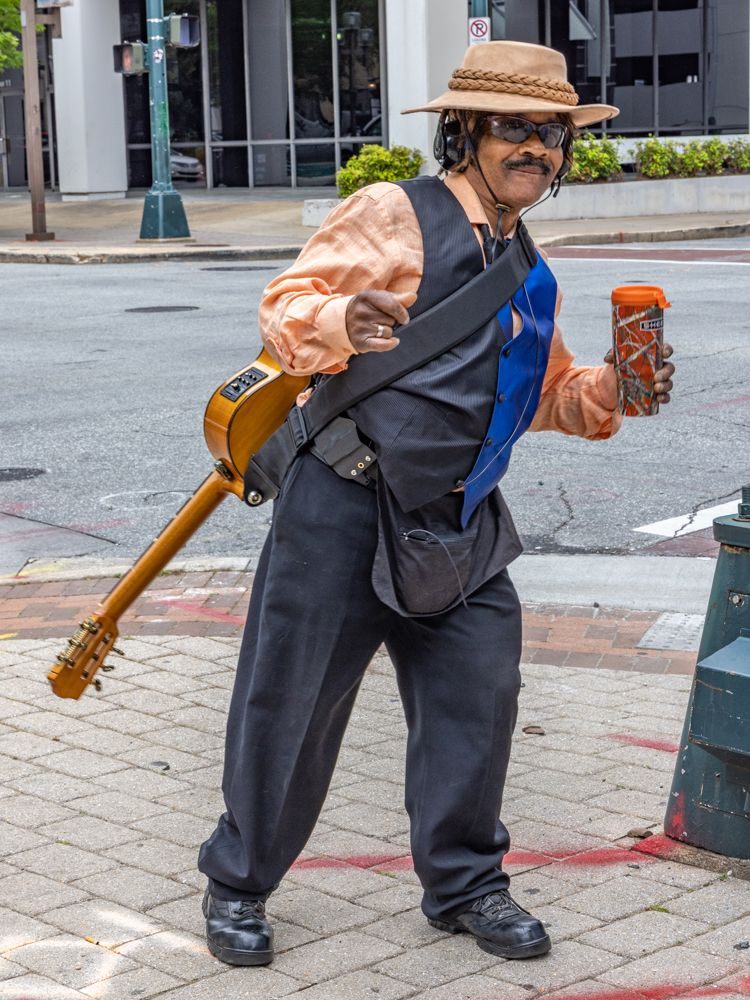
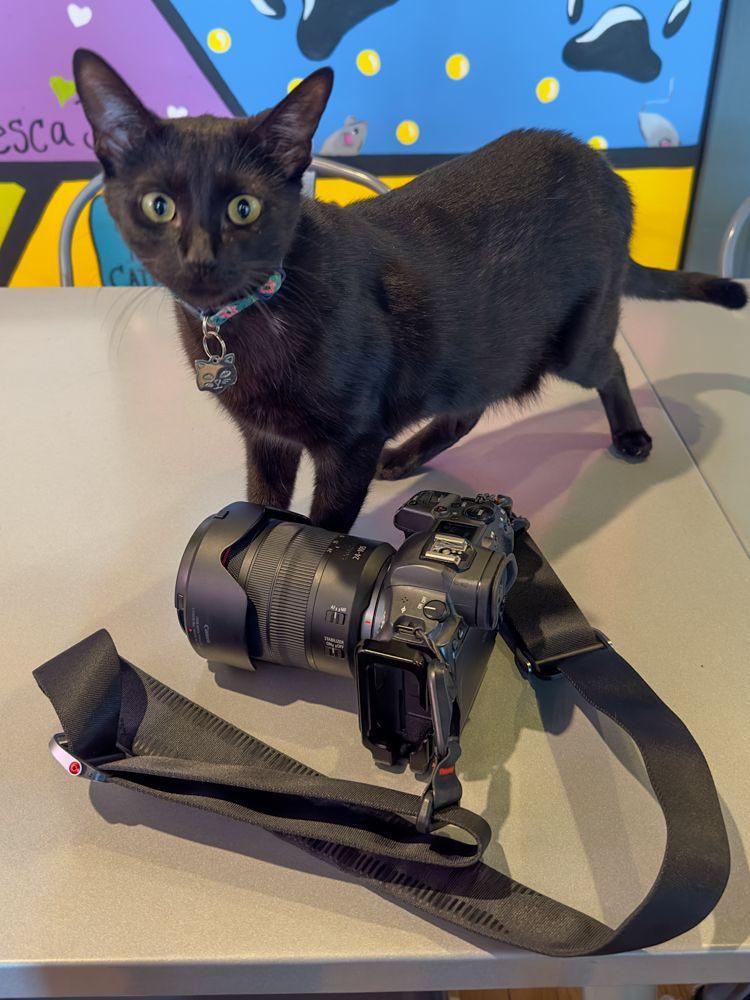
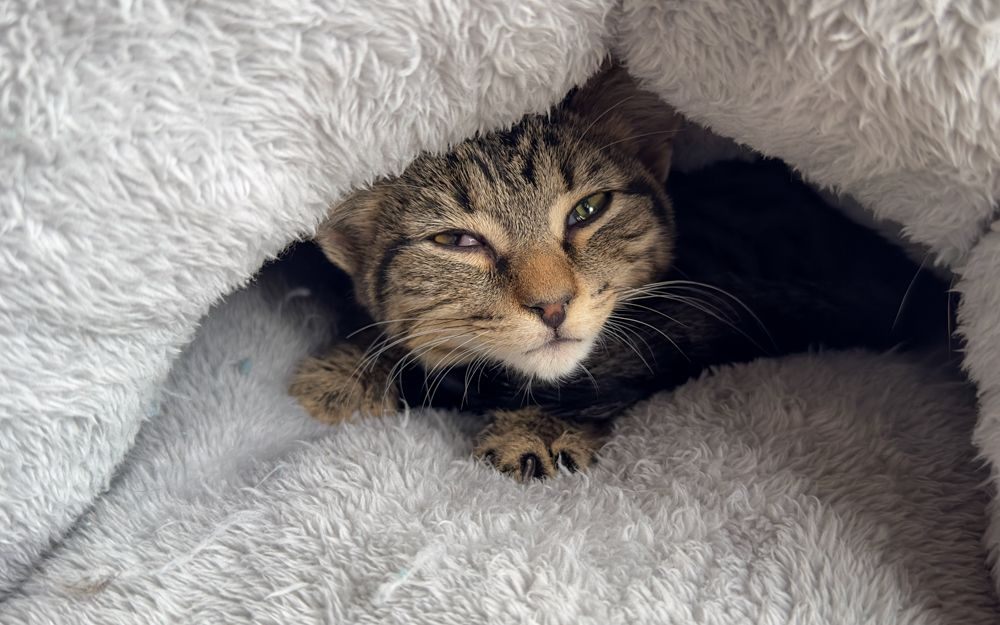
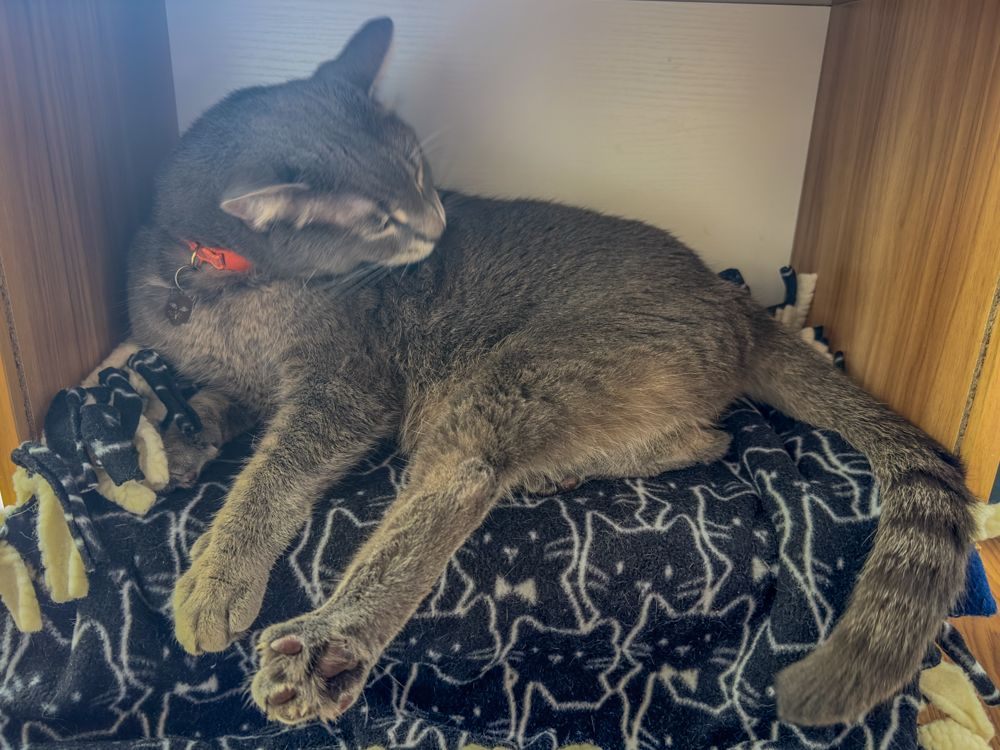
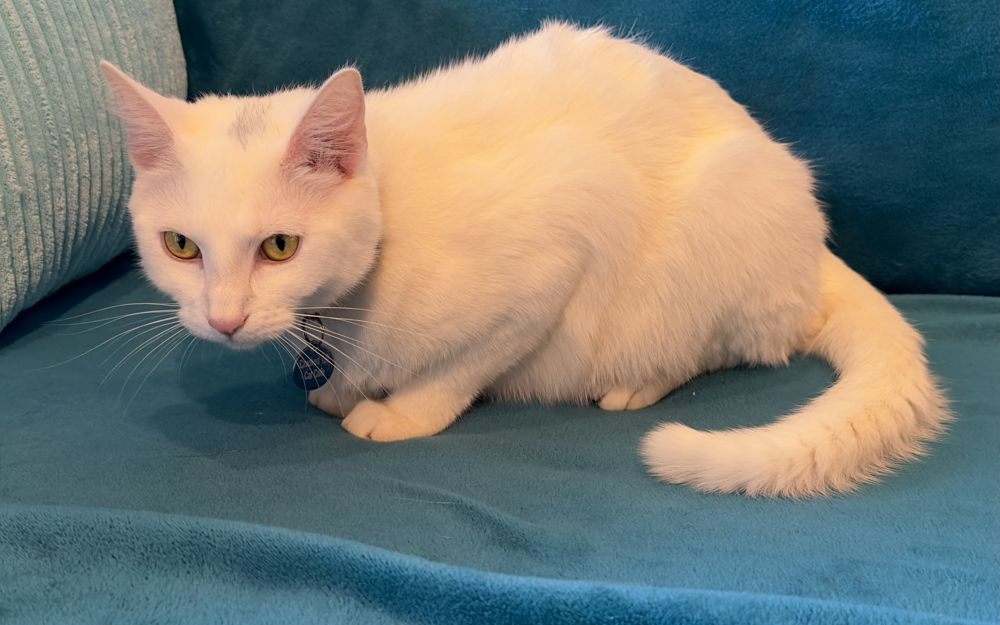
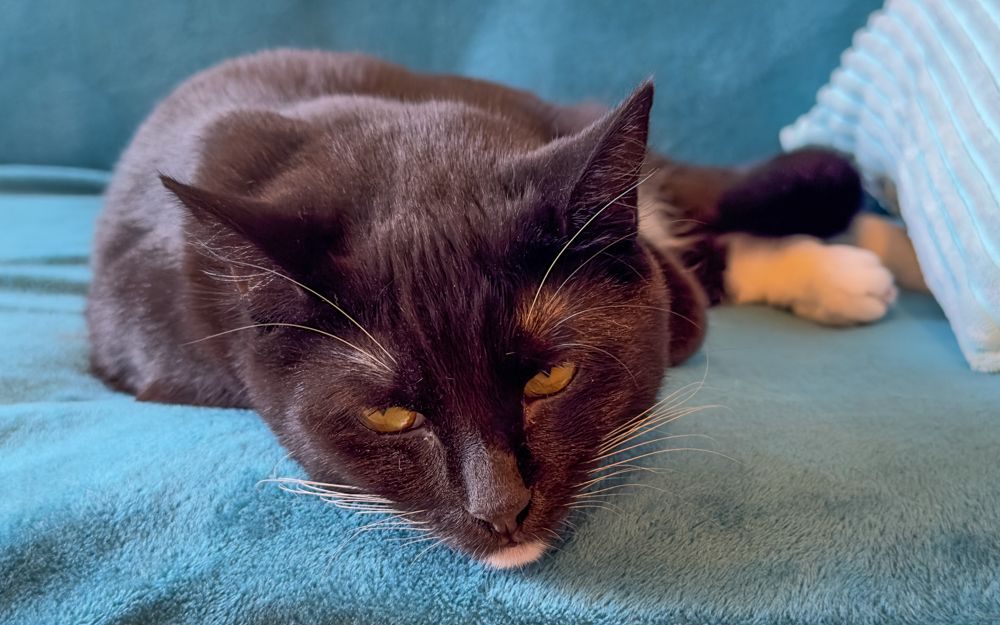
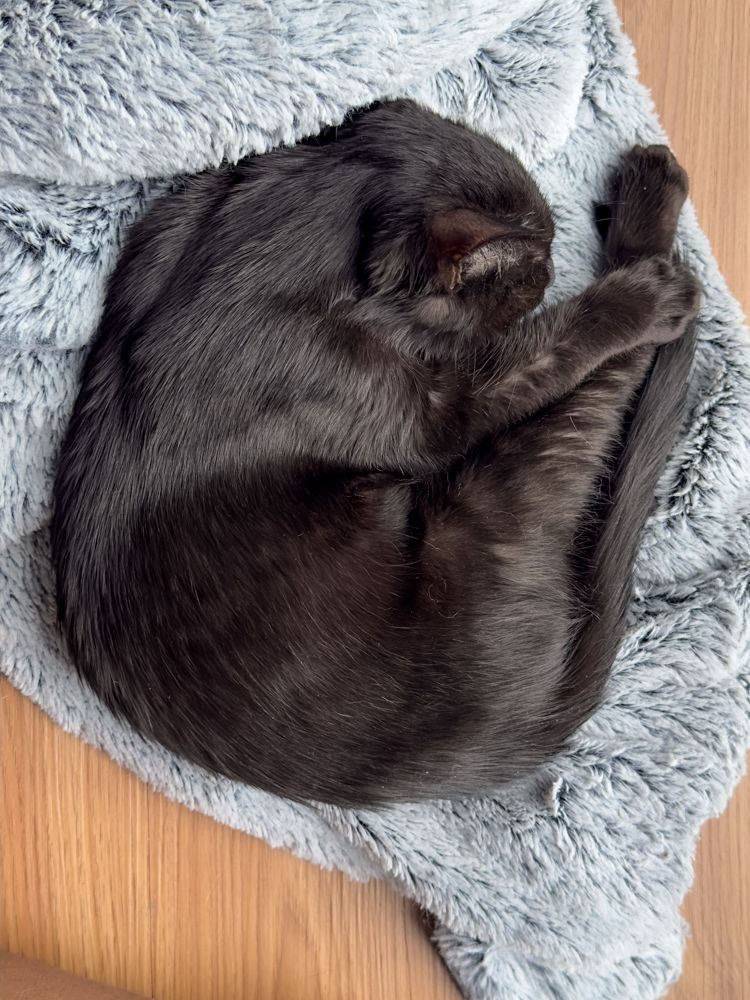
After I left the museum, grabbed a coffee at The Green Bean and, refueled, took a tour of Elm Street in downtown Greensboro. I happened on The Crooked Tail Cat Cafe. The cafe functions as both an adoption agency and a petting lounge. For a minimal donation, you are allowed to come in and pet the cats, something I can never resist. It was a nice diversion from the very serious and, by nature, disturbing events documented at the Civil Rights Museum.
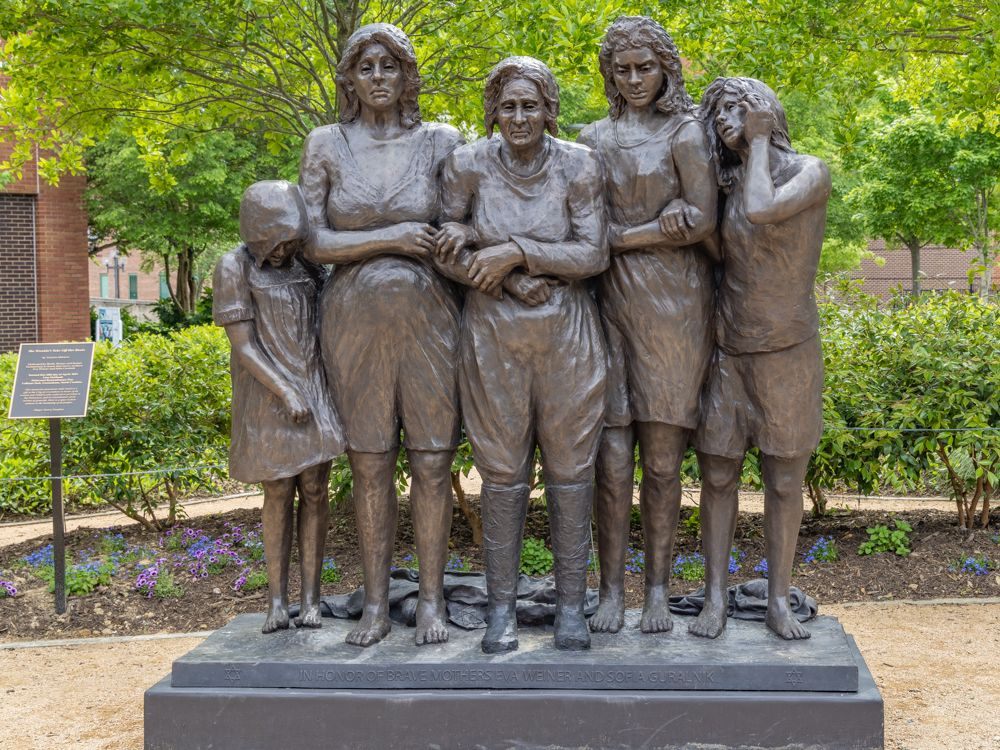
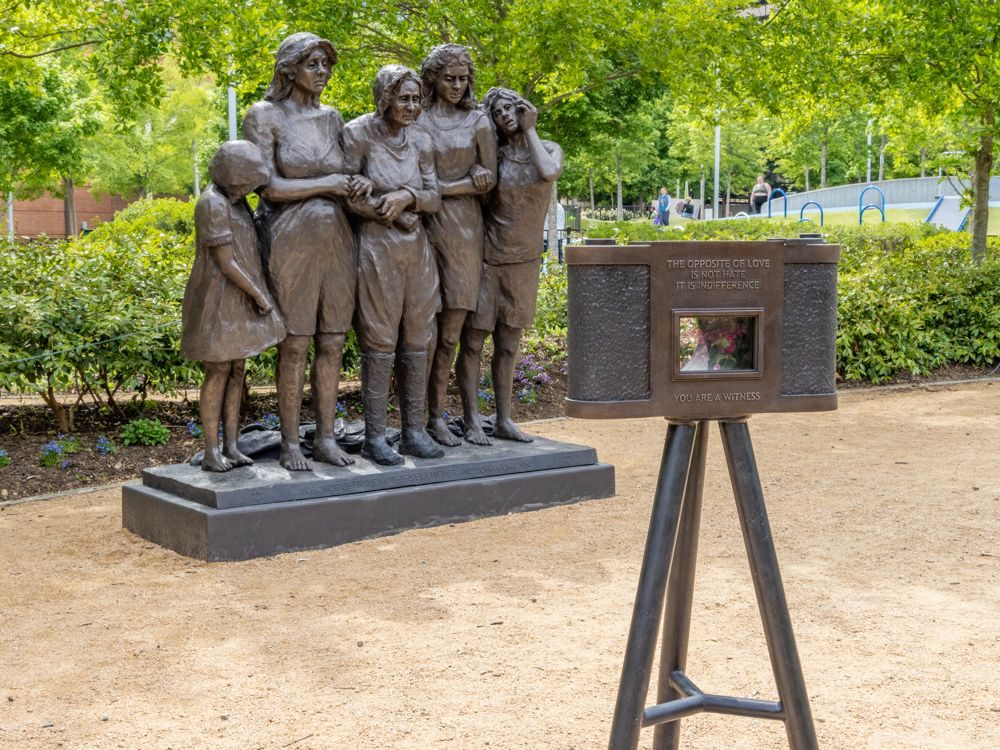
I had noticed a sign in an empty store front advertising that a new stature commemorating “Women of the Shoah ” would be unveiled in 2023 in Greensboro. And bit of research revealed that this original sculpture by artist Victoria Milstein would honor the strength and resilience of these Holocaust victims, and all women. I found out that the sculpture had been placed in LeBauer Park only the week prior, as a commemoration of Yom HaShoah, the Holocaust Memorial Day
From the web site:
In Liepāja, Latvia, on December 15, 1941, thousands of Jewish women and children were taken to the women’s prison where they were forced to strip to their underclothes and shot dead in groups of 10. Many of the victims were photographed in their final moments by a Nazi photographer. One such photograph serves as the inspiration for the Monument, “She Wouldn’t Take Off Her Boots.”
The monument is being named in honor of Eva Weiner and Sofia Guralnik, the brave women who saved their children, Shelly Weiner and Raya Kizhnerman, by hiding them in Nazi-occupied Poland for almost two years. Shelly, now a resident of Greenboro, has graciously contributed the lead gift that has enabled this project to proceed.
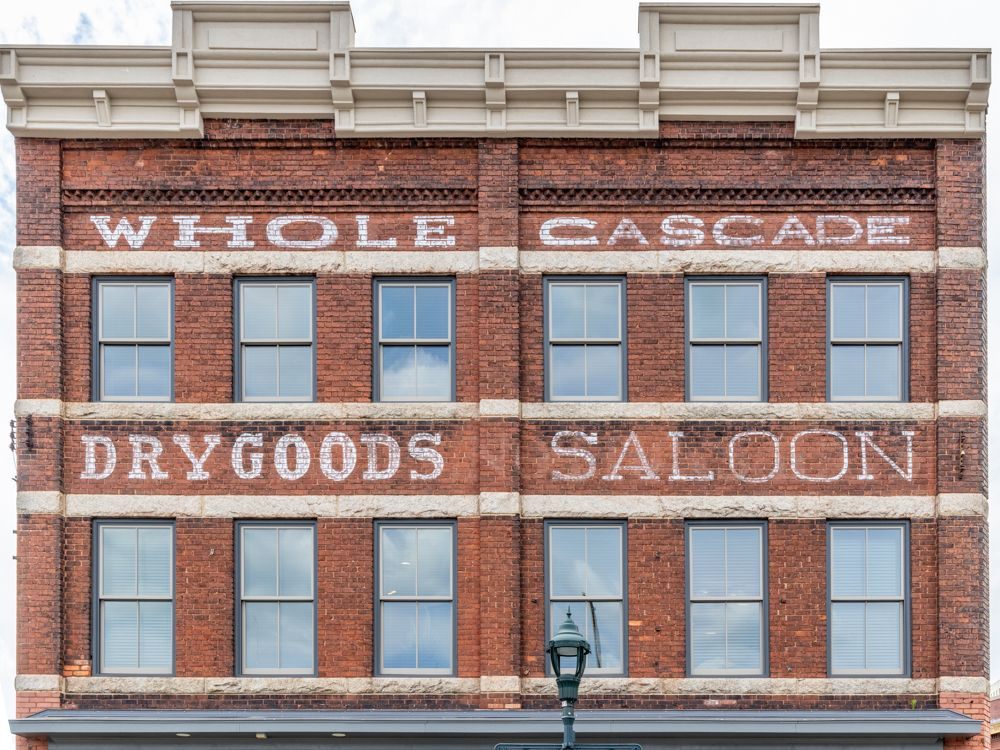
That was a pretty full day for one street in a small town.
Tomorrow I will travel to the Raleigh-Durham area to visit Stagville Plantation.
Their actions ultimately inspired many more students, both college students and high school students, to continue the sit-ins through the school year and through the summer. They are considered a catalyst to the subsequent sit-in movement, in which 70,000 people participated. The sit-ins spread to other public venues, including transport facilities, swimming pools, lunch counters, libraries, art galleries, parks and beaches and museums, primarily in the South.
Student-led boycotts of stores with segregated lunch counters resulted in serious financial consequences, which was what finally motivated desegregation of these venues. Interestingly, after making the decision to desegragate, the store manager of the original Woolworths, Clarence Harris, asked four black employees, Geneva Tisdale, Susie Morrison, Anetha Jones, and Charles Bess, to change out of their work clothes and order a meal at the counter. They were, quietly, the first to be served at a Woolworth lunch counter.
I was initially allowed to tag along with a school group to hear the docent-led tour, which was well worthwhile. We had a number of different docents, each explaining a different section of the museum. Our last docent was Iyanna, a knowledgeable and articulate young woman. After the school group left, she was able to spend some time with me one on one and we were able to have a much more in depth conversation about a number of issues.
After I left the museum, grabbed a coffee at The Green Bean and, refueled, took a tour of Elm Street in downtown Greensboro. I happened on The Crooked Tail Cat Cafe. The cafe functions as both an adoption agency and a petting lounge. For a minimal donation, you are allowed to come in and pet the cats, something I can never resist. It was a nice diversion from the very serious and, by nature, disturbing events documented at the Civil Rights Museum.
I had noticed a sign in an empty store front advertising that a new stature commemorating “Women of the Shoah ” would be unveiled in 2023 in Greensboro. And bit of research revealed that this original sculpture by artist Victoria Milstein would honor the strength and resilience of these Holocaust victims, and all women. I found out that the sculpture had been placed in LeBauer Park only the week prior, as a commemoration of Yom HaShoah, the Holocaust Memorial Day
From the web site:
In Liepāja, Latvia, on December 15, 1941, thousands of Jewish women and children were taken to the women’s prison where they were forced to strip to their underclothes and shot dead in groups of 10. Many of the victims were photographed in their final moments by a Nazi photographer. One such photograph serves as the inspiration for the Monument, “She Wouldn’t Take Off Her Boots.”
The monument is being named in honor of Eva Weiner and Sofia Guralnik, the brave women who saved their children, Shelly Weiner and Raya Kizhnerman, by hiding them in Nazi-occupied Poland for almost two years. Shelly, now a resident of Greenboro, has graciously contributed the lead gift that has enabled this project to proceed.
That was a pretty full day for one street in a small town.
Tomorrow I will travel to the Raleigh-Durham area to visit Stagville Plantation.

61 photo galleries
50 States
- Big Sur
- Salinas
- Laguna Beach
- San Diego
- California
- Grand Canyon
- Sedona
- Utah
- Syracuse
- Moab
- Denver
- Manitou Springs
- Calhan
- Mesa Verde
- Los Alamos
- Santa Fe
- Carlsbad
- New Mexico
- Eureka Springs
- Little Rock
- Birmingham
- Jackson
- Lottie
- Ten Thousand Islands
- Jerome
- Savannah
- White
- Asheville
- Sandstone Falls
- Baltimore
- Timonium
- Maryland
- Berlin
- Milton
- Smyrna
- Ocean City
- Detroit
- Upper Peninsula of Michigan
- Michigan
- Herod
- Ozark
- Two Harbors
- Carlton
- Madison County
- Oakley
- Valentine
- South Dakota
- United States
- Yellowstone National Park
- Lima
- Idaho
- Port Townsend
- Lincoln City
- Newport
- San Francisco