Whitefish (Museum of the Plains Indian)
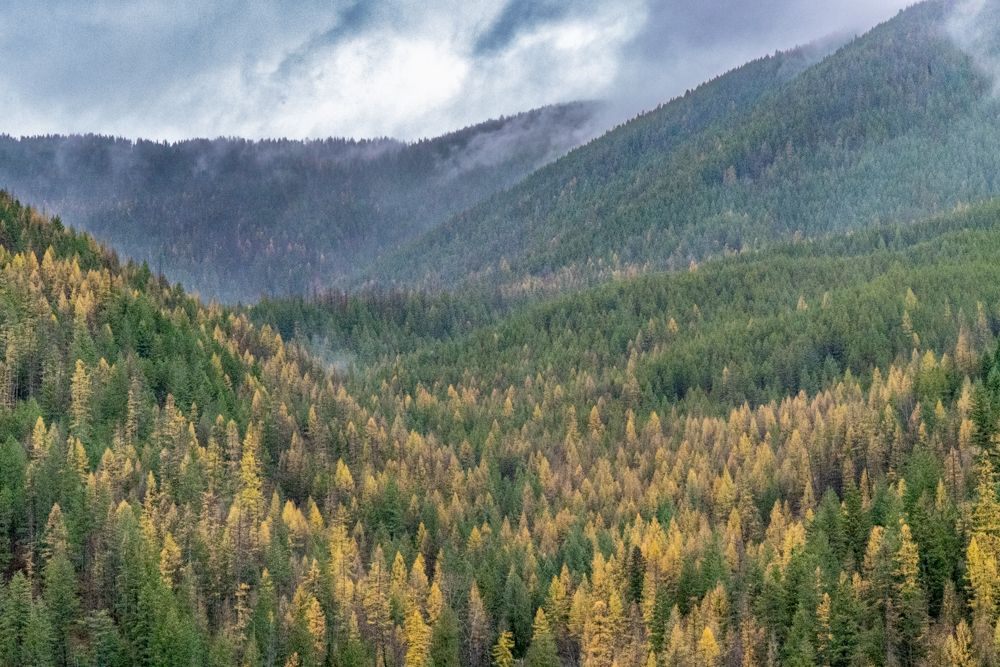
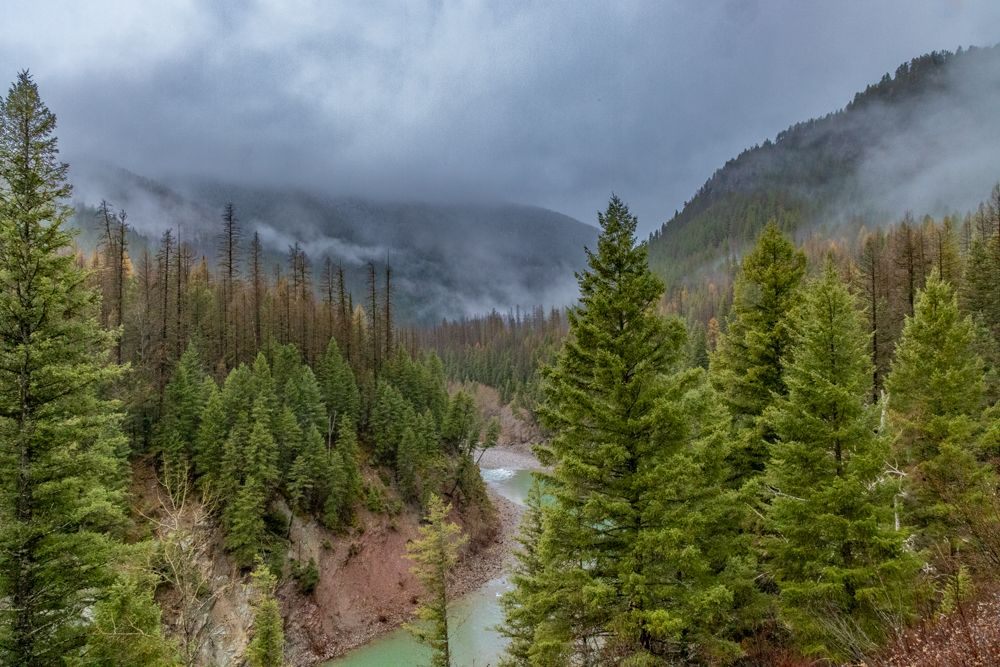
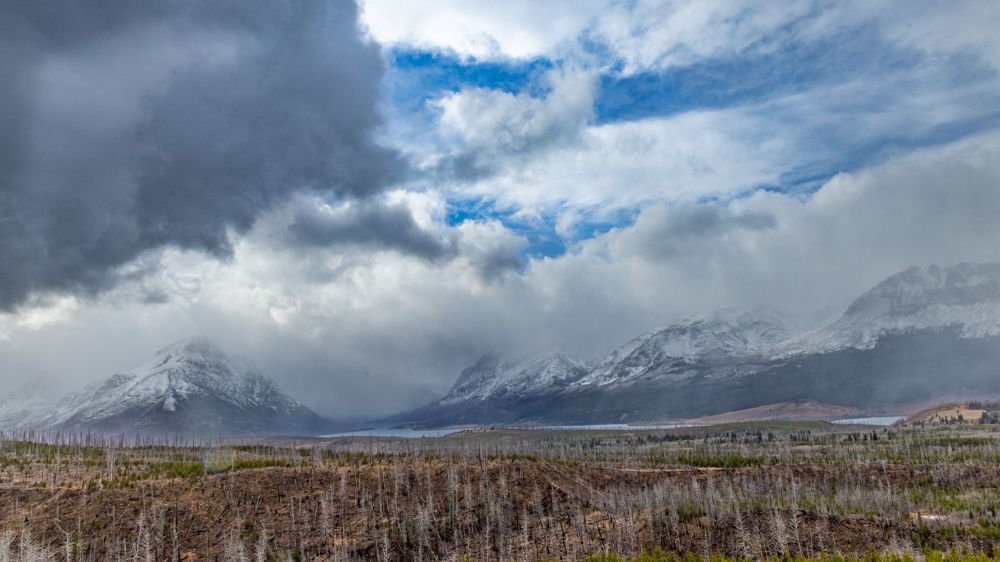
There is no way to soft-pedal it, today was just dismal. When I looked at the weather prediction this morning, it looked like a rain shower around 7 AM and cloudy the rest of the day. Since the Road-to-the-Sun - the main road through Glacier National Park is closed for the season, I thought I might drive the roads to the South and East to see if I could at least get some views. As I started driving at first light, the light rain soon turned into a downpour. As I climbed in elevation, it did briefly turn to snow, but it never stopped. The mountains were barely visible through the gloom.
One of the roads on my original itinerary was also closed and the detour dumped me out in Browning, which turned out to be fortuitous. As cell service was spotty, I was interpolating with a paper map of the area. This was also fortuitous as I noticed that the Museum of the Plains Indian was located in Browning. As the weather did not seem to be letting up, I decided this would make a nice mid-day stop.
Renee greeted me and started a short film that I watched before perusing the rest of the museum. The main room is a well-curated collection of Native American artifacts representing many of the local tribes. As well, it contains a number of concise, but informative, exhibit boards. Another room is dedicated to rotating art exhibits of Indigenous artists.
After I went through the museum, I took the opportunity to speak with Renee. Renee Bear Medicine is an enrolled member of the Blackfeet Tribe, one of the prevalent tribes in Montana. She is the curator of the museum, which is a collaboration of the Indian Arts and Crafts Board and the U.S. Department of the Interior/National Park Service. Renee is highly educated with a degree in anthropology and and is close to a biology degree as well. She also has a keen grasp of both the history and current issues of Native Peoples. I took advantage of the opportunity to speak with her and further my own understanding.
We first discussed how the Plains Indians had a different experience with European-American settlers than the Tribes in the east, southeast and midwest. While the consequences of settlers pushing westward were ultimately no less brutal, it was less of a surprise, as the Plains Indians were well aware of what had happened in the early days of European colonization. As such, they could at least be a bit more prepared for what would unfold. Events such as the spread of Smallpox, the destruction of natural resources that supported vast herds of Bison, the broken treaties of Fort Laramie , the Massacre at Wounded Knee and Battle of the Little Bighorn decimated Tribal populations and culture. These events have been discussed in more detail in previous posts. The Plains Indians were ultimately restricted to reservations, but at least they were generally in the vicinity of historical Tribal lands; they did escape the horrors of forced evacuation suffered by Tribes further east.
Renee is very much of the opinion that history can’t be changed and the most productive thing to do is to move forward. She feels that, while it is critical to preserve and recover the language, culture, art and ancestral knowledge, Native Peoples now live in a modern world and they must learn how to navigate it to best advantage. There is no possibility to revert to life as it was known prior to the arrival of European settlers and it is not useful to dwell on an unrealistic ideal.
I asked Renee what she sees as the biggest issues facing Indigenous communities today. She had a lot to say about this. She feels that Tribal members have become too dependent on government subsidies and are insufficiently motivated to improve their lives. She blames this on the community and even the Tribal council. She gave me an example of youth who lived outside the Tribal community and attended standard public schools. Overwhelmingly, these students excelled academically. In contrast, students attending schools on the reservation struggle.
This, she believes, reveals another issue. Many of the teachers in tribal schools come from outside the community and are there for only a few years to work off student loans. They have no investment in the students or the community, they are simply marking time. The same is true of medical professionals who accept to work a few years on a Reservation in exchange for a reduction in student loans. So why is it not possible to send Tribal members out to obtain education and training and have them come back to the community with their skills? Apparently those who have done so are now considered over qualified and too expensive to hire. A catch-22 situation.
Ultimately, Renee believes that the Indigenous communities need to take responsibility for their own betterment and that the motivation must come from within. More emphasis needs to be placed on values such as education and personal responsibility. I was impressed with her honest assessment and her brutal honesty, both tempered by compassion and personal understanding. This was the most instructive conversation I have had with a Tribal member.
The other interesting discussion we had revolved around the possibility of constructing a private DNA database for the purpose of connecting those whose heritage has been lost or become unclear to a Tribe via kinship analysis. I hope I might have planted a seed that could be useful in a very practical way.
After leaving the museum, I drove around a bit more, but the weather never improved. Tomorrow I will drive down to visit the Bison Range, a National Wildlife Refuge managed by several local tribes. Hopefully the weather will be more cooperative.
One of the roads on my original itinerary was also closed and the detour dumped me out in Browning, which turned out to be fortuitous. As cell service was spotty, I was interpolating with a paper map of the area. This was also fortuitous as I noticed that the Museum of the Plains Indian was located in Browning. As the weather did not seem to be letting up, I decided this would make a nice mid-day stop.
Renee greeted me and started a short film that I watched before perusing the rest of the museum. The main room is a well-curated collection of Native American artifacts representing many of the local tribes. As well, it contains a number of concise, but informative, exhibit boards. Another room is dedicated to rotating art exhibits of Indigenous artists.
After I went through the museum, I took the opportunity to speak with Renee. Renee Bear Medicine is an enrolled member of the Blackfeet Tribe, one of the prevalent tribes in Montana. She is the curator of the museum, which is a collaboration of the Indian Arts and Crafts Board and the U.S. Department of the Interior/National Park Service. Renee is highly educated with a degree in anthropology and and is close to a biology degree as well. She also has a keen grasp of both the history and current issues of Native Peoples. I took advantage of the opportunity to speak with her and further my own understanding.
We first discussed how the Plains Indians had a different experience with European-American settlers than the Tribes in the east, southeast and midwest. While the consequences of settlers pushing westward were ultimately no less brutal, it was less of a surprise, as the Plains Indians were well aware of what had happened in the early days of European colonization. As such, they could at least be a bit more prepared for what would unfold. Events such as the spread of Smallpox, the destruction of natural resources that supported vast herds of Bison, the broken treaties of Fort Laramie , the Massacre at Wounded Knee and Battle of the Little Bighorn decimated Tribal populations and culture. These events have been discussed in more detail in previous posts. The Plains Indians were ultimately restricted to reservations, but at least they were generally in the vicinity of historical Tribal lands; they did escape the horrors of forced evacuation suffered by Tribes further east.
Renee is very much of the opinion that history can’t be changed and the most productive thing to do is to move forward. She feels that, while it is critical to preserve and recover the language, culture, art and ancestral knowledge, Native Peoples now live in a modern world and they must learn how to navigate it to best advantage. There is no possibility to revert to life as it was known prior to the arrival of European settlers and it is not useful to dwell on an unrealistic ideal.
I asked Renee what she sees as the biggest issues facing Indigenous communities today. She had a lot to say about this. She feels that Tribal members have become too dependent on government subsidies and are insufficiently motivated to improve their lives. She blames this on the community and even the Tribal council. She gave me an example of youth who lived outside the Tribal community and attended standard public schools. Overwhelmingly, these students excelled academically. In contrast, students attending schools on the reservation struggle.
This, she believes, reveals another issue. Many of the teachers in tribal schools come from outside the community and are there for only a few years to work off student loans. They have no investment in the students or the community, they are simply marking time. The same is true of medical professionals who accept to work a few years on a Reservation in exchange for a reduction in student loans. So why is it not possible to send Tribal members out to obtain education and training and have them come back to the community with their skills? Apparently those who have done so are now considered over qualified and too expensive to hire. A catch-22 situation.
Ultimately, Renee believes that the Indigenous communities need to take responsibility for their own betterment and that the motivation must come from within. More emphasis needs to be placed on values such as education and personal responsibility. I was impressed with her honest assessment and her brutal honesty, both tempered by compassion and personal understanding. This was the most instructive conversation I have had with a Tribal member.
The other interesting discussion we had revolved around the possibility of constructing a private DNA database for the purpose of connecting those whose heritage has been lost or become unclear to a Tribe via kinship analysis. I hope I might have planted a seed that could be useful in a very practical way.
After leaving the museum, I drove around a bit more, but the weather never improved. Tomorrow I will drive down to visit the Bison Range, a National Wildlife Refuge managed by several local tribes. Hopefully the weather will be more cooperative.
61 photo galleries
50 States
- Big Sur
- Salinas
- Laguna Beach
- San Diego
- California
- Grand Canyon
- Sedona
- Utah
- Syracuse
- Moab
- Denver
- Manitou Springs
- Calhan
- Mesa Verde
- Los Alamos
- Santa Fe
- Carlsbad
- New Mexico
- Eureka Springs
- Little Rock
- Birmingham
- Jackson
- Lottie
- Ten Thousand Islands
- Jerome
- Savannah
- White
- Asheville
- Sandstone Falls
- Baltimore
- Timonium
- Maryland
- Berlin
- Milton
- Smyrna
- Ocean City
- Detroit
- Upper Peninsula of Michigan
- Michigan
- Herod
- Ozark
- Two Harbors
- Carlton
- Madison County
- Oakley
- Valentine
- South Dakota
- United States
- Yellowstone National Park
- Lima
- Idaho
- Port Townsend
- Lincoln City
- Newport
- San Francisco