Twin Cities (History day)
Today was history day. I first visited the Minnesota History Center. I started with the “Our Home ” exhibit which reviewed the history of the indigenous peoples who had lived and thrived in the area for thousands of years. The story is, by now, all too familiar. The two main groups who inhabited this region were the Dakota and the Ojibwe. As the introductory exhibits explain, identities in Native American culture are flexible, overlapping and complex. They can, simultaneously, embrace identities based on villages, clans, or groupings based on origin stories. The European settlers invented labels such as as Sioux and Chippewa to ease categorization; but these labels were a gross over-simplification and did a major disservice to the First Nations. And this rigid thought process likely also hampered the colonists’ understanding of complex societies that they mistook for primitive and uneducated. Minnesota, derived from the word Mni Sota Makoce (Mni means water), which describes lands that were and remain sacred to the Dakota and Ojibwa peoples.
French Canadian fur traders arrived here in the 1680s and began to interact and trade with the native tribes. By 1800, the British held a trading monopoly. American officials wanted to build a fort and trading post to break the British control on trade. Lt. Zebulon Pike, the U.S. negotiator, promised to build a trading post and pay $200,000 in exchange for 100,000 acres of land to build a fort. In theory, the Dakota people retained the right to hunt and travel through the area as they always had. The U.S. Senate cut the payment to $2,000 and in fact the 1805 treaty never became official. But it opened the door to American settlement in Minnesota. And of course the Dakota would effectively lose their rights to travel and hunt the land.
1850s, additional treaties between the U.S. government and Dakota nations relocated many Dakota to small tracts of land along the Minnesota River. As was typical, the native tribes were forced to sign treaties that were unfair or deceptive. Many times, they were simply given no choice - sign or starve. British settlers rapidly took over the land. Partly due to the Civil War, annuity payments and treaty provisions (including food) from the federal government were late or purposefully withheld and some Dakota, pushed to the brink of their survival, decided upon war. The Dakota people were divided over whether violent confrontation was the right solution, but it proceeded nonetheless and escalated to the U.S.-Dakota War of 1862.
The rebellion was easily quashed and repercussions were swift and harsh. Minnesota governor Alexander Ramsey stated, "The Sioux [Dakota] Indians of Minnesota must be exterminated or driven forever beyond the borders of Minnesota." Nearly all Dakota people fled the region, hid, or were forcibly removed from Minnesota. Thirty-eight Dakota men were hanged in Mankato on December 26th, 1862; it remains the largest public mass execution in United States history. On November 11, 1865, two more men (often referred to today as the 38+2)-were hanged outside of Fort Snelling. Men that were not hanged were kept imprisoned at Camp McClellan near Davenport, lowa. Women, children, and elders were first held in a concentration camp at Fort Snelling, then removed by steamboat to Crow Creek, South Dakota, where hundreds died from exposure, disease and starvation.
Today, some of the Dakota and Ojibwa people have returned to Minnesota to pursue healing and reconciliation. Other return periodically for ceremonies. The exhibit was curated by native peoples and - apparently - reflects their recollections, attitudes and current thoughts.
A portion of the exhibit that I found particularly interesting was the wild rice story. A docent (she herself is not Native, but has been trained in the history) was available to explain a working exhibit. Wild rice, called Manoomin by the Ojibwa and Psin by the Dakota, has played a vital role in their lives for centuries. They honor it as a food with important cultural and spiritual qualities. They use traditional methods (with a few modern twists) to harvest and process the wild rice in the late summer months, when the berries are ripe. Wild rice is also grown and harvested commercially - well it is the same grain, but it is no longer wild. I did not realize that true wild rice, harvested using ancestral techniques is still available. I will look for that product next time I purchase wild rice.
The History Center also housed a few other exhibits, including a temporary exhibit highlighting the life and work of Charles Schultz , creator of the Peanuts comic strip. I was not aware that he hailed from Minnesota. Another exhibit explored “The Greatest Generation ,” those who survived the Great Depression and lived through WWII.
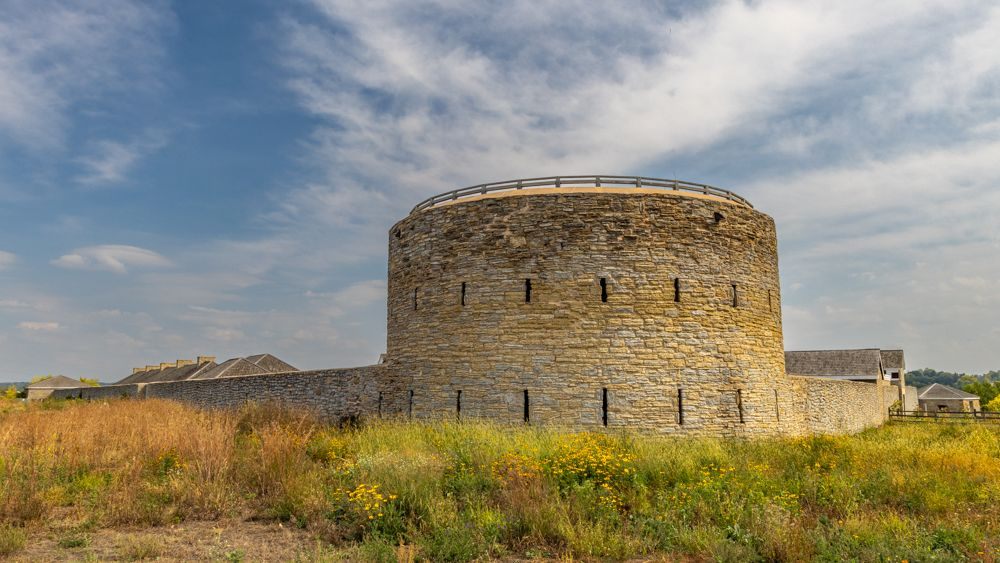
My next stop was Historic Fort Snelling . As the Fort played a pivotal role in Colonial interactions with the native peoples, much of the information was overlapping between the two sites. They are also both run by the Minnesota Historical Society. Built in the 1820s, Fort Snelling stands at the confluence of the Mississippi and Minnesota Rivers. Of course the location was strategic, in particular prior to the expansion of railroads.
Another pivotal event in American history occurred at Fort Snelling. Minnesota was, at the time, the Western frontier of the U.S. expansion. In 1820, Congress banned slavery in the territory that became Minnesota. Yet dozens of enslaved African-Americans had been brought by their owners to Fort Snelling and continued to be treated as property. Dred Scott was enslaved by Army Surgeon John Emerson; Harriet Robinson by U.S. Indian Agent Lawrence Taliaferro. Taliferro, a justice of the peace, agree to marry them and either gave or sold Harriet to Emerson so that they could live together. Emerson took the couple to St. Louis in 1843 and when he died in 1846, the Scotts sued for freedom. Missouri courts had previously upheld the freedom of enslaved people who had lived on free soil. The case went all the way up to the U.S. Supreme Court. After 11 years and four trials, in a majority opinion authored by Chief Justice Roger B. Taney, the U.S. Supreme Court declared the Missouri Compromise invalid and dismissed the Scotts' lawsuits. The Scotts remained enslaved and the decision became a pivotal moment in a country careening toward Civil War. Two months later, Emerson’s son, who had inherited the Scotts, purchased their freedom and they were able to live out the rest of their lives as free people.
Fort Snelling played a key role in the Civil war, as Minnesota was the first state to send troops to support the Union cause. During WWII, it became a training center for language experts, in particular Japanese, which was required to break codes and intercept communications. It was a great irony that relatives of Japanese-Americans, who were indubitably assisting the U.S. in the war effort, remained confined to internment camps out of fear that they could be Japanese spies.
After the end of the war in 1946, Fort Snelling had outlived its usefulness and was abandoned.
When highway construction threatened the site in the 1950s, concerned citizens rallied to save the fort. In 1960, Fort Snelling became Minnesota's first National Historic Landmark. Reconstruction of the fort began after 1969. The rebuilt fort opened to the public in 1977.
In the evening, G. and I joined two addition friends, C. and J. or dinner at W.A. Frost and Company . The weather was mild and we were able to sit on the patio. We had a wonderful evening chatting and catching up; in fact we pretty much closed the place down.
Tomorrow I will explore a few destinations in downtown Minneapolis.
French Canadian fur traders arrived here in the 1680s and began to interact and trade with the native tribes. By 1800, the British held a trading monopoly. American officials wanted to build a fort and trading post to break the British control on trade. Lt. Zebulon Pike, the U.S. negotiator, promised to build a trading post and pay $200,000 in exchange for 100,000 acres of land to build a fort. In theory, the Dakota people retained the right to hunt and travel through the area as they always had. The U.S. Senate cut the payment to $2,000 and in fact the 1805 treaty never became official. But it opened the door to American settlement in Minnesota. And of course the Dakota would effectively lose their rights to travel and hunt the land.
1850s, additional treaties between the U.S. government and Dakota nations relocated many Dakota to small tracts of land along the Minnesota River. As was typical, the native tribes were forced to sign treaties that were unfair or deceptive. Many times, they were simply given no choice - sign or starve. British settlers rapidly took over the land. Partly due to the Civil War, annuity payments and treaty provisions (including food) from the federal government were late or purposefully withheld and some Dakota, pushed to the brink of their survival, decided upon war. The Dakota people were divided over whether violent confrontation was the right solution, but it proceeded nonetheless and escalated to the U.S.-Dakota War of 1862.
The rebellion was easily quashed and repercussions were swift and harsh. Minnesota governor Alexander Ramsey stated, "The Sioux [Dakota] Indians of Minnesota must be exterminated or driven forever beyond the borders of Minnesota." Nearly all Dakota people fled the region, hid, or were forcibly removed from Minnesota. Thirty-eight Dakota men were hanged in Mankato on December 26th, 1862; it remains the largest public mass execution in United States history. On November 11, 1865, two more men (often referred to today as the 38+2)-were hanged outside of Fort Snelling. Men that were not hanged were kept imprisoned at Camp McClellan near Davenport, lowa. Women, children, and elders were first held in a concentration camp at Fort Snelling, then removed by steamboat to Crow Creek, South Dakota, where hundreds died from exposure, disease and starvation.
Today, some of the Dakota and Ojibwa people have returned to Minnesota to pursue healing and reconciliation. Other return periodically for ceremonies. The exhibit was curated by native peoples and - apparently - reflects their recollections, attitudes and current thoughts.
A portion of the exhibit that I found particularly interesting was the wild rice story. A docent (she herself is not Native, but has been trained in the history) was available to explain a working exhibit. Wild rice, called Manoomin by the Ojibwa and Psin by the Dakota, has played a vital role in their lives for centuries. They honor it as a food with important cultural and spiritual qualities. They use traditional methods (with a few modern twists) to harvest and process the wild rice in the late summer months, when the berries are ripe. Wild rice is also grown and harvested commercially - well it is the same grain, but it is no longer wild. I did not realize that true wild rice, harvested using ancestral techniques is still available. I will look for that product next time I purchase wild rice.
The History Center also housed a few other exhibits, including a temporary exhibit highlighting the life and work of Charles Schultz , creator of the Peanuts comic strip. I was not aware that he hailed from Minnesota. Another exhibit explored “The Greatest Generation ,” those who survived the Great Depression and lived through WWII.
My next stop was Historic Fort Snelling . As the Fort played a pivotal role in Colonial interactions with the native peoples, much of the information was overlapping between the two sites. They are also both run by the Minnesota Historical Society. Built in the 1820s, Fort Snelling stands at the confluence of the Mississippi and Minnesota Rivers. Of course the location was strategic, in particular prior to the expansion of railroads.
Another pivotal event in American history occurred at Fort Snelling. Minnesota was, at the time, the Western frontier of the U.S. expansion. In 1820, Congress banned slavery in the territory that became Minnesota. Yet dozens of enslaved African-Americans had been brought by their owners to Fort Snelling and continued to be treated as property. Dred Scott was enslaved by Army Surgeon John Emerson; Harriet Robinson by U.S. Indian Agent Lawrence Taliaferro. Taliferro, a justice of the peace, agree to marry them and either gave or sold Harriet to Emerson so that they could live together. Emerson took the couple to St. Louis in 1843 and when he died in 1846, the Scotts sued for freedom. Missouri courts had previously upheld the freedom of enslaved people who had lived on free soil. The case went all the way up to the U.S. Supreme Court. After 11 years and four trials, in a majority opinion authored by Chief Justice Roger B. Taney, the U.S. Supreme Court declared the Missouri Compromise invalid and dismissed the Scotts' lawsuits. The Scotts remained enslaved and the decision became a pivotal moment in a country careening toward Civil War. Two months later, Emerson’s son, who had inherited the Scotts, purchased their freedom and they were able to live out the rest of their lives as free people.
Fort Snelling played a key role in the Civil war, as Minnesota was the first state to send troops to support the Union cause. During WWII, it became a training center for language experts, in particular Japanese, which was required to break codes and intercept communications. It was a great irony that relatives of Japanese-Americans, who were indubitably assisting the U.S. in the war effort, remained confined to internment camps out of fear that they could be Japanese spies.
After the end of the war in 1946, Fort Snelling had outlived its usefulness and was abandoned.
When highway construction threatened the site in the 1950s, concerned citizens rallied to save the fort. In 1960, Fort Snelling became Minnesota's first National Historic Landmark. Reconstruction of the fort began after 1969. The rebuilt fort opened to the public in 1977.
In the evening, G. and I joined two addition friends, C. and J. or dinner at W.A. Frost and Company . The weather was mild and we were able to sit on the patio. We had a wonderful evening chatting and catching up; in fact we pretty much closed the place down.
Tomorrow I will explore a few destinations in downtown Minneapolis.
61 photo galleries
50 States
- Big Sur
- Salinas
- Laguna Beach
- San Diego
- California
- Grand Canyon
- Sedona
- Utah
- Syracuse
- Moab
- Denver
- Manitou Springs
- Calhan
- Mesa Verde
- Los Alamos
- Santa Fe
- Carlsbad
- New Mexico
- Eureka Springs
- Little Rock
- Birmingham
- Jackson
- Lottie
- Ten Thousand Islands
- Jerome
- Savannah
- White
- Asheville
- Sandstone Falls
- Baltimore
- Timonium
- Maryland
- Berlin
- Milton
- Smyrna
- Ocean City
- Detroit
- Upper Peninsula of Michigan
- Michigan
- Herod
- Ozark
- Two Harbors
- Carlton
- Madison County
- Oakley
- Valentine
- South Dakota
- United States
- Yellowstone National Park
- Lima
- Idaho
- Port Townsend
- Lincoln City
- Newport
- San Francisco