Twin Cities (history, art and politics)
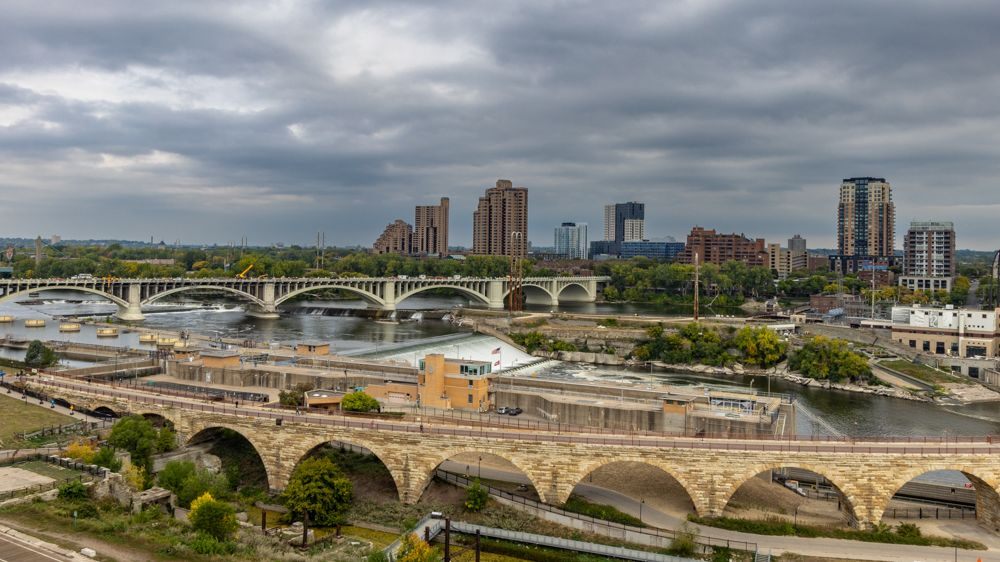
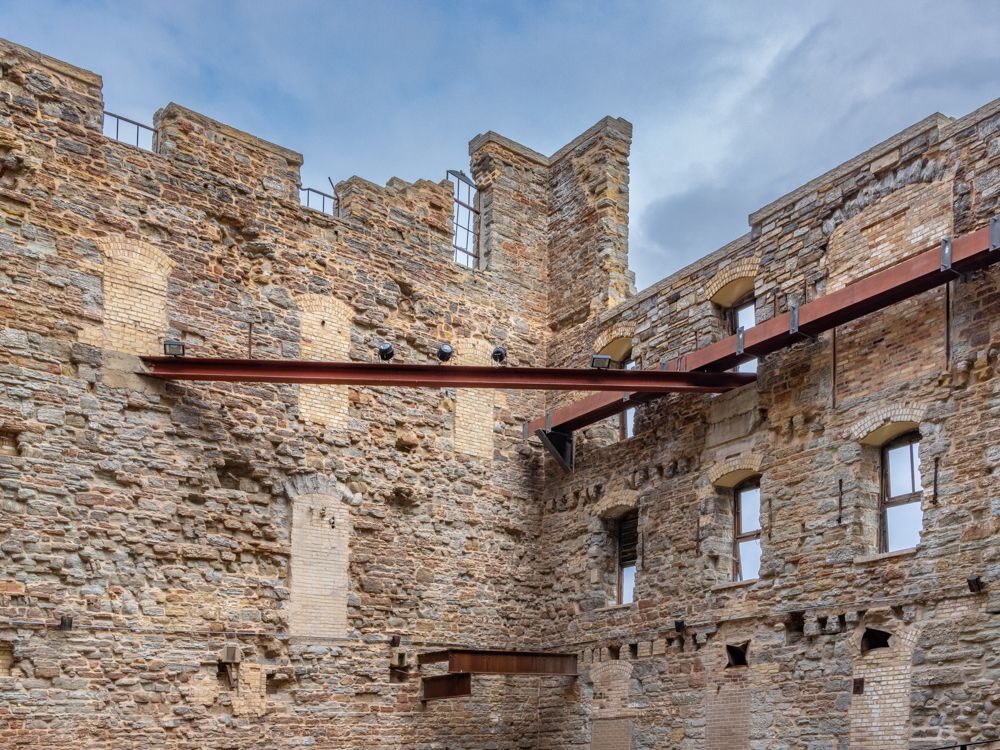
I began this morning with a visit to Mill City Museum . Like other cities in the Northeast and upper Northwest, settlement and growth began with harnessing the power of a natural waterfall. For the Twin Cities, the river was the Mississippi and the falls were originally known to the Dakota People as Owámniyomni (‘whirlpool). In 1680, Father Hennepin, the first European to view the falls (he had just come from reporting Niagara Falls) renamed them for his patron saint, St. Anthony of Padua. The St. Anthony falls powered both the lumber industry and the flour milling industry in what would become the city of Minneapolis. From 1880 to about 1930, Minneapolis was known as the "Flour Milling Capital of the World ". By the early 1900s, three companies controlled 97% of the falls flour production. They were the Pillsbury-Washburn Flour Mills Company (later Pillsbury Flour Mills Company and now General Mills), the Washburn-Crosby Company (later General Mills), and Northwestern Consolidated Milling Company (later Standard Milling Company)." The Pillsbury and Washburn-Crosby companies were started at the falls.
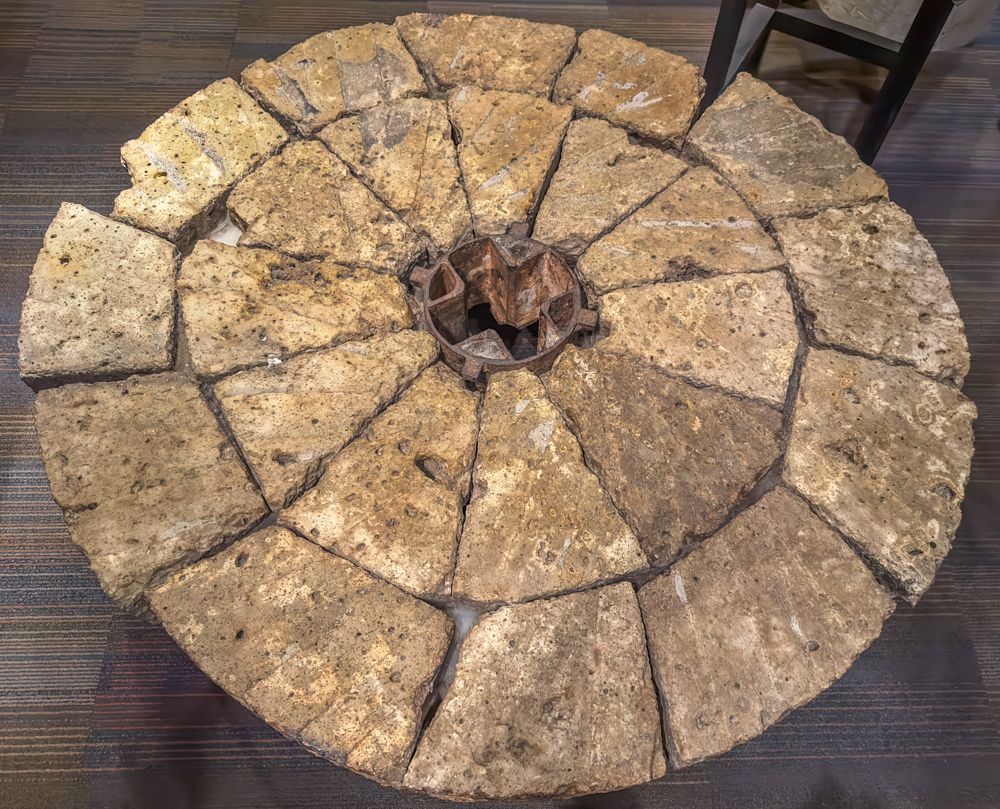
The original Washburn A Mill began processing flour in 1874. In May 1878, a spark, likely caused by dry millstones grinding together, ignited airborne flour dust, creating an explosion that claimed 18 lives, leveled the mill, and destroyed much of the riverfront business area. Austrian engineer William de la Barre was hired to install ventilation systems and dust collectors that would prevent the build-up of combustible flour dust.
In 1928 an equipment malfunction caused another fire, gutting the mostly wooden interior of the building. New concrete pillars and flooring were installed to limit the flammability of the building. Flour production would continue for another 35 years. As happened in other mill cities, changes in economics and technology led the industry to move out of Minneapolis, and the old mills fell into disuse. The Washburn A Mill closed in 1965 and for almost three decades sat vacant, used mostly by the homeless as a shelter.
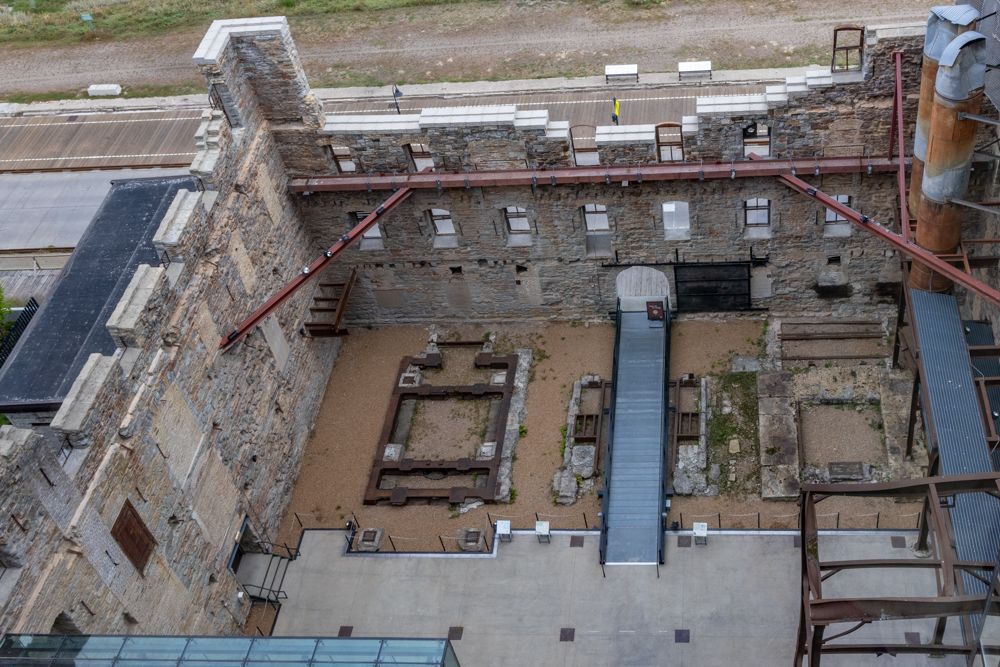
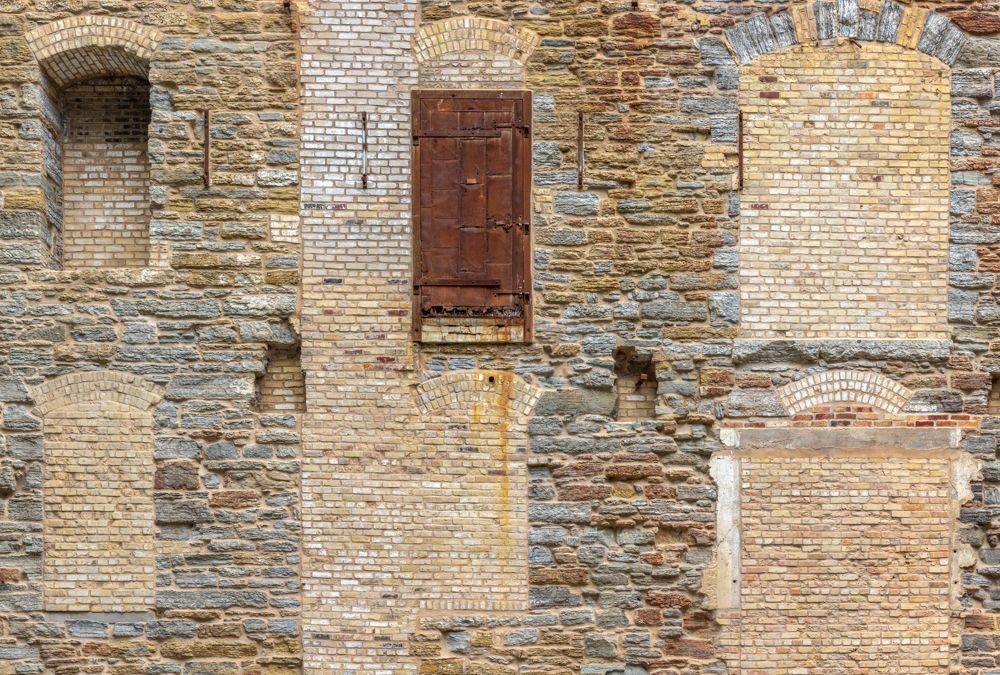
In February 1991, fire struck once again and because the neighborhood was still largely vacant, the emergency response was slow and the building was engulfed before the fire was contained. By then, all that was left of the old mill were the concrete of the interior and crumbling limestone walls. The rubble was cleared and the walls reinforced, leading to the current use of the building as a museum.
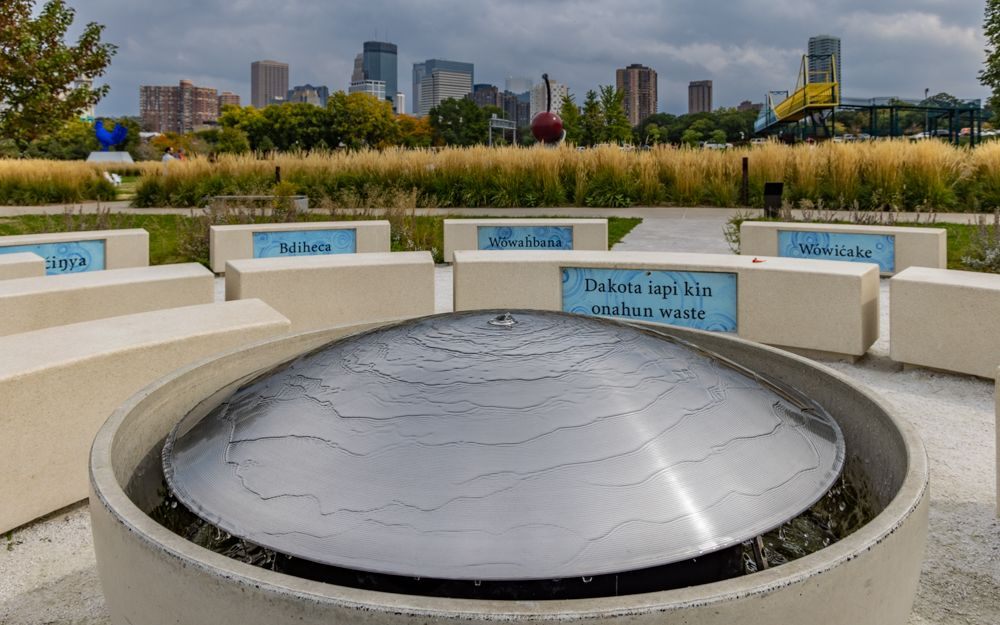
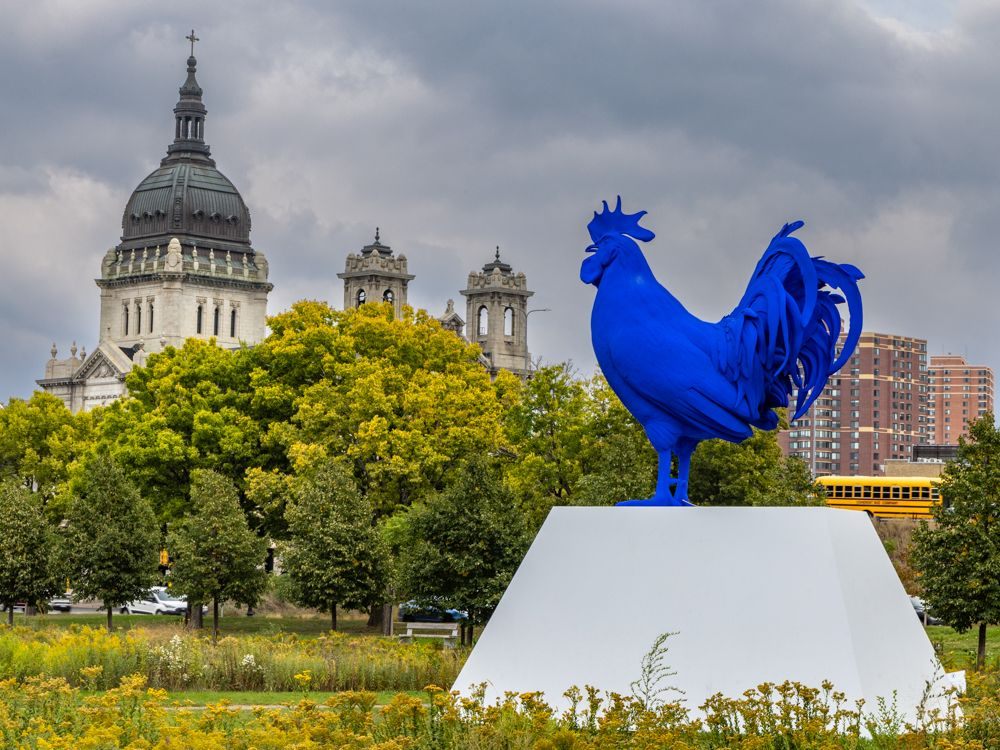
I next headed over the the Sculpture Garden of the Walker Art Center. I decided to just walk the exterior as I had two more stops I wanted to make today. The most interesting sculpture was Okciyapi , a gathering place and welcoming site of reflection. This is a commissioned work by Twin Cities–based artist Angela Two Stars. Dakota words of wisdom, bravery and encouragement are engraved in the circular benches that surround a central fountain element.
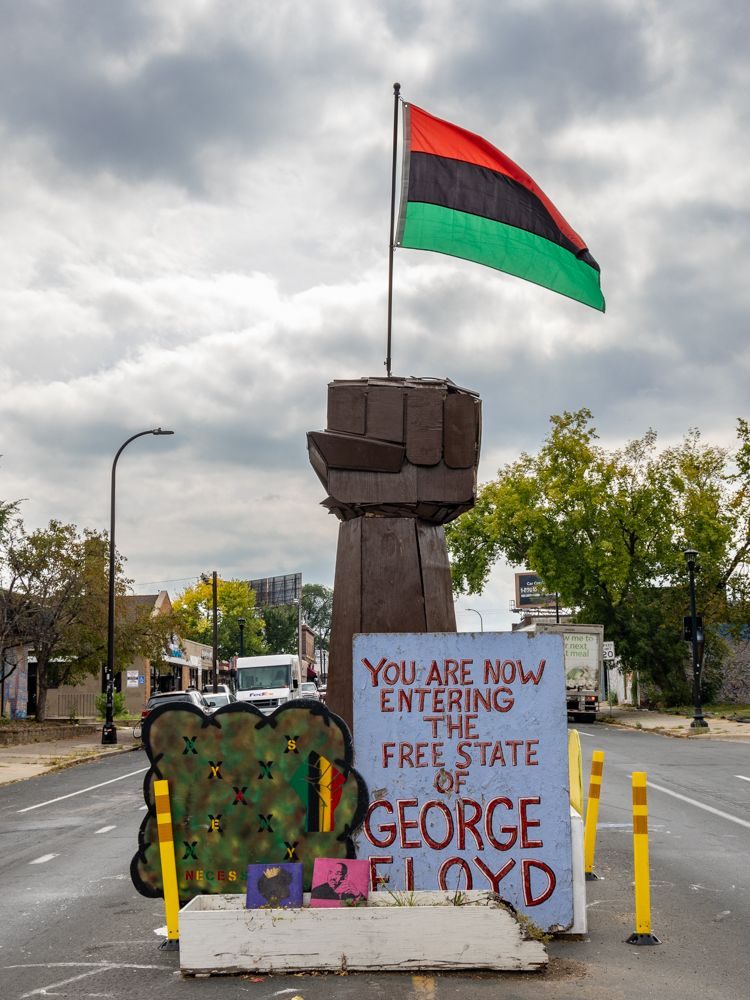
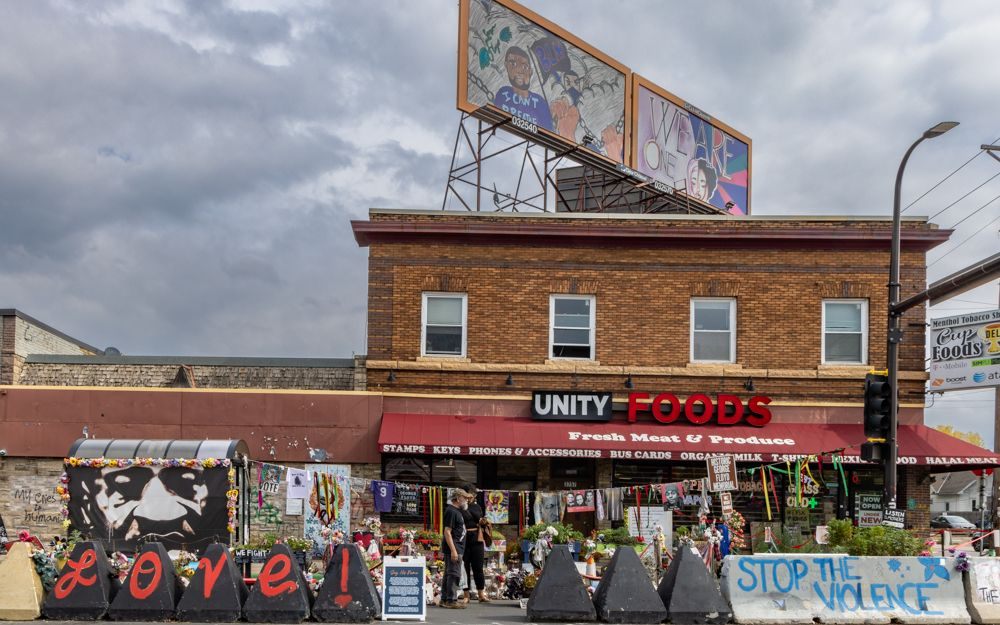
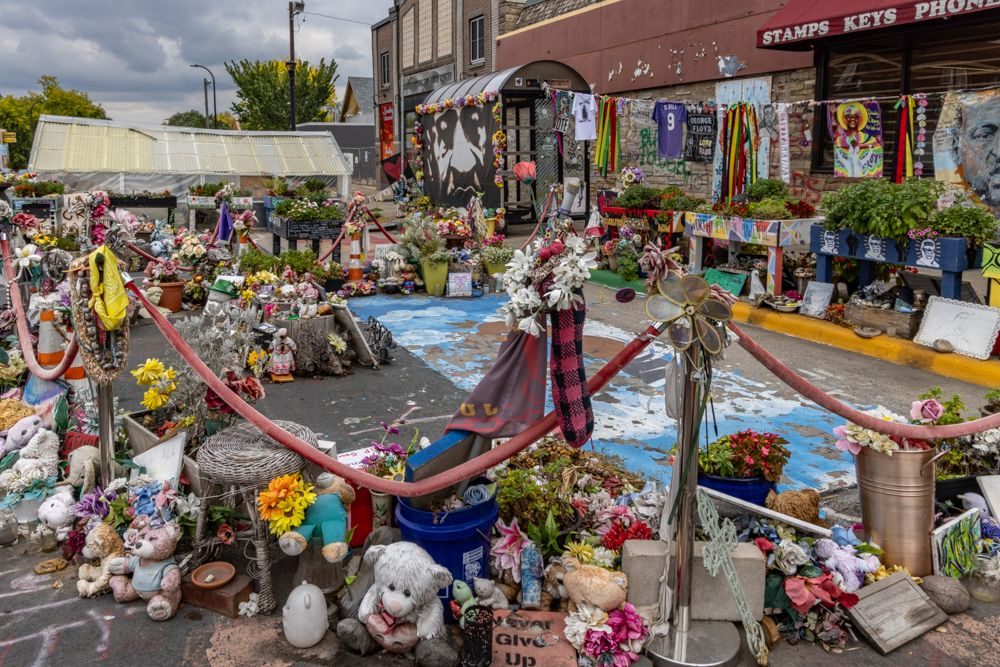
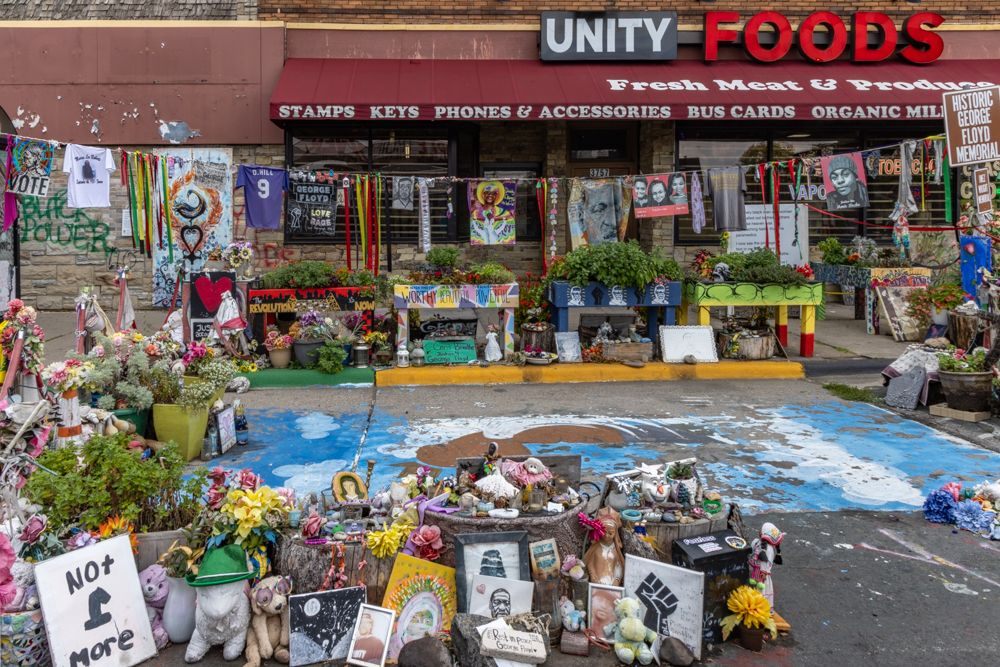
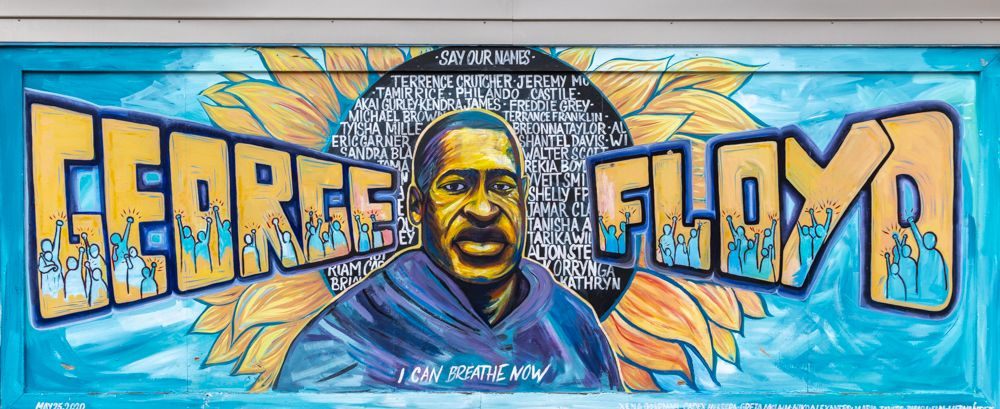
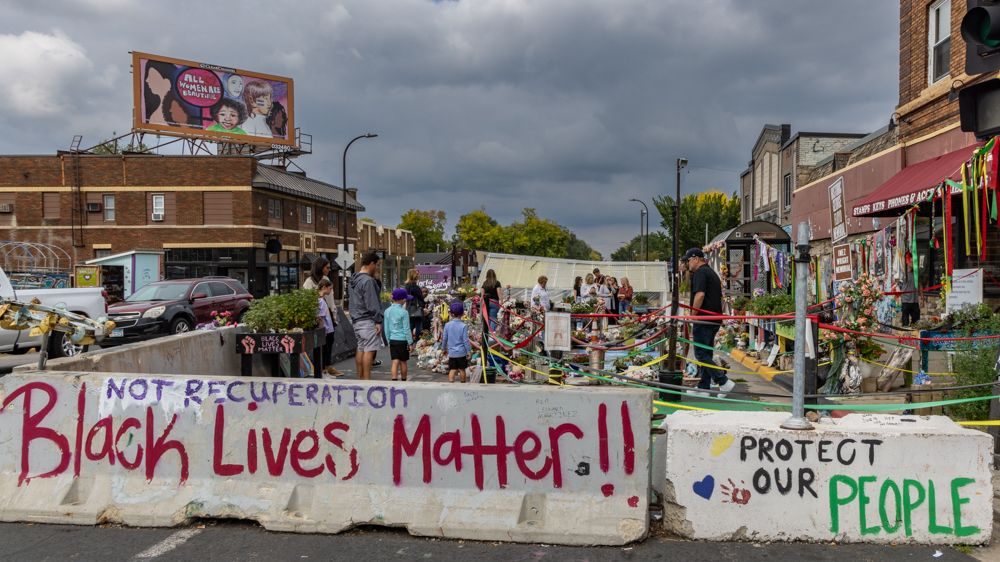
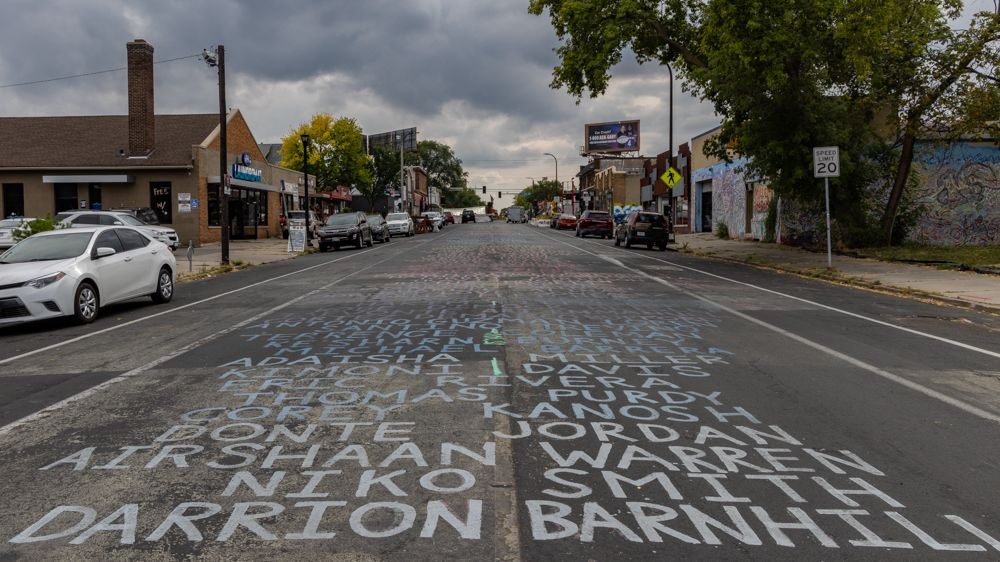
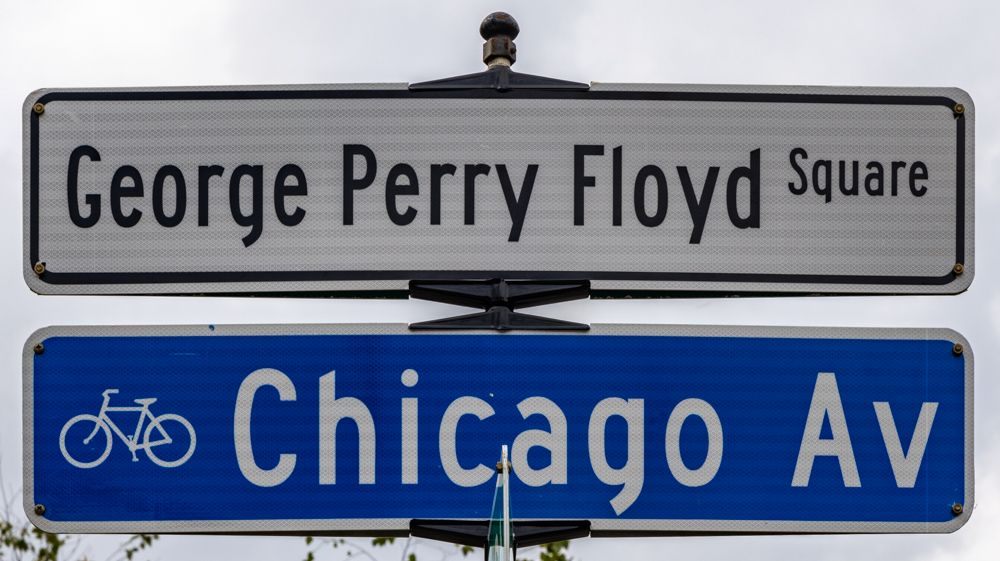
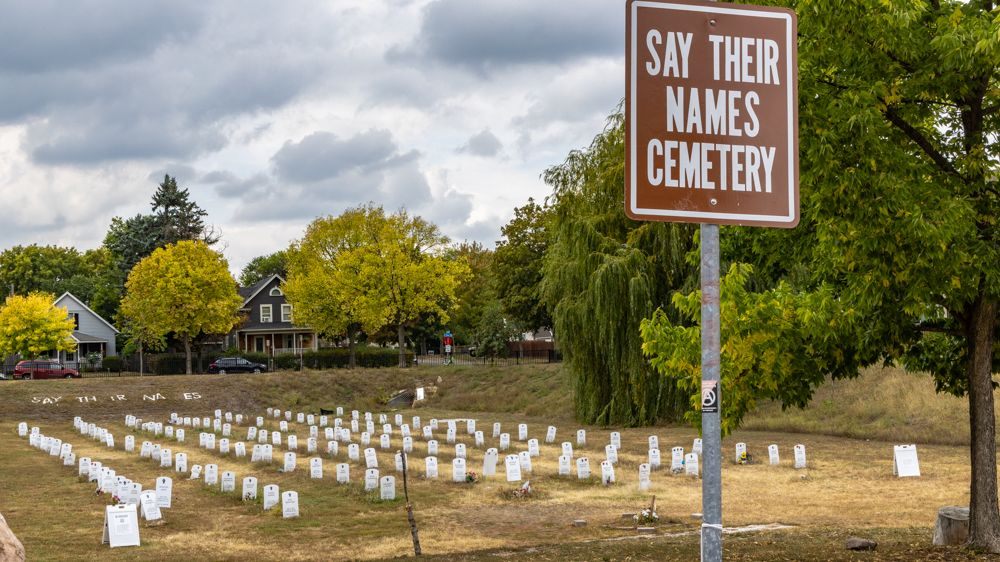
My next stop was the much-anticipated George Floyd memorial. The central location, the spot where Floyd perished at the hands of the police, is located at the corner of Chicago and 38th, however the memorial has spread a block or two in each direction. Other than that, the neighborhood appears to be much as it was in 2020, when the incident occurred. Traffic cedes to the constant foot traffic generated by the memorial.
The site has evolved to be much more than just a memorial; It has become a place of gathering and healing. The visitors were all respectful and kind. I engaged with a few different people during the time I spent at the site. I first spoke with Chazidy Bowman . Chazidy works with the Ohio Prisoners Justice League (OPJL), so the site was particularly meaningful to her. I also spent some time speaking with Pam and JJ. They are both journalists and were attending at the Radio Television Digital News Association (RTDNA) conference being held at the Renaissance Hotel in the Mill District. JJ (who turns out to be JJ Green , a well-known national security correspondent and creator of the Colors podcast ) is on the conference board. We chatted for a bit, exchanged some information and went our separate ways (or so we thought).
After spending some time at the memorial, I decided to drive back to Mill city to see if I could snag a late lunch at Omamni by The Sioux Chef. As alluded to by the name, this is a restaurant that focuses on dishes inspired by Native ingredients. It was rumored to be popular and thus difficult to secure a reservation. However, the website offered that walk-ins might be accommodated on the patio. I parked at a garage also used by hotels in the area, including the Renaissance, and decided to cut through the lobby. There I ran smack into Pam and JJ again. They immediately invited me to join them for a late lunch, and I suggested the Omamni, since I was headed there anyway. They readily agreed and we were, in fact, easily accommodated on their patio.
Pam and I walked over to secure a table and JJ, being a very busy guy, joined us after he had completed a call. In the meantime, I got to know Pam a little bit. She is a first-generation Latina, living in Oklahoma, and has a graduate degree in journalism and political science from San Diego (I think she said SDSU). In addition to her reporting duties, she is the U.S. coordinator of the RIAS Berlin Commission, which sponsors exchange programs for journalists and journalism students.
When JJ arrived, we started chatting (we had very little time as he was due to take another call). He insisted that I looked familiar and he had seen me somewhere. Given that he lives in D.C., that did not seem that likely, but he was sure, so we started exploring where that might have occurred. He asked if I had ever appeared on TV. I shared that about 30 seconds of my testimony was televised many years ago, during a trial in Arizona. Then I remembered that, three decades ago, I had done some local commentary during the O.J. Simpson trial. He said that he had covered that trial, his first big story as a cub reporter, and would have reviewed local news feeds. He believes that is where he saw my face. Unbelievable.
JJ ran off to his next engagement, Pam and I finished our meal and walked back to the Renaissance, where she left to get read to head home and I left to collect my car.
This was my last day in Minnesota. Tomorrow I head South to Iowa.
The original Washburn A Mill began processing flour in 1874. In May 1878, a spark, likely caused by dry millstones grinding together, ignited airborne flour dust, creating an explosion that claimed 18 lives, leveled the mill, and destroyed much of the riverfront business area. Austrian engineer William de la Barre was hired to install ventilation systems and dust collectors that would prevent the build-up of combustible flour dust.
In 1928 an equipment malfunction caused another fire, gutting the mostly wooden interior of the building. New concrete pillars and flooring were installed to limit the flammability of the building. Flour production would continue for another 35 years. As happened in other mill cities, changes in economics and technology led the industry to move out of Minneapolis, and the old mills fell into disuse. The Washburn A Mill closed in 1965 and for almost three decades sat vacant, used mostly by the homeless as a shelter.
In February 1991, fire struck once again and because the neighborhood was still largely vacant, the emergency response was slow and the building was engulfed before the fire was contained. By then, all that was left of the old mill were the concrete of the interior and crumbling limestone walls. The rubble was cleared and the walls reinforced, leading to the current use of the building as a museum.
I next headed over the the Sculpture Garden of the Walker Art Center. I decided to just walk the exterior as I had two more stops I wanted to make today. The most interesting sculpture was Okciyapi , a gathering place and welcoming site of reflection. This is a commissioned work by Twin Cities–based artist Angela Two Stars. Dakota words of wisdom, bravery and encouragement are engraved in the circular benches that surround a central fountain element.
My next stop was the much-anticipated George Floyd memorial. The central location, the spot where Floyd perished at the hands of the police, is located at the corner of Chicago and 38th, however the memorial has spread a block or two in each direction. Other than that, the neighborhood appears to be much as it was in 2020, when the incident occurred. Traffic cedes to the constant foot traffic generated by the memorial.
The site has evolved to be much more than just a memorial; It has become a place of gathering and healing. The visitors were all respectful and kind. I engaged with a few different people during the time I spent at the site. I first spoke with Chazidy Bowman . Chazidy works with the Ohio Prisoners Justice League (OPJL), so the site was particularly meaningful to her. I also spent some time speaking with Pam and JJ. They are both journalists and were attending at the Radio Television Digital News Association (RTDNA) conference being held at the Renaissance Hotel in the Mill District. JJ (who turns out to be JJ Green , a well-known national security correspondent and creator of the Colors podcast ) is on the conference board. We chatted for a bit, exchanged some information and went our separate ways (or so we thought).
After spending some time at the memorial, I decided to drive back to Mill city to see if I could snag a late lunch at Omamni by The Sioux Chef. As alluded to by the name, this is a restaurant that focuses on dishes inspired by Native ingredients. It was rumored to be popular and thus difficult to secure a reservation. However, the website offered that walk-ins might be accommodated on the patio. I parked at a garage also used by hotels in the area, including the Renaissance, and decided to cut through the lobby. There I ran smack into Pam and JJ again. They immediately invited me to join them for a late lunch, and I suggested the Omamni, since I was headed there anyway. They readily agreed and we were, in fact, easily accommodated on their patio.
Pam and I walked over to secure a table and JJ, being a very busy guy, joined us after he had completed a call. In the meantime, I got to know Pam a little bit. She is a first-generation Latina, living in Oklahoma, and has a graduate degree in journalism and political science from San Diego (I think she said SDSU). In addition to her reporting duties, she is the U.S. coordinator of the RIAS Berlin Commission, which sponsors exchange programs for journalists and journalism students.
When JJ arrived, we started chatting (we had very little time as he was due to take another call). He insisted that I looked familiar and he had seen me somewhere. Given that he lives in D.C., that did not seem that likely, but he was sure, so we started exploring where that might have occurred. He asked if I had ever appeared on TV. I shared that about 30 seconds of my testimony was televised many years ago, during a trial in Arizona. Then I remembered that, three decades ago, I had done some local commentary during the O.J. Simpson trial. He said that he had covered that trial, his first big story as a cub reporter, and would have reviewed local news feeds. He believes that is where he saw my face. Unbelievable.
JJ ran off to his next engagement, Pam and I finished our meal and walked back to the Renaissance, where she left to get read to head home and I left to collect my car.
This was my last day in Minnesota. Tomorrow I head South to Iowa.
61 photo galleries
50 States
- Big Sur
- Salinas
- Laguna Beach
- San Diego
- California
- Grand Canyon
- Sedona
- Utah
- Syracuse
- Moab
- Denver
- Manitou Springs
- Calhan
- Mesa Verde
- Los Alamos
- Santa Fe
- Carlsbad
- New Mexico
- Eureka Springs
- Little Rock
- Birmingham
- Jackson
- Lottie
- Ten Thousand Islands
- Jerome
- Savannah
- White
- Asheville
- Sandstone Falls
- Baltimore
- Timonium
- Maryland
- Berlin
- Milton
- Smyrna
- Ocean City
- Detroit
- Upper Peninsula of Michigan
- Michigan
- Herod
- Ozark
- Two Harbors
- Carlton
- Madison County
- Oakley
- Valentine
- South Dakota
- United States
- Yellowstone National Park
- Lima
- Idaho
- Port Townsend
- Lincoln City
- Newport
- San Francisco