ScottsBluff
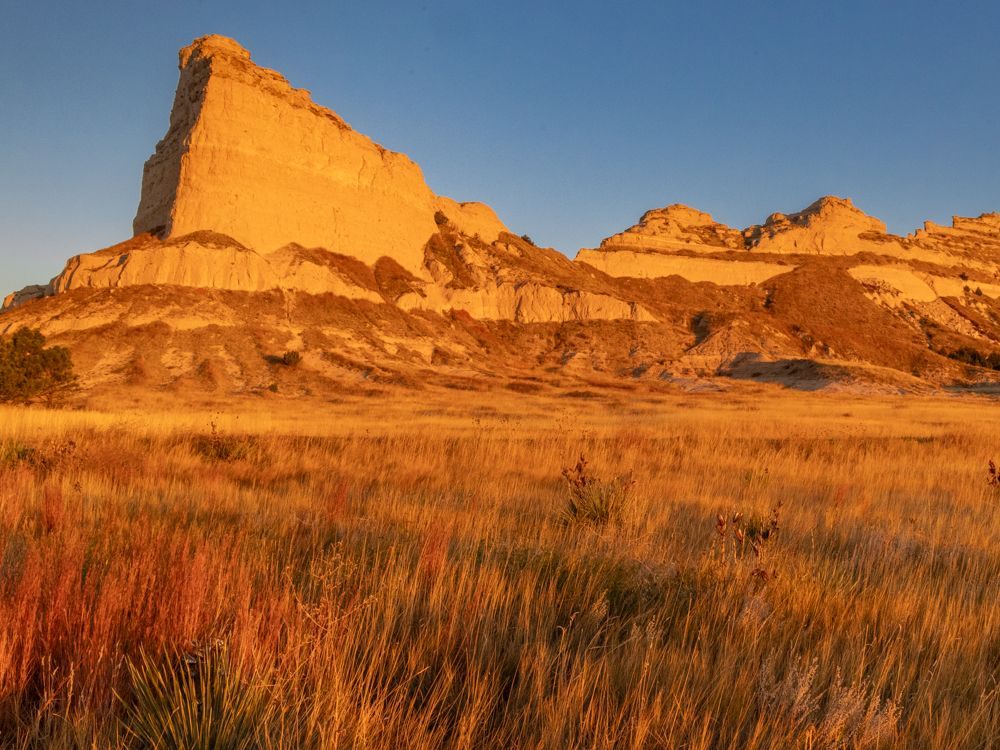
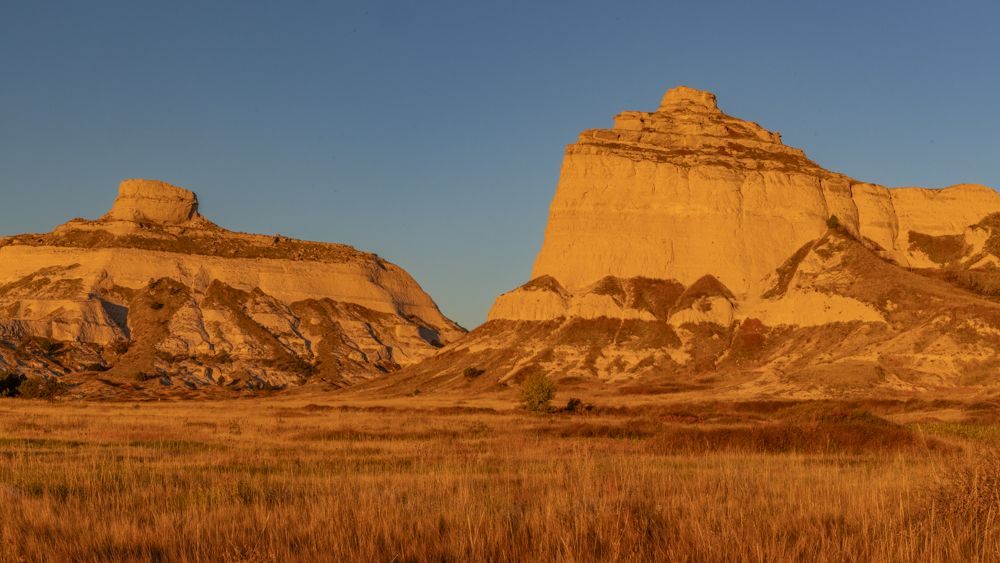
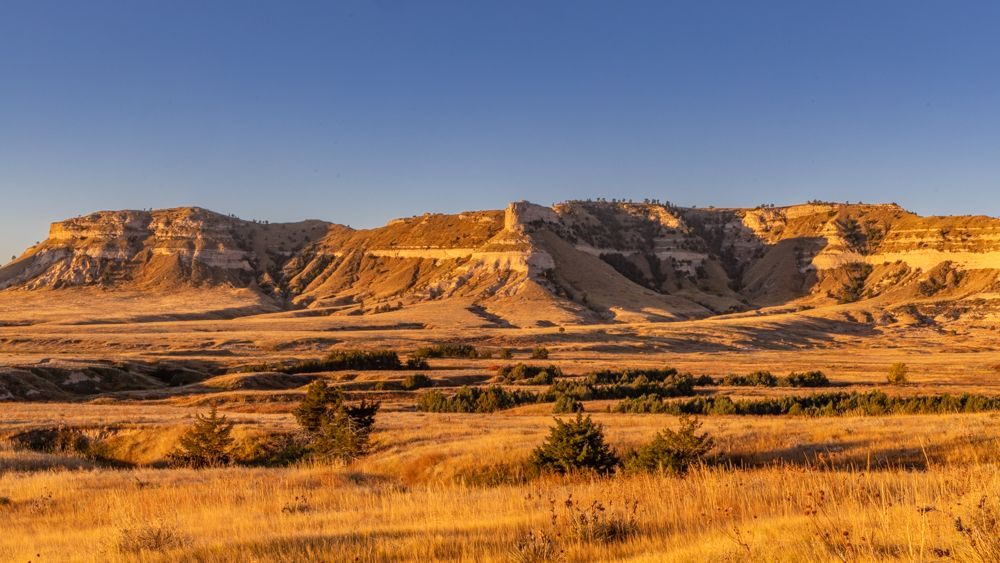
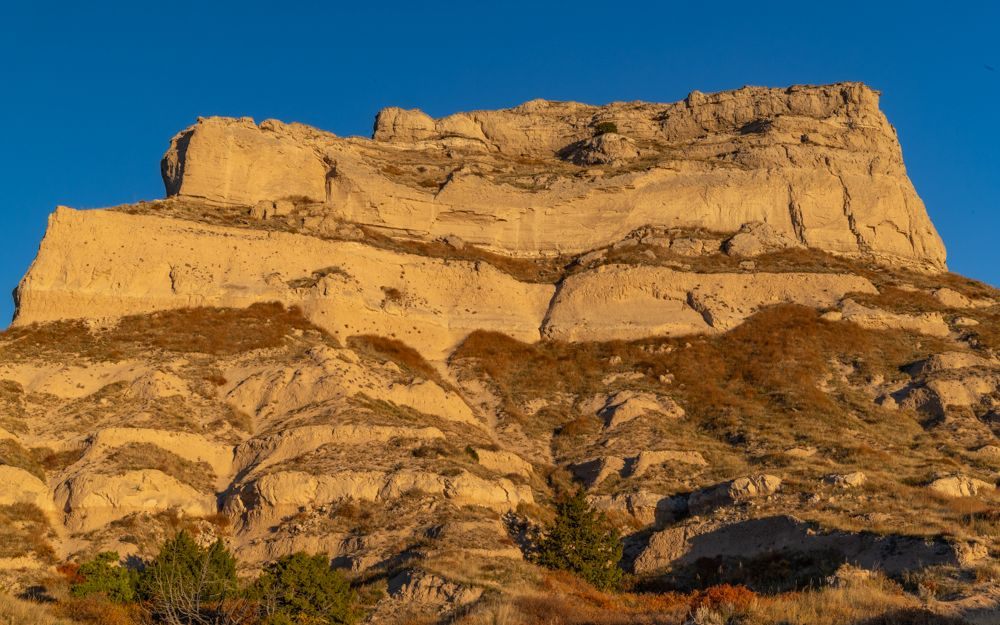
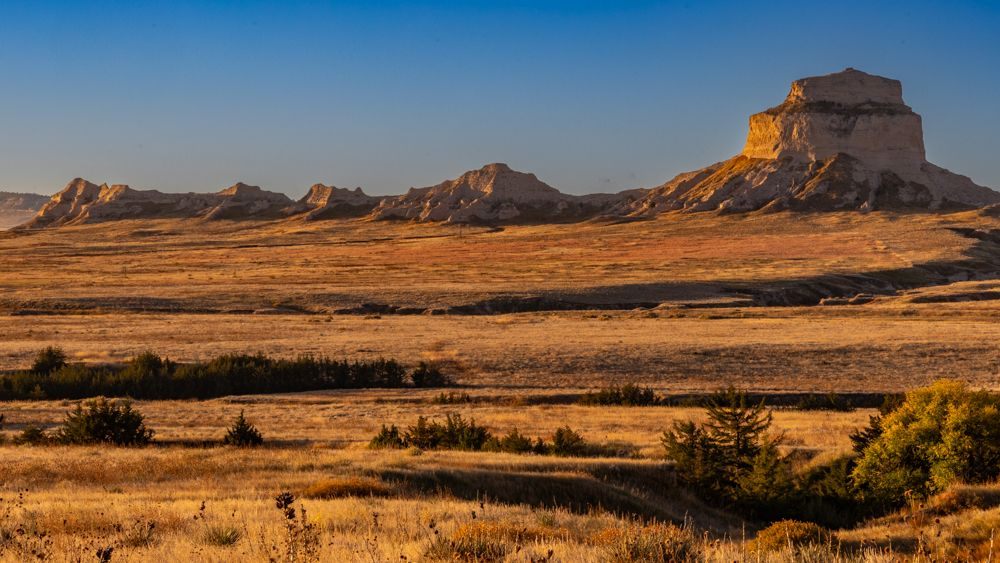
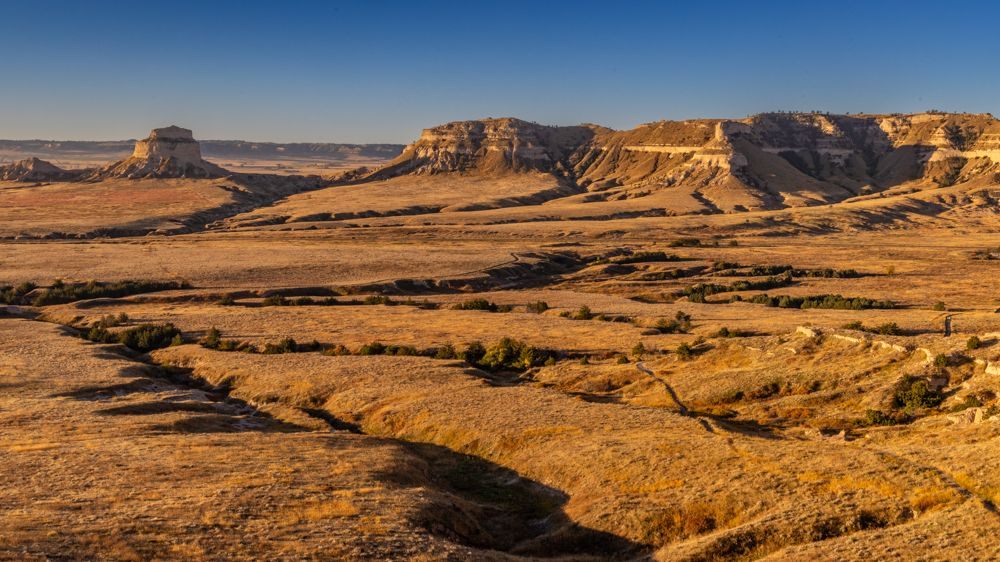
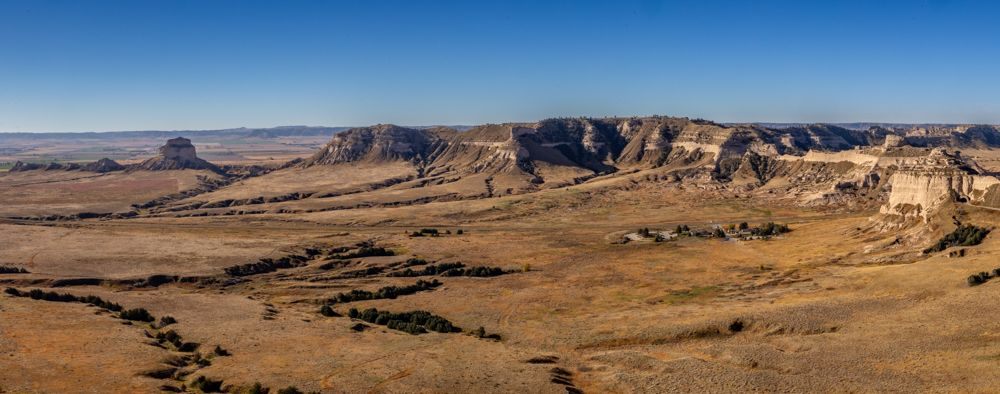
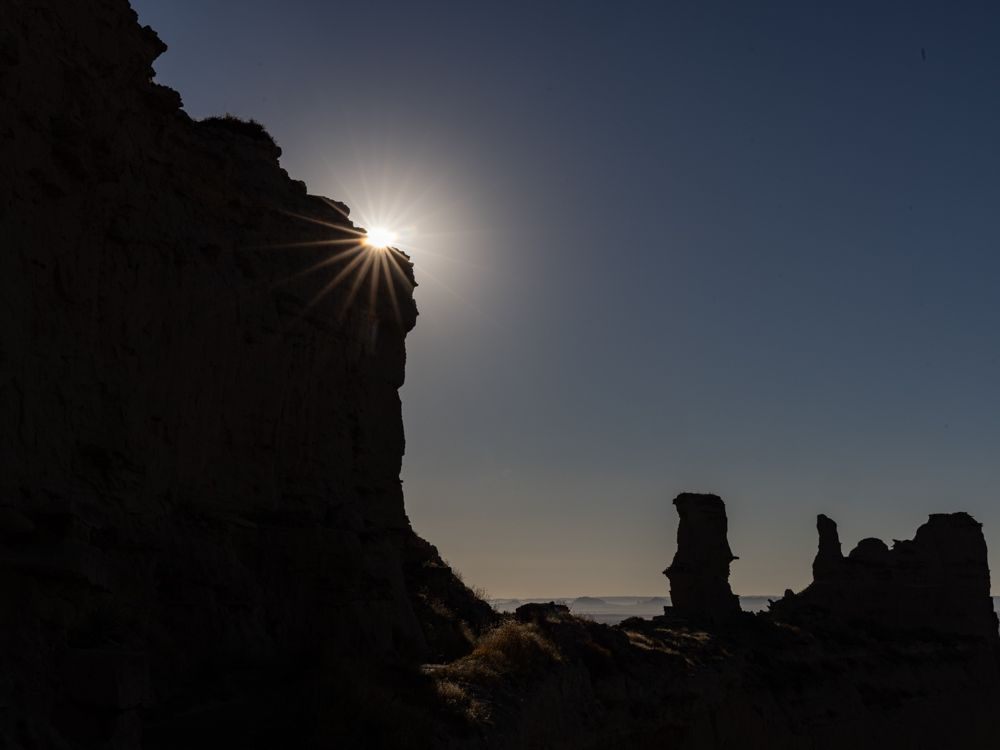
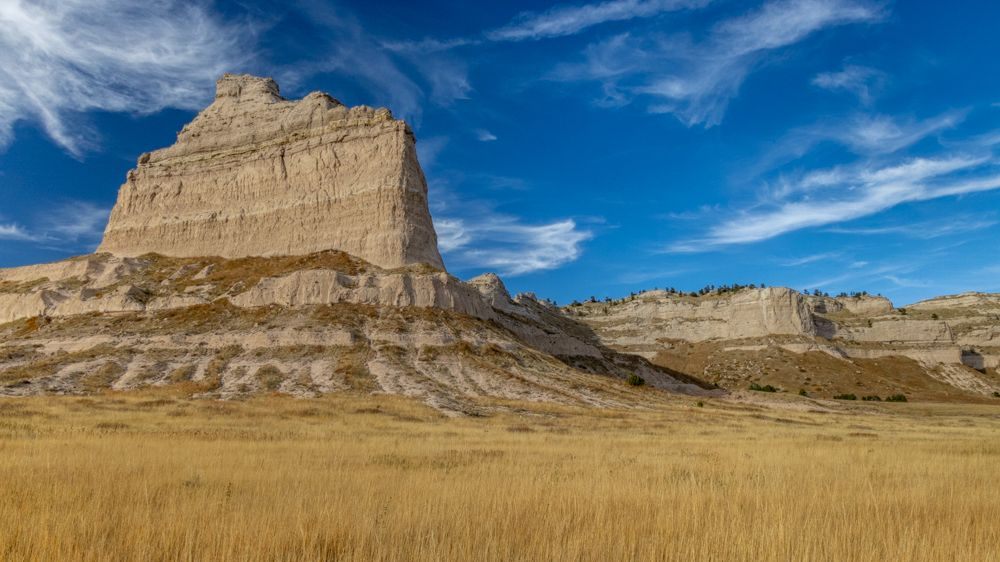
This morning I headed out to Scott’s Bluff National Monument at first light. Between changing geographical location and changing time zones, I have to look every day when is sunrise and sunset. One of the disadvantages of spending so little time in each place as I have to guess what might be a good location for a morning or evening shot. Ideally I would have an opportunity to scout a location first, but not on this trip. I rolled into the parking lot and just started walking in the direction that gave me the light from the rising sun on the rocks. Before I knew it, I was climbing the Saddle Rock Trail. This 3.2 mile out-and-back trail is paved, but climbs up with steep drop-offs. It was well worth the effort.
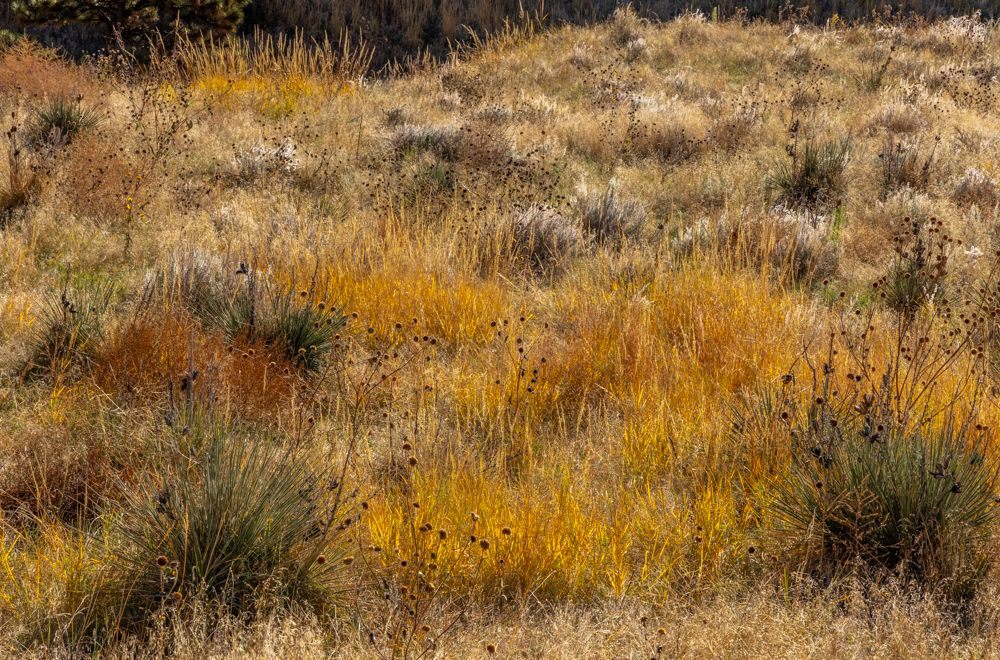
This is the first time I have seen dramatic rock formations since leaving the southwest last February. After the sandy beaches of the Gulf Coast, the seaports of the East Coast, the dramatic cliffs of the Great Lakes and the rolling hills and agricultural flatlands of the Midwest, nothing says heading West more than towering rocks. This is high prairie, a kissing cousin to the high desert that lies just to the west. The feeling is similar - a deceptively stark and barren beauty - hiding a complex ecosystem.
By the time I walked down, it was mid-morning and the light was completely flat and harsh. All of my several layers had come off during the hike and the day was pleasant, if lousy for photography. It was a good time to explore the small museum located at the parking lot. The exhibits tell the story of the westward migration of American settlers. Scott’s Bluff sits right on the old Oregon Trail. Early travelers followed a route through Robidoux Pass, slightly to the south. The trail was less rugged, but further away from the fresh water of the North Platte River. In the early 1850s, a trail was opened through Mitchell Pass - a narrow gap in the bluffs flanked by two large cliffs. It was more difficult terrain, but closer to the river. The area was named for Hiram Scott, an employee of the Rocky Mountain Fur Company. Legend has it that he was deserted by his companions in the area of the bluffs and died in the vicinity.
To the 19th century European-Americans making their westward in search of opportunities and riches, the plains, including the Sandhills were just a barrier between them and their destinations further west. Oregon had the fertile Willamette Valley. California had gold, and Utah was the Promised Land. As thousands of emigrants passed, their animals devoured the grasses, their wagons cut deep paths into the fragile prairie landscape, and the travelers brought diseases to the indigenous peoples who had no resistance. These caravans also disrupted the migration routes of animal herds that the Tribes depended on for all of their subsistence needs. The Prairie wolf and Audubon bighorn sheep are now extinct; bears elk, moose and antelope might wander through occasionally. And the massive herds of Bison that once roamed the plains are now represented by only a few herds confined to ranches and refuges.
Initially, the Native Americans helped the immigrants to navigate foreign territory and relations were cordial. As has become a sad refrain, their efforts were rewarded with lies and theft. The 1851 Treaty of Fort Laramie (AKA Horse Creek Treaty) gave the federal government the right to establish roads, military, and other posts within the tribal territories, and provided safe passage for migrants along the overland trails. In return, the government promised tribes $50,000 in goods each year for ten years. These payments were never delivered.
Military presence was increased to protect the Pony Express route established in 1860 and telegraph lines installed in 1861. The 1862 Homestead act further increased the traffic on overland trails. In 1864 Fort Mitchell, an outpost to Fort Laramie, was established close to Scott’s Bluff. In 1868, a second Treaty of Fort Laramie promised the Lakota ownership of Black hills and further land and hunting rights. With the discovery of gold in the Black Hills, the treaty was disregarded and the Black Hills were overrun with miners, impacting the Lakota claim to the land.
During the Civil War, mounting tensions with Native Tribes discouraged overland travel. The Union Pacific Railroad, which began operations in 1869, provided a faster safer travel alternative and wagon traffic on the trails further declined. Eventually segments of the Oregon, Mormon, and California trails became highways between the new towns that spread west. Today, these are designated National Historic Trails. In the Scott’s Bluff are, modern irrigation allowed homesteaders to turn what many considered The Great American Desert into productive farmland and ranch land. But at what cost.
As a modern reference, I could not help noticing the release of the new movie, Killers of the Flower Moon . This is the story of systematic murders of members of the Osage Nation in Oklahoma to acquire rights to oil located under Tribal lands. The movie is on my list to view after my return.
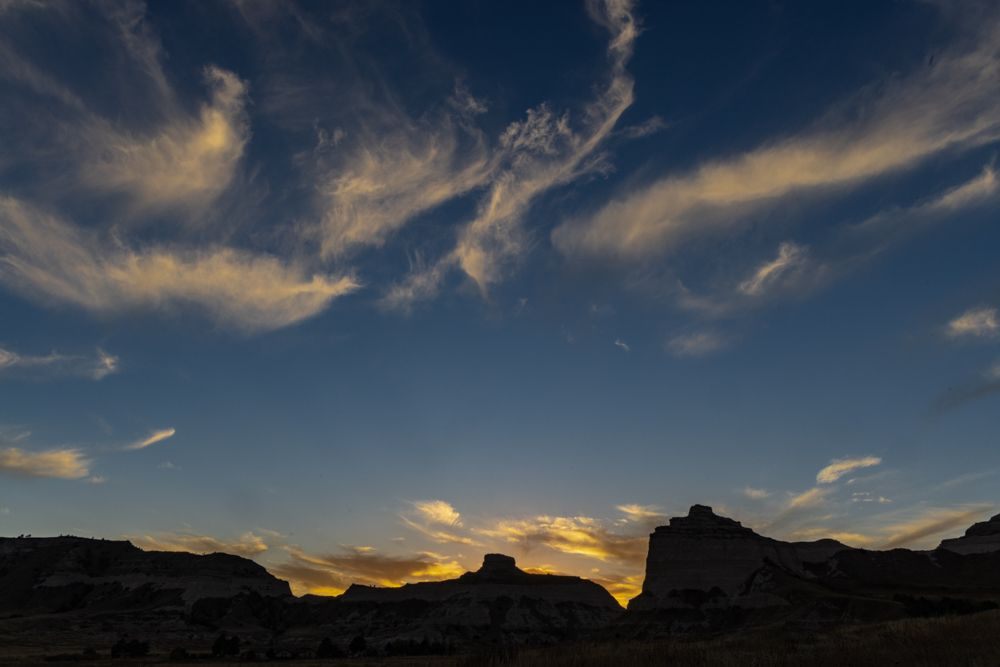
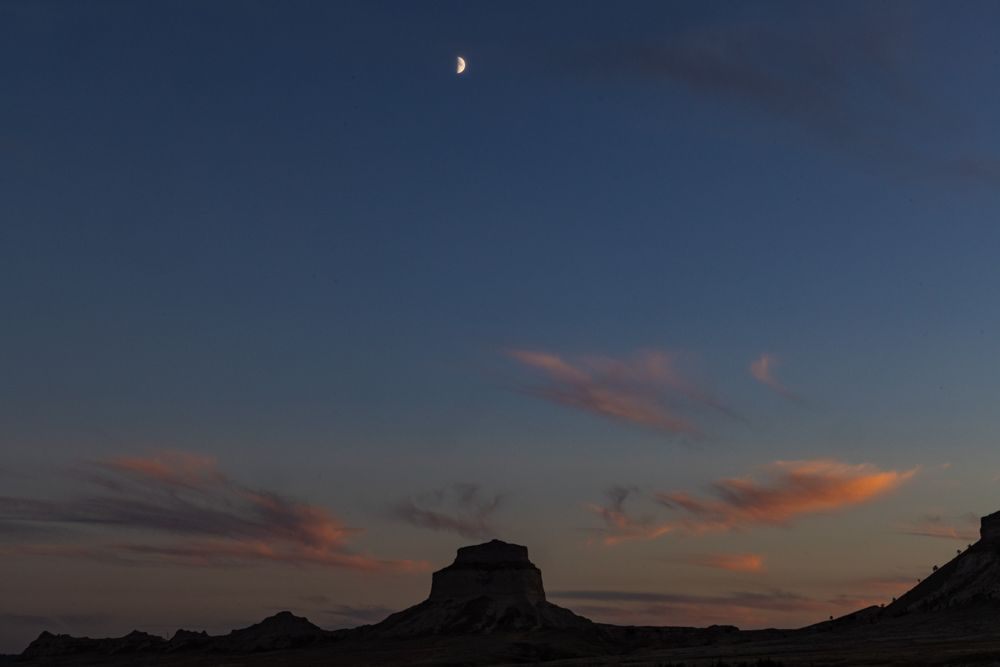
I did some food shopping and gave Lucy II a much needed bath. The bugs and mud were starting to form layers. After taking a break to download, process and begin writing, I headed back to Scott’s Bluff with the hope of photographing sunset. The wispy clouds looked promising, but as the sun descended they mostly dissipated. I have not had good luck with either sunsets or sunrises this trip. Either heavy cloud cover and/or wildfire smoke has blanketed the sky for much of the year.
This is my last day in Nebraska. Tomorrow I drive North to South Dakota.
This is the first time I have seen dramatic rock formations since leaving the southwest last February. After the sandy beaches of the Gulf Coast, the seaports of the East Coast, the dramatic cliffs of the Great Lakes and the rolling hills and agricultural flatlands of the Midwest, nothing says heading West more than towering rocks. This is high prairie, a kissing cousin to the high desert that lies just to the west. The feeling is similar - a deceptively stark and barren beauty - hiding a complex ecosystem.
By the time I walked down, it was mid-morning and the light was completely flat and harsh. All of my several layers had come off during the hike and the day was pleasant, if lousy for photography. It was a good time to explore the small museum located at the parking lot. The exhibits tell the story of the westward migration of American settlers. Scott’s Bluff sits right on the old Oregon Trail. Early travelers followed a route through Robidoux Pass, slightly to the south. The trail was less rugged, but further away from the fresh water of the North Platte River. In the early 1850s, a trail was opened through Mitchell Pass - a narrow gap in the bluffs flanked by two large cliffs. It was more difficult terrain, but closer to the river. The area was named for Hiram Scott, an employee of the Rocky Mountain Fur Company. Legend has it that he was deserted by his companions in the area of the bluffs and died in the vicinity.
To the 19th century European-Americans making their westward in search of opportunities and riches, the plains, including the Sandhills were just a barrier between them and their destinations further west. Oregon had the fertile Willamette Valley. California had gold, and Utah was the Promised Land. As thousands of emigrants passed, their animals devoured the grasses, their wagons cut deep paths into the fragile prairie landscape, and the travelers brought diseases to the indigenous peoples who had no resistance. These caravans also disrupted the migration routes of animal herds that the Tribes depended on for all of their subsistence needs. The Prairie wolf and Audubon bighorn sheep are now extinct; bears elk, moose and antelope might wander through occasionally. And the massive herds of Bison that once roamed the plains are now represented by only a few herds confined to ranches and refuges.
Initially, the Native Americans helped the immigrants to navigate foreign territory and relations were cordial. As has become a sad refrain, their efforts were rewarded with lies and theft. The 1851 Treaty of Fort Laramie (AKA Horse Creek Treaty) gave the federal government the right to establish roads, military, and other posts within the tribal territories, and provided safe passage for migrants along the overland trails. In return, the government promised tribes $50,000 in goods each year for ten years. These payments were never delivered.
Military presence was increased to protect the Pony Express route established in 1860 and telegraph lines installed in 1861. The 1862 Homestead act further increased the traffic on overland trails. In 1864 Fort Mitchell, an outpost to Fort Laramie, was established close to Scott’s Bluff. In 1868, a second Treaty of Fort Laramie promised the Lakota ownership of Black hills and further land and hunting rights. With the discovery of gold in the Black Hills, the treaty was disregarded and the Black Hills were overrun with miners, impacting the Lakota claim to the land.
During the Civil War, mounting tensions with Native Tribes discouraged overland travel. The Union Pacific Railroad, which began operations in 1869, provided a faster safer travel alternative and wagon traffic on the trails further declined. Eventually segments of the Oregon, Mormon, and California trails became highways between the new towns that spread west. Today, these are designated National Historic Trails. In the Scott’s Bluff are, modern irrigation allowed homesteaders to turn what many considered The Great American Desert into productive farmland and ranch land. But at what cost.
As a modern reference, I could not help noticing the release of the new movie, Killers of the Flower Moon . This is the story of systematic murders of members of the Osage Nation in Oklahoma to acquire rights to oil located under Tribal lands. The movie is on my list to view after my return.
I did some food shopping and gave Lucy II a much needed bath. The bugs and mud were starting to form layers. After taking a break to download, process and begin writing, I headed back to Scott’s Bluff with the hope of photographing sunset. The wispy clouds looked promising, but as the sun descended they mostly dissipated. I have not had good luck with either sunsets or sunrises this trip. Either heavy cloud cover and/or wildfire smoke has blanketed the sky for much of the year.
This is my last day in Nebraska. Tomorrow I drive North to South Dakota.
61 photo galleries
50 States
- Big Sur
- Salinas
- Laguna Beach
- San Diego
- California
- Grand Canyon
- Sedona
- Utah
- Syracuse
- Moab
- Denver
- Manitou Springs
- Calhan
- Mesa Verde
- Los Alamos
- Santa Fe
- Carlsbad
- New Mexico
- Eureka Springs
- Little Rock
- Birmingham
- Jackson
- Lottie
- Ten Thousand Islands
- Jerome
- Savannah
- White
- Asheville
- Sandstone Falls
- Baltimore
- Timonium
- Maryland
- Berlin
- Milton
- Smyrna
- Ocean City
- Detroit
- Upper Peninsula of Michigan
- Michigan
- Herod
- Ozark
- Two Harbors
- Carlton
- Madison County
- Oakley
- Valentine
- South Dakota
- United States
- Yellowstone National Park
- Lima
- Idaho
- Port Townsend
- Lincoln City
- Newport
- San Francisco