Richmond
I started my morning with a visit to the Virginia Museum of History and Culture. I spent most of my time in the main exhibit rooms that trace the history of Virginia from pre-history to the present.
I met my friend B for lunch in Carytown, then visited the American Civil War Museum at the historic Tredegar site, significant because it was the biggest ironworks in the Confederacy during the American Civil War, and a significant factor in the decision to make Richmond its capital.
Many of the themes repeat themselves, especially from Charleston, SC. Charleston, Richmond, Boston and New York were the main port cities on the Eastern Seaboard. As such they were the foci of colonization and, subsequently, the war for independence and then the civil war. The two museums also obviously presented a fair amount of redundant information.
The following are some fun (and not so fun) facts that are specific to Virginia.
The name Virginia was conferred to honor Queen Elizabeth I, the virgin Queen. Jamestown and the James River were named after her successor, King James I.
Jamestown was where the story of John Rolfe and Pocahontas , the daughter of Chief Powhatan, occurred. Initially she was captured by the colonists who attempted to use her as a bargaining chip to return colonial prisoners held by her father. While the prisoners were returned, the colonists remained unsatisfied that a number of tools and weapons were not returned and kept Pocahontas prisoner. During her year-long detainment, during which she was reportedly treated well and courteously, she met John Rolfe, who had lost his wife and child in a ship wreck on what is now known as Bermuda. Their union did foster peace between the Jamestown colonists and Powhatan's tribes, which lasted for eight years. It was known as the "Peace of Pocahontas". In 1616, Rolfe, Pocahontas and their son journeyed to England, where they lived for a year. During that time Pocahontas was reportedly treated like royalty. In 1617 they boarded a ship to return to Virginia, but did not make it out of the Thames river before she became ill of an undiagnosed disease and perished at the age of 21.
The city of Richmond had one of the most active slave markets and sold many enslaved persons to buyers in the Deep South. I did not have a chance to walk the slave trail. A note for next time I visit.
Tobacco was colonial Virginia‘s most lucrative and successful cash crop. In fact it was John Rolfe who introduced a strain of Spanish tobacco that was milder than the native variety cultivated by the indigenous tribes. It was grown on plantations at the hands of enslaved persons and soon became the standard in Europe. The growing and processing of tobacco remains an important industry in Virginia. Although its production has declined since the 1970s, Virginia farmers continue to be major producers. It is no surprise that Phillip Morris , which produces almost half of all the cigarettes sold in the U.S., claims the Richmond plant is one of the largest in the world.
In 1861, West Virginia would secede from the Confederate state of Virginia. Differences between the Eastern and Western inhabitants derived not only from conflicting views on abolition, but basic commerce and governance. The Western portion of the state felt that the government, dominated by the more populated Eastern towns, did not sufficiently support infrastructure in the West, which had very different needs. Among other things, they were far less dependent on the institution of slavery, as the mountainous terrain in the East was inhospitable to plantations. It was the only state to form by secession and became a key American Civil War "border state."
Some of the most significant events at the end of the civil war occurred in Richmond. On the morning of Sunday April 2, 1865 Confederate lines near Petersburg broke after a nine month siege. The retreat of the army left the Confederate capital of Richmond, 25 miles to the north, defenseless. Over the next three days, the Confederate government evacuated, and thousands were emancipated from bondage. However before Confederates left, they set fire to the city , which burned practically to the ground. The Union troops, which included many Black freemen, were left to clean up the mess. President Abraham Lincoln famously toured the former Confederate Capital before returning North only to be assassinated on April 14, 1865.
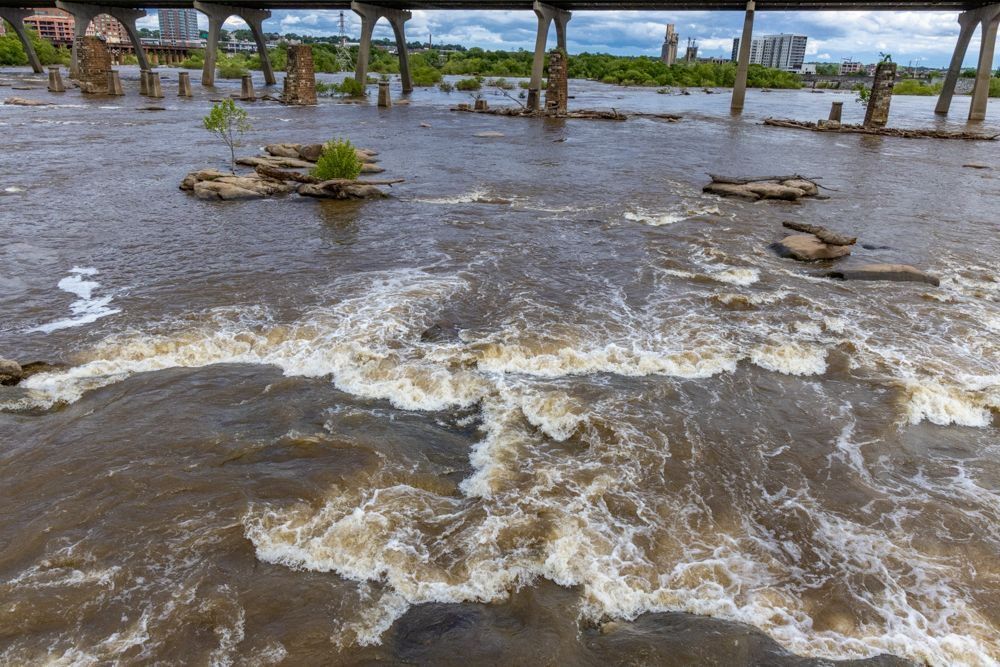
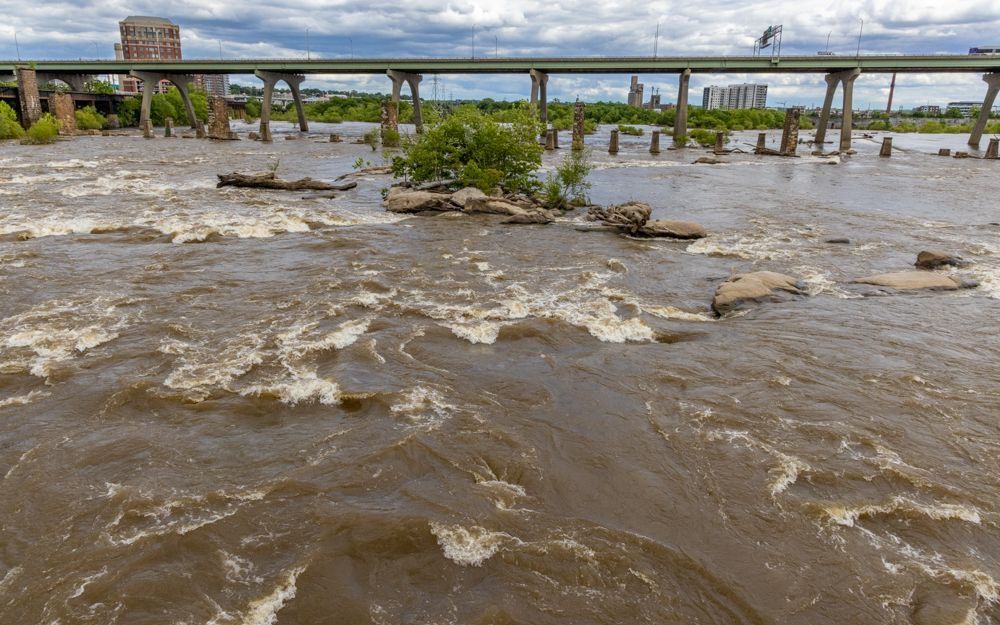
In an update to yesterday's story about the rafters rescued from the river, apparently one of them tragically was pronounced dead upon arrival at the hospital.
I met my friend B for lunch in Carytown, then visited the American Civil War Museum at the historic Tredegar site, significant because it was the biggest ironworks in the Confederacy during the American Civil War, and a significant factor in the decision to make Richmond its capital.
Many of the themes repeat themselves, especially from Charleston, SC. Charleston, Richmond, Boston and New York were the main port cities on the Eastern Seaboard. As such they were the foci of colonization and, subsequently, the war for independence and then the civil war. The two museums also obviously presented a fair amount of redundant information.
The following are some fun (and not so fun) facts that are specific to Virginia.
The name Virginia was conferred to honor Queen Elizabeth I, the virgin Queen. Jamestown and the James River were named after her successor, King James I.
Jamestown was where the story of John Rolfe and Pocahontas , the daughter of Chief Powhatan, occurred. Initially she was captured by the colonists who attempted to use her as a bargaining chip to return colonial prisoners held by her father. While the prisoners were returned, the colonists remained unsatisfied that a number of tools and weapons were not returned and kept Pocahontas prisoner. During her year-long detainment, during which she was reportedly treated well and courteously, she met John Rolfe, who had lost his wife and child in a ship wreck on what is now known as Bermuda. Their union did foster peace between the Jamestown colonists and Powhatan's tribes, which lasted for eight years. It was known as the "Peace of Pocahontas". In 1616, Rolfe, Pocahontas and their son journeyed to England, where they lived for a year. During that time Pocahontas was reportedly treated like royalty. In 1617 they boarded a ship to return to Virginia, but did not make it out of the Thames river before she became ill of an undiagnosed disease and perished at the age of 21.
The city of Richmond had one of the most active slave markets and sold many enslaved persons to buyers in the Deep South. I did not have a chance to walk the slave trail. A note for next time I visit.
Tobacco was colonial Virginia‘s most lucrative and successful cash crop. In fact it was John Rolfe who introduced a strain of Spanish tobacco that was milder than the native variety cultivated by the indigenous tribes. It was grown on plantations at the hands of enslaved persons and soon became the standard in Europe. The growing and processing of tobacco remains an important industry in Virginia. Although its production has declined since the 1970s, Virginia farmers continue to be major producers. It is no surprise that Phillip Morris , which produces almost half of all the cigarettes sold in the U.S., claims the Richmond plant is one of the largest in the world.
In 1861, West Virginia would secede from the Confederate state of Virginia. Differences between the Eastern and Western inhabitants derived not only from conflicting views on abolition, but basic commerce and governance. The Western portion of the state felt that the government, dominated by the more populated Eastern towns, did not sufficiently support infrastructure in the West, which had very different needs. Among other things, they were far less dependent on the institution of slavery, as the mountainous terrain in the East was inhospitable to plantations. It was the only state to form by secession and became a key American Civil War "border state."
Some of the most significant events at the end of the civil war occurred in Richmond. On the morning of Sunday April 2, 1865 Confederate lines near Petersburg broke after a nine month siege. The retreat of the army left the Confederate capital of Richmond, 25 miles to the north, defenseless. Over the next three days, the Confederate government evacuated, and thousands were emancipated from bondage. However before Confederates left, they set fire to the city , which burned practically to the ground. The Union troops, which included many Black freemen, were left to clean up the mess. President Abraham Lincoln famously toured the former Confederate Capital before returning North only to be assassinated on April 14, 1865.
In an update to yesterday's story about the rafters rescued from the river, apparently one of them tragically was pronounced dead upon arrival at the hospital.
61 photo galleries
50 States
- Big Sur
- Salinas
- Laguna Beach
- San Diego
- California
- Grand Canyon
- Sedona
- Utah
- Syracuse
- Moab
- Denver
- Manitou Springs
- Calhan
- Mesa Verde
- Los Alamos
- Santa Fe
- Carlsbad
- New Mexico
- Eureka Springs
- Little Rock
- Birmingham
- Jackson
- Lottie
- Ten Thousand Islands
- Jerome
- Savannah
- White
- Asheville
- Sandstone Falls
- Baltimore
- Timonium
- Maryland
- Berlin
- Milton
- Smyrna
- Ocean City
- Detroit
- Upper Peninsula of Michigan
- Michigan
- Herod
- Ozark
- Two Harbors
- Carlton
- Madison County
- Oakley
- Valentine
- South Dakota
- United States
- Yellowstone National Park
- Lima
- Idaho
- Port Townsend
- Lincoln City
- Newport
- San Francisco