Portsmouth
This morning began with a visit to Davies Tire and Auto service for my third 5K oil change. For those who are keeping track, that means I have put 15K miles on my car since setting out on January 1. Bob took care of me, including suggesting the use of synthetic oil appropriate for high mileage vehicles and high mileage driving. When I went to pick up my care, he also let me know that I needed a non-urgent repair. He told me that the inner tire rod on the front passenger side was loose and needed to be replaced, and also that the steering shaft needed to be “reclocked.” I have to imagine that these repairs could be related to the outer tire rod that I had replaced back in Miami, when I ran into the cement piling in the gas station. He was unable to make the repairs himself, but suggested that I get them done “soon.”
I called the Toyota dealer in Portsmouth, but they did not think they could get the parts in time. Because my vehicle is a 2005, parts are not necessarily in stock. My next stop is Portland Maine, and fortunately the Toyota dealer there is able to get the parts and can fit me in on Monday. Everyone, including my mechanic back home, agreed that I could continue to drive the car for a few days with no real concern. But I did want to get this done before I venture into more remote areas of Maine and Vermont that are not near a Toyota dealer.
Once I had set that up, I had the rest of the afternoon to walk around Portsmouth. Of course, by then, the heat and humidity had set in with a vengeance. Locals I have spoken to say that the weather this year is uncharacteristic. Yes, it is not uncommon to have high humidity and the occasional summer rain shower or thunderstorm. But not with this frequency or intensity. I’m just glad I am not driving around the South this summer as that look truly miserable, with temperatures remaining in the triple digits for weeks on end.
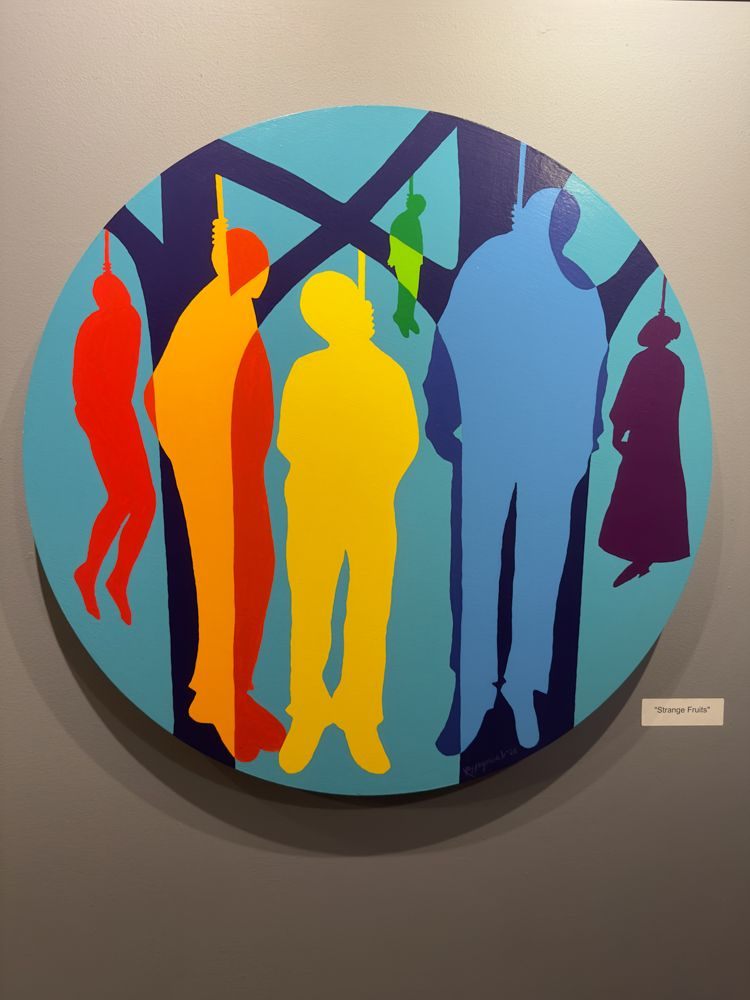
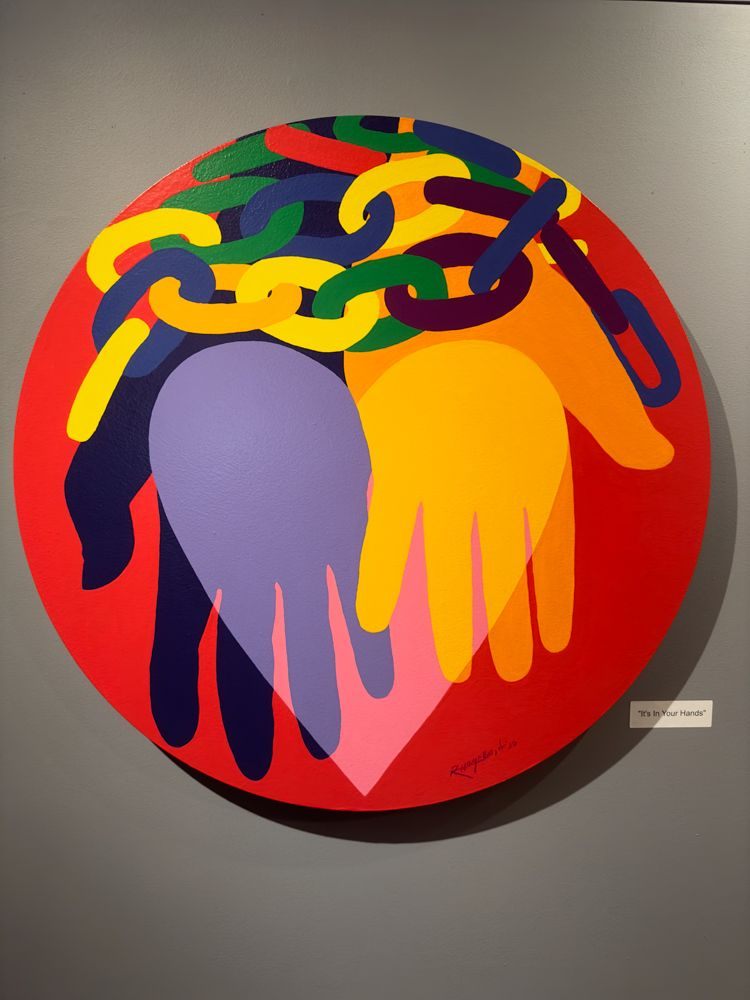
My first stop was the Portsmouth historical society . I was particularly interested in the Seacoast African American cultural center , which is located within the Portsmouth historical society building. The current exhibit is “The Sum of Us” which features the art of Richard Haynes . This is an evocative exhibit that tackles difficult subject matter through art. Although Haynes usually paints in vivid color, a large portion of this exhibition was black and white line drawings that specifically and deliberately excluded color. As I understood it, this was to convey the message in a colorblind fashion. A few of his color works also hung in the gallery, and a couple of them were particularly courageous. I normally don’t take photos of other peoples art, but I will include two of his paintings below (with permission from the person managing the gallery today). As an advisory, they are disturbing and may upset some people.
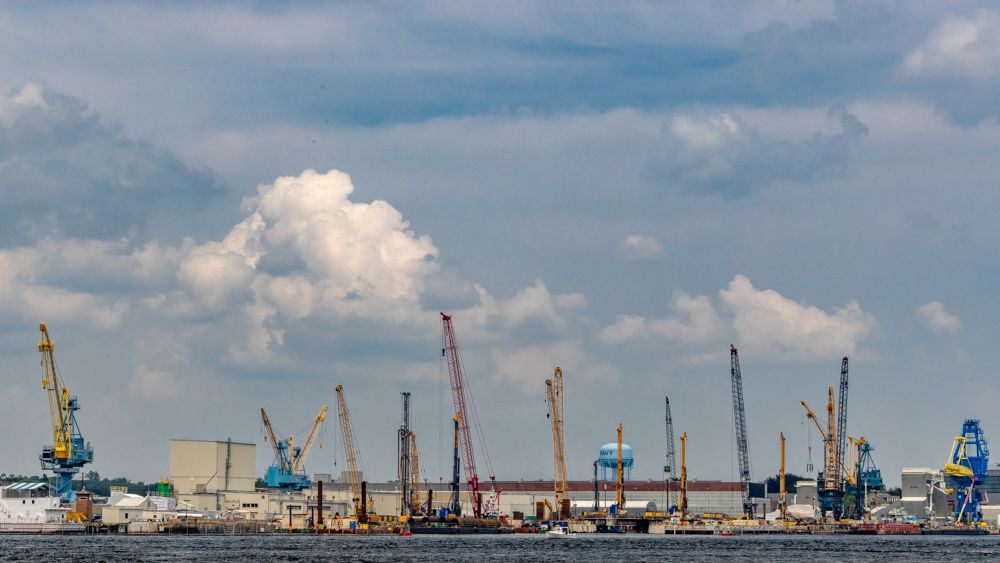
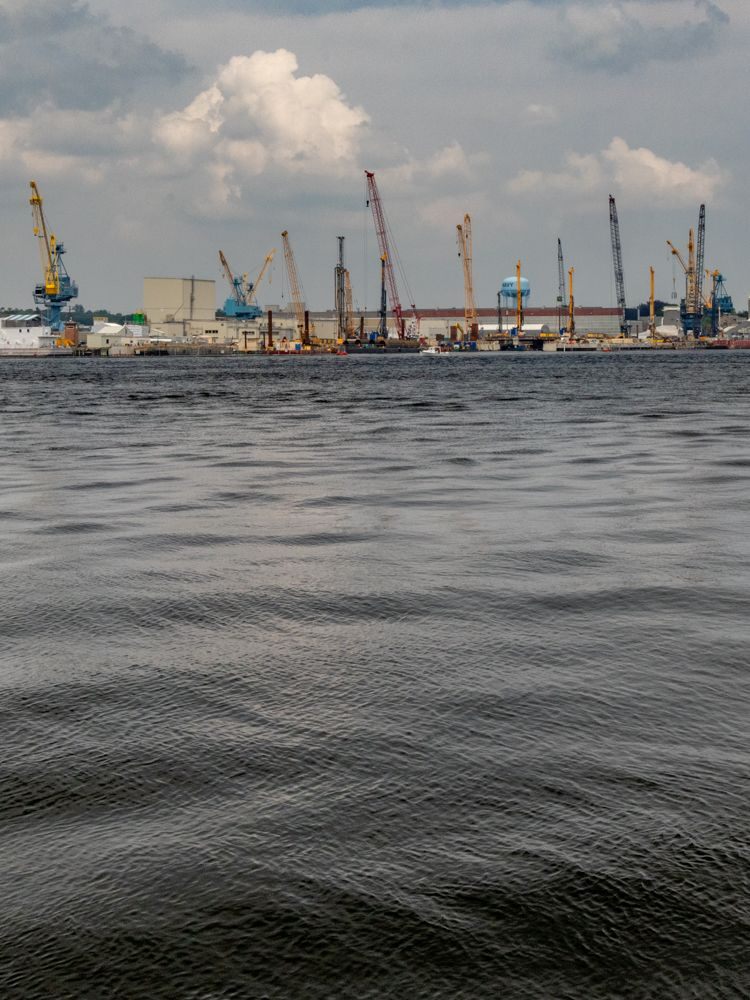
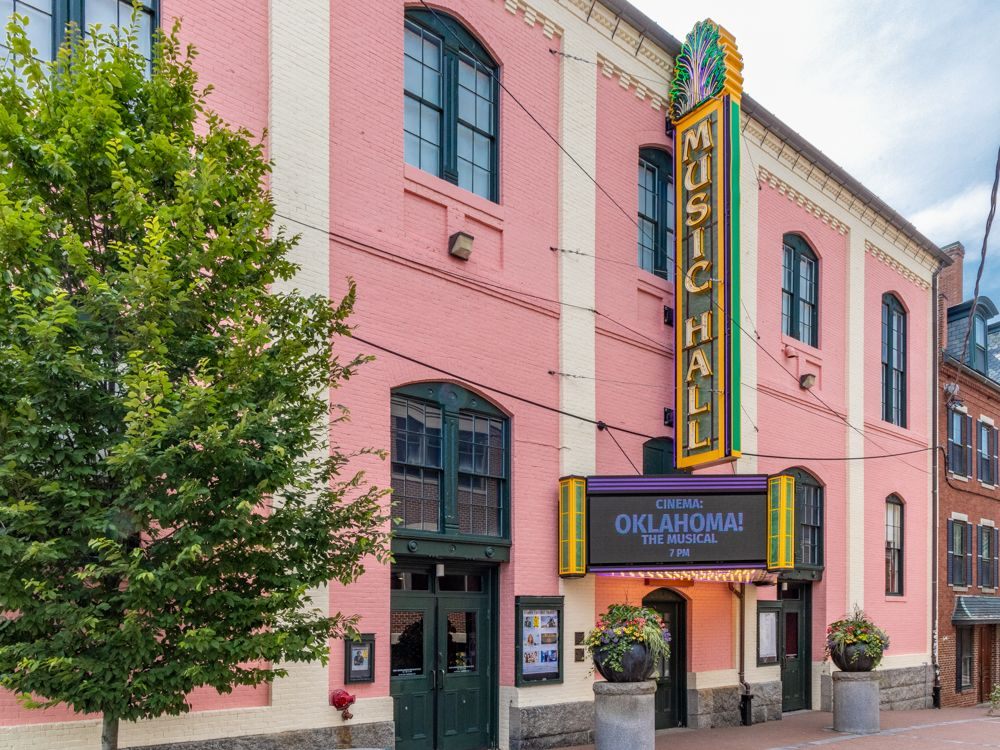
I then headed over to the Portsmouth Black heritage trail . This was on my list anyway, but I thought it was particularly important in light of yesterday’s conversation (see the post). It starts at the office, where I met Dariya and Yulia. I spoke with them for some time, both about yesterday’s experience and more general topics. They provided me with a printed map and I also purchased a booklet with more information. Like most of these historical trails, the actual buildings or sites don’t tell you much without the background information about what happened in that location.
New Hampshire has an African heritage that dates back at least 350 years, almost to the arrival of European settlers. Not surprisingly, the Portsmouth was a major port for the trans-Atlantic sale trade. Against the dismal odds conferred by early enslavement and subsequent marginalization, Africans and their descendants formed families, build communities and made important contributions to the growing city. In addition to those who ended up in the area as enslaved persons, others were part of a little-known free black society. Some came through New Hampshire on their way to the Canadian border and freedom. Although African-Americans make up only about 2-4% of the population of Portsmouth, their historical contributions, both as enslaved persons and free persons was significant.
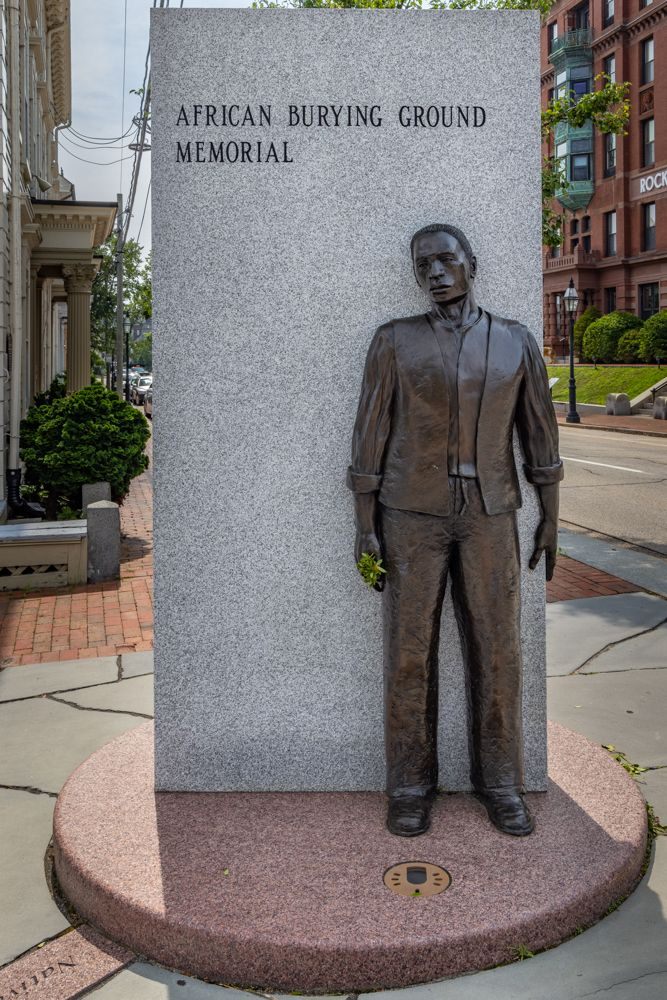
One of the most interesting sites is the African Burying Ground Memorial Park. In 2003 city workers found thirteen coffins under a small area of what would have been the outskirts of the town in the 1700s. In fact, clues that this was a burial site had come to light previously, but had mostly been ignored, with sewer lines being routed directly through some coffins. Historical records indicate that as many as two hundred people may be buried in this area. The African Burying Ground Memorial Park, themed “We stand for those forgotten,” and designed with the help of sculptor Jerome Meadows, features several sculptures and inscriptions. It is now appropriately considered a sacred place.
At that point I did need a break from both the heat and the intensity of the trail. Portsmouth Book and Bar had been recommended by several people, so I stopped in for a much needed drink and bite. This is a comfortable welcoming place, and yes, there are both books and drinks. All of my bartenders - Jaden, Andrea, Frank - were friendly and hospitable. They were interested in my journey and gave me a number of tips, including for Maine, my next destination.
Tomorrow I will continue to explore Portsmouth as there is plenty yet to experience.
I called the Toyota dealer in Portsmouth, but they did not think they could get the parts in time. Because my vehicle is a 2005, parts are not necessarily in stock. My next stop is Portland Maine, and fortunately the Toyota dealer there is able to get the parts and can fit me in on Monday. Everyone, including my mechanic back home, agreed that I could continue to drive the car for a few days with no real concern. But I did want to get this done before I venture into more remote areas of Maine and Vermont that are not near a Toyota dealer.
Once I had set that up, I had the rest of the afternoon to walk around Portsmouth. Of course, by then, the heat and humidity had set in with a vengeance. Locals I have spoken to say that the weather this year is uncharacteristic. Yes, it is not uncommon to have high humidity and the occasional summer rain shower or thunderstorm. But not with this frequency or intensity. I’m just glad I am not driving around the South this summer as that look truly miserable, with temperatures remaining in the triple digits for weeks on end.
My first stop was the Portsmouth historical society . I was particularly interested in the Seacoast African American cultural center , which is located within the Portsmouth historical society building. The current exhibit is “The Sum of Us” which features the art of Richard Haynes . This is an evocative exhibit that tackles difficult subject matter through art. Although Haynes usually paints in vivid color, a large portion of this exhibition was black and white line drawings that specifically and deliberately excluded color. As I understood it, this was to convey the message in a colorblind fashion. A few of his color works also hung in the gallery, and a couple of them were particularly courageous. I normally don’t take photos of other peoples art, but I will include two of his paintings below (with permission from the person managing the gallery today). As an advisory, they are disturbing and may upset some people.
I then headed over to the Portsmouth Black heritage trail . This was on my list anyway, but I thought it was particularly important in light of yesterday’s conversation (see the post). It starts at the office, where I met Dariya and Yulia. I spoke with them for some time, both about yesterday’s experience and more general topics. They provided me with a printed map and I also purchased a booklet with more information. Like most of these historical trails, the actual buildings or sites don’t tell you much without the background information about what happened in that location.
New Hampshire has an African heritage that dates back at least 350 years, almost to the arrival of European settlers. Not surprisingly, the Portsmouth was a major port for the trans-Atlantic sale trade. Against the dismal odds conferred by early enslavement and subsequent marginalization, Africans and their descendants formed families, build communities and made important contributions to the growing city. In addition to those who ended up in the area as enslaved persons, others were part of a little-known free black society. Some came through New Hampshire on their way to the Canadian border and freedom. Although African-Americans make up only about 2-4% of the population of Portsmouth, their historical contributions, both as enslaved persons and free persons was significant.
One of the most interesting sites is the African Burying Ground Memorial Park. In 2003 city workers found thirteen coffins under a small area of what would have been the outskirts of the town in the 1700s. In fact, clues that this was a burial site had come to light previously, but had mostly been ignored, with sewer lines being routed directly through some coffins. Historical records indicate that as many as two hundred people may be buried in this area. The African Burying Ground Memorial Park, themed “We stand for those forgotten,” and designed with the help of sculptor Jerome Meadows, features several sculptures and inscriptions. It is now appropriately considered a sacred place.
At that point I did need a break from both the heat and the intensity of the trail. Portsmouth Book and Bar had been recommended by several people, so I stopped in for a much needed drink and bite. This is a comfortable welcoming place, and yes, there are both books and drinks. All of my bartenders - Jaden, Andrea, Frank - were friendly and hospitable. They were interested in my journey and gave me a number of tips, including for Maine, my next destination.
Tomorrow I will continue to explore Portsmouth as there is plenty yet to experience.
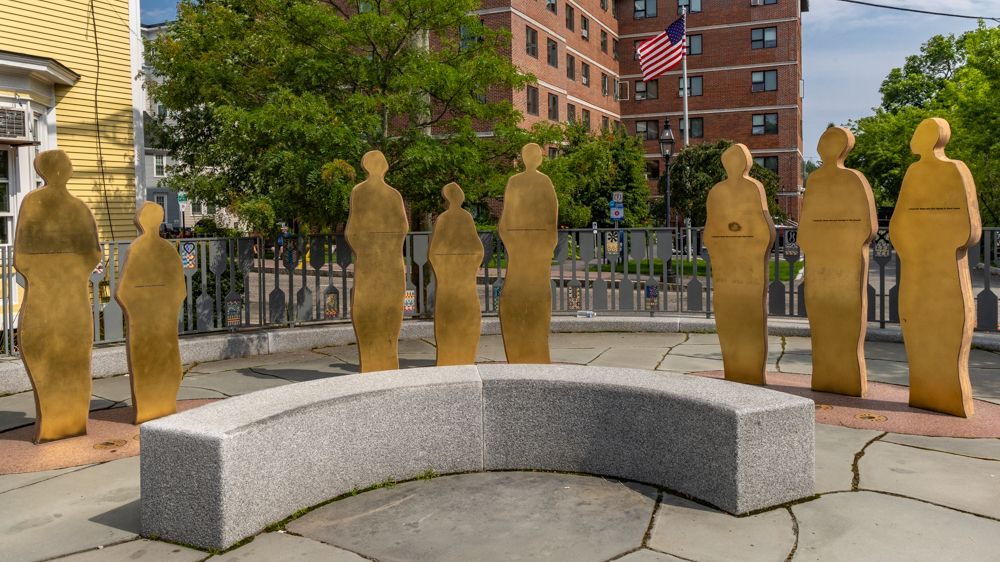
I stand for the Ancestors Here and Beyond
I stand for those who feel anger
I stand for those who were treated unjustly
I stand for those who were taken from their loved ones
I stand for those who suffered the middle passage
I stand for those who survived upon these shores
I stand for those who pay homage to this ground
I stand for those who find dignity in these bones
61 photo galleries
50 States
- Big Sur
- Salinas
- Laguna Beach
- San Diego
- California
- Grand Canyon
- Sedona
- Utah
- Syracuse
- Moab
- Denver
- Manitou Springs
- Calhan
- Mesa Verde
- Los Alamos
- Santa Fe
- Carlsbad
- New Mexico
- Eureka Springs
- Little Rock
- Birmingham
- Jackson
- Lottie
- Ten Thousand Islands
- Jerome
- Savannah
- White
- Asheville
- Sandstone Falls
- Baltimore
- Timonium
- Maryland
- Berlin
- Milton
- Smyrna
- Ocean City
- Detroit
- Upper Peninsula of Michigan
- Michigan
- Herod
- Ozark
- Two Harbors
- Carlton
- Madison County
- Oakley
- Valentine
- South Dakota
- United States
- Yellowstone National Park
- Lima
- Idaho
- Port Townsend
- Lincoln City
- Newport
- San Francisco