Philadelphia
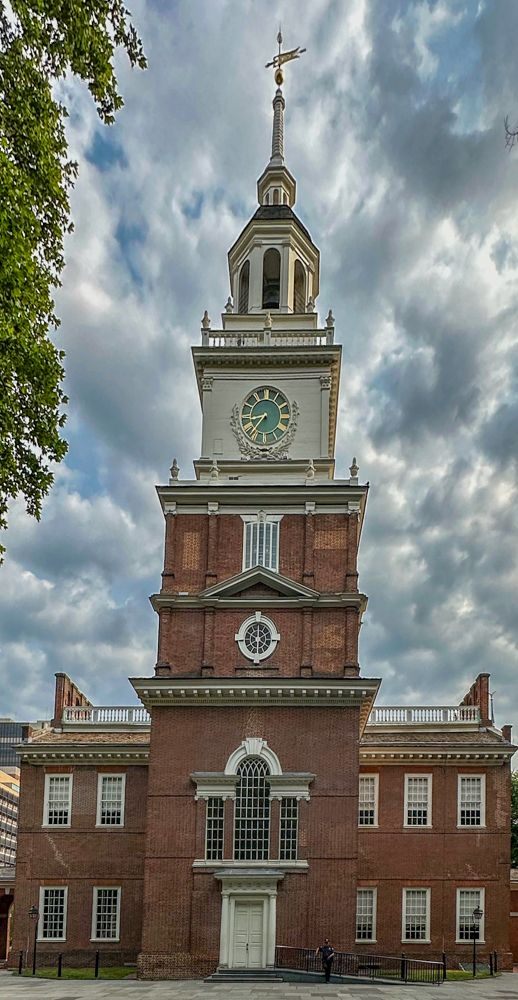
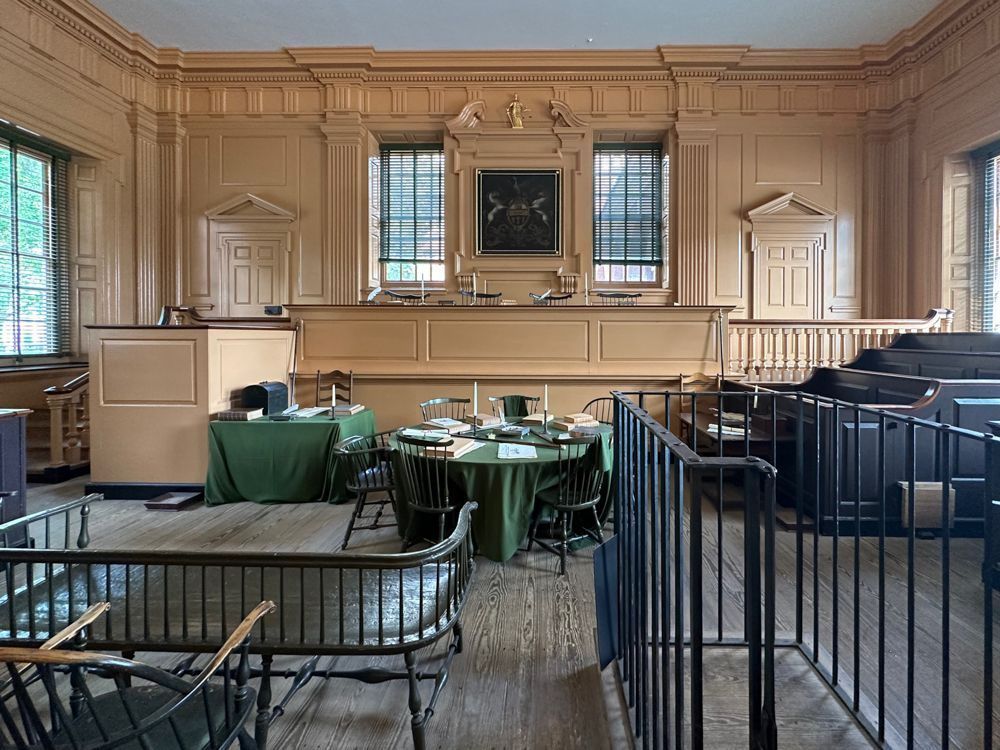
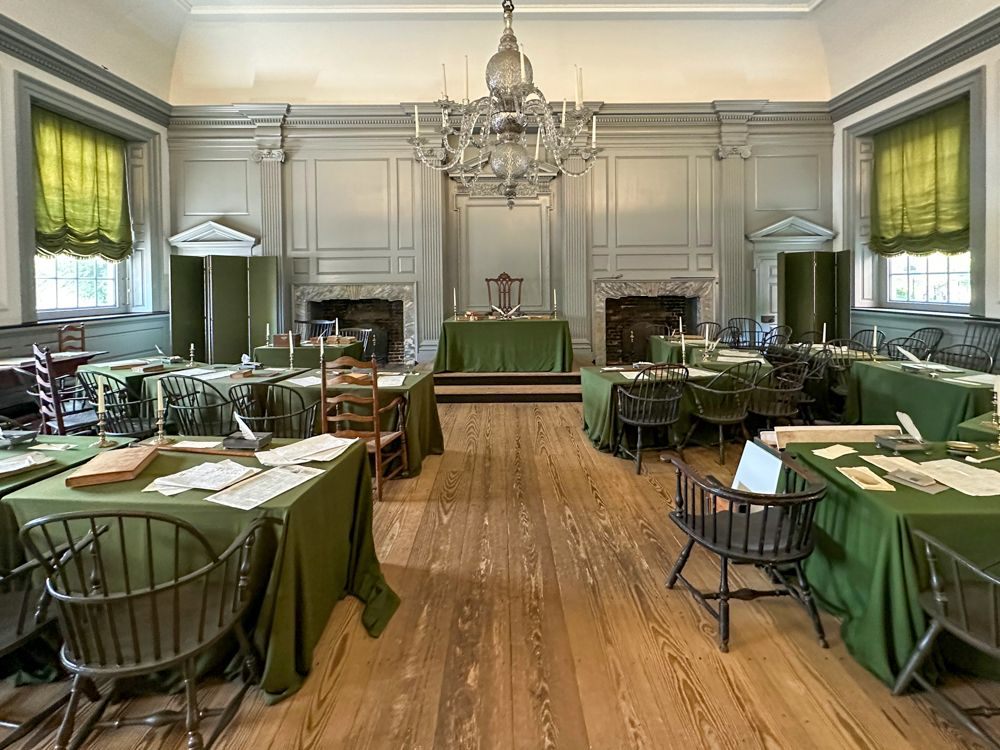
This morning I immersed myself in quintessential Philadelphia history. I started with a visit to Independence Hall , the birthplace of America. In 1776, the Second Continental Congress debated and signed the Declaration of Independence here. Eleven years later, in the same room, delegates to the Constitutional Convention created and signed the United States Constitution. The building was initially and subsequently Pennsylvania’s State House, but it was commandeered both for meetings of the first and second Continental Congress, and later as the temporary seat of the U.S. government while the complex in Washington D.C. was constructed. Across the hall from Assembly Hall was the Pennsylvania Supreme Court , where criminal cases were heard. There was a barred box where the accused “stood” trial - literally. Independence hall was also the original location of the Liberty Bell.
Pat was our tour guide and she took it to the next level. In addition to leading tours for the NPS, she works as a regular tour guide and, most importantly, actually teaches history. Her stories and insights into the personalities and events made the experience more than just a recitation of dry facts. For example, did you know that the Declaration of Independence was actually signed on July 2, 1776, but was not publicized until July 4, 1776? Did you know that the delegation from New York originally abstained because they had not yet received instructions from Albany to vote for independence. They did sign on July 15, allowing the “The Declaration ...” To be changed to “The Unanimous Declaration ...”
While the first draft of the Articles of Confederation prepared 1776, they were not ratified until 1871. Although, formally, all 13 state were required to ratify the document, Rhode Island decided not to participate. The Articles were ratified anyway - though not before a lot of sweat and tears went into difficult compromises.
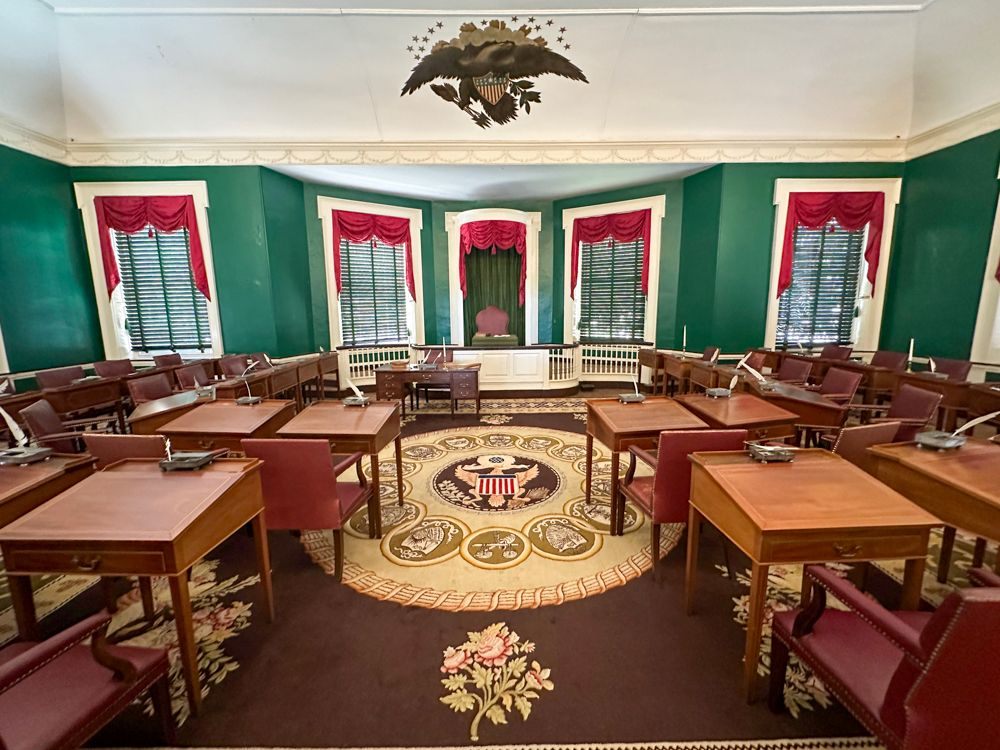
Congress Hall was originally built as the Philadelphia County Courthouse. Again, this building served as the temporary home for the U.S. Congress from 1790-1800, while buildings in Washington D.C. were being constructed. The original Library of Congress was housed in a rather small room on the second floor. Members of the House of Representatives met on the first floor, in very modest surroundings, while the Senators met upstairs, in a much more lavishly furnished room. Originally senators were elected by State legislatures , rather than by the people. This led to them envisioning themselves as ambassadors, deserving of only the very finest. The seventeenth amendment corrected this and replaced the phrase “chosen by the Legislature thereof” with “elected by the people thereof.”
Located in the West Wing of Independence Hall, the Great Essentials Exhibit displays surviving copies of the Declaration of Independence, the Articles of Confederation, and the Constitution of the United States. The docent present clarified that the physical documents housed in this room were “final drafts.” They were printed using a printing press rather than hand-written, but they are not the final signed copies. Those are housed in the National Archives in Washington D.C..
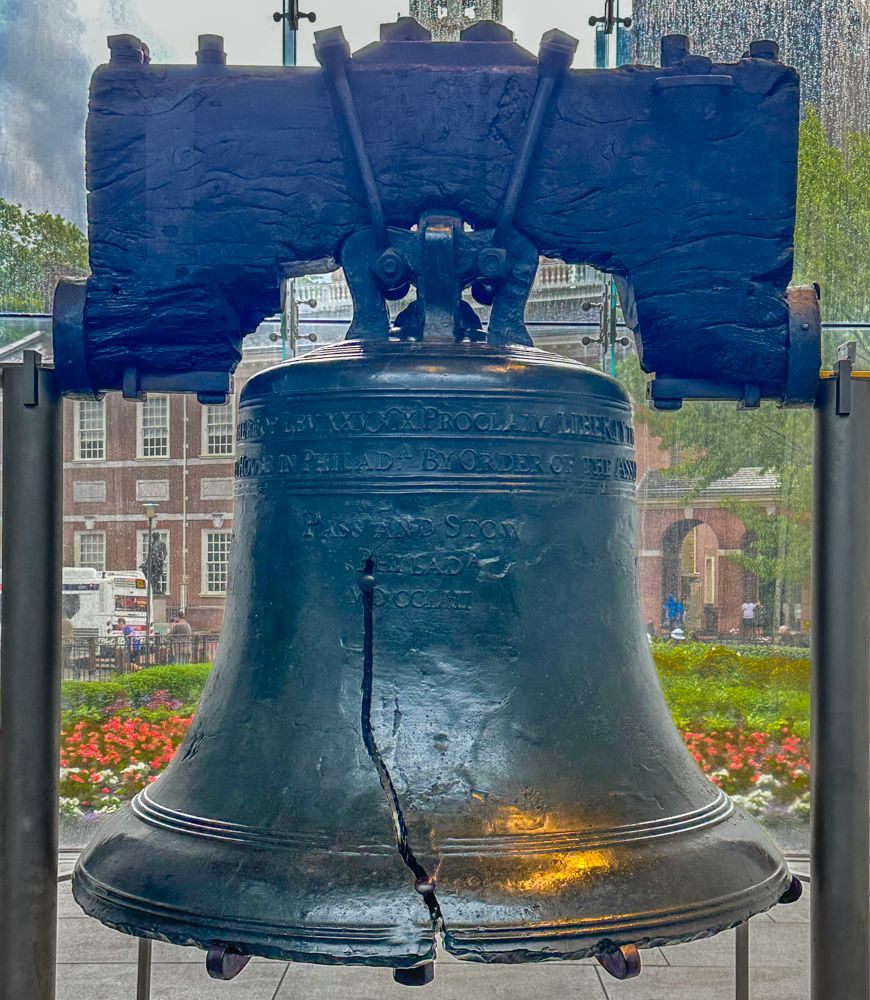
I then went across the street to wait in a rather long line to view the Liberty Bell . The raindrops had started falling, so I took my time in this building to miss the worst of the downpour. This turned out to be fortuitous as Pat, our tour guide from Independence hall was taking a break there before her next assignment. I was able to spend a very pleasant and informative few minutes chatting with her. Like all of these encounters, she was much more forthcoming than during the public presentation.
My next stop was the Museum of the American Revolution . I intended to spend some time in this museum anyway, which was, again, a good plan, as the rain had started up again. The story of the American Revolution starts in earnest at the conclusion of the 7 years war (also known as the French-Indian war). This became a global war, involving many countries, but ultimately resulted in a victory for the British. In exchange for their assistance, the British had promised the Native Americans that they would be able to retain at least some of their Native lands. Of course, this was only a temporary expediency, and promptly reneged upon.
Because the British had left troops in North America, they decided to tax the colonies to pay those troops. But of course, the colonies had no direct representation in British Parliament. Hence the complaint of “taxation without representation,” which prompted the call for independence. George Washington became the commander of the continental army and, through both luck and skill managed, eventually, to prevail against the British. What I had not realized was that Benjamin Franklin had been sent to Europe to negotiate for allies. France, in particular, had sent troops to join the continental army. This is probably not a big surprise given their defeat to the British in the 7 years war, but still a new fact for me.
The deciding battle took place at Yorktown , where the continental Army was able to surround the British army on land, and the French fleet blocked them from receiving aid by sea. Following the surrender of British forces at Yorktown, the British Parliament, in March 1782, passed a resolution calling for the nation to end the war. On September 3, 1783, the Revolutionary War came to an official end with the signing of the Treaty of Paris.
The MAR now owns the tent used by George Washington during the Revolutionary was. We were shown a glimpse of it, through glass, after viewing a short film. A random fact that I learned during this film is that the great-great-grandaugher, of George and Martha Washington, Mary Custis Lee , married General Robert E. Lee. Among other things, she was the last private owner of the tent.
I then walked around the corner to view the The Dream Garden . This work was commissioned by publisher Cyrus Curtis, designed by Maxfield Parrish, and fabricated by glass master Louis Comfort Tiffany . The mural, composed of hundreds of thousands of glass tesserae in more than 260 color tones, and weighing in excess of four tons, was installed in the lobby of the Curtis Publishing Company, facing Independence square.
I walked around for a while longer, searching for a gift store that would have a Pennsylvania State shot glass. No luck, only Philadelphia or revolutionary was shot glasses were available. This is the downside of missing the airport, where such things are usually sold. This will be the second state for which I will have to cheat a bit and order a glass from Amazon.
Tomorrow I leave Pennsylvania and head North to upstate New York.
Pat was our tour guide and she took it to the next level. In addition to leading tours for the NPS, she works as a regular tour guide and, most importantly, actually teaches history. Her stories and insights into the personalities and events made the experience more than just a recitation of dry facts. For example, did you know that the Declaration of Independence was actually signed on July 2, 1776, but was not publicized until July 4, 1776? Did you know that the delegation from New York originally abstained because they had not yet received instructions from Albany to vote for independence. They did sign on July 15, allowing the “The Declaration ...” To be changed to “The Unanimous Declaration ...”
While the first draft of the Articles of Confederation prepared 1776, they were not ratified until 1871. Although, formally, all 13 state were required to ratify the document, Rhode Island decided not to participate. The Articles were ratified anyway - though not before a lot of sweat and tears went into difficult compromises.
Congress Hall was originally built as the Philadelphia County Courthouse. Again, this building served as the temporary home for the U.S. Congress from 1790-1800, while buildings in Washington D.C. were being constructed. The original Library of Congress was housed in a rather small room on the second floor. Members of the House of Representatives met on the first floor, in very modest surroundings, while the Senators met upstairs, in a much more lavishly furnished room. Originally senators were elected by State legislatures , rather than by the people. This led to them envisioning themselves as ambassadors, deserving of only the very finest. The seventeenth amendment corrected this and replaced the phrase “chosen by the Legislature thereof” with “elected by the people thereof.”
Located in the West Wing of Independence Hall, the Great Essentials Exhibit displays surviving copies of the Declaration of Independence, the Articles of Confederation, and the Constitution of the United States. The docent present clarified that the physical documents housed in this room were “final drafts.” They were printed using a printing press rather than hand-written, but they are not the final signed copies. Those are housed in the National Archives in Washington D.C..
I then went across the street to wait in a rather long line to view the Liberty Bell . The raindrops had started falling, so I took my time in this building to miss the worst of the downpour. This turned out to be fortuitous as Pat, our tour guide from Independence hall was taking a break there before her next assignment. I was able to spend a very pleasant and informative few minutes chatting with her. Like all of these encounters, she was much more forthcoming than during the public presentation.
My next stop was the Museum of the American Revolution . I intended to spend some time in this museum anyway, which was, again, a good plan, as the rain had started up again. The story of the American Revolution starts in earnest at the conclusion of the 7 years war (also known as the French-Indian war). This became a global war, involving many countries, but ultimately resulted in a victory for the British. In exchange for their assistance, the British had promised the Native Americans that they would be able to retain at least some of their Native lands. Of course, this was only a temporary expediency, and promptly reneged upon.
Because the British had left troops in North America, they decided to tax the colonies to pay those troops. But of course, the colonies had no direct representation in British Parliament. Hence the complaint of “taxation without representation,” which prompted the call for independence. George Washington became the commander of the continental army and, through both luck and skill managed, eventually, to prevail against the British. What I had not realized was that Benjamin Franklin had been sent to Europe to negotiate for allies. France, in particular, had sent troops to join the continental army. This is probably not a big surprise given their defeat to the British in the 7 years war, but still a new fact for me.
The deciding battle took place at Yorktown , where the continental Army was able to surround the British army on land, and the French fleet blocked them from receiving aid by sea. Following the surrender of British forces at Yorktown, the British Parliament, in March 1782, passed a resolution calling for the nation to end the war. On September 3, 1783, the Revolutionary War came to an official end with the signing of the Treaty of Paris.
The MAR now owns the tent used by George Washington during the Revolutionary was. We were shown a glimpse of it, through glass, after viewing a short film. A random fact that I learned during this film is that the great-great-grandaugher, of George and Martha Washington, Mary Custis Lee , married General Robert E. Lee. Among other things, she was the last private owner of the tent.
I then walked around the corner to view the The Dream Garden . This work was commissioned by publisher Cyrus Curtis, designed by Maxfield Parrish, and fabricated by glass master Louis Comfort Tiffany . The mural, composed of hundreds of thousands of glass tesserae in more than 260 color tones, and weighing in excess of four tons, was installed in the lobby of the Curtis Publishing Company, facing Independence square.
I walked around for a while longer, searching for a gift store that would have a Pennsylvania State shot glass. No luck, only Philadelphia or revolutionary was shot glasses were available. This is the downside of missing the airport, where such things are usually sold. This will be the second state for which I will have to cheat a bit and order a glass from Amazon.
Tomorrow I leave Pennsylvania and head North to upstate New York.
61 photo galleries
50 States
- Big Sur
- Salinas
- Laguna Beach
- San Diego
- California
- Grand Canyon
- Sedona
- Utah
- Syracuse
- Moab
- Denver
- Manitou Springs
- Calhan
- Mesa Verde
- Los Alamos
- Santa Fe
- Carlsbad
- New Mexico
- Eureka Springs
- Little Rock
- Birmingham
- Jackson
- Lottie
- Ten Thousand Islands
- Jerome
- Savannah
- White
- Asheville
- Sandstone Falls
- Baltimore
- Timonium
- Maryland
- Berlin
- Milton
- Smyrna
- Ocean City
- Detroit
- Upper Peninsula of Michigan
- Michigan
- Herod
- Ozark
- Two Harbors
- Carlton
- Madison County
- Oakley
- Valentine
- South Dakota
- United States
- Yellowstone National Park
- Lima
- Idaho
- Port Townsend
- Lincoln City
- Newport
- San Francisco