Ocean City (Assateague Island NWR)
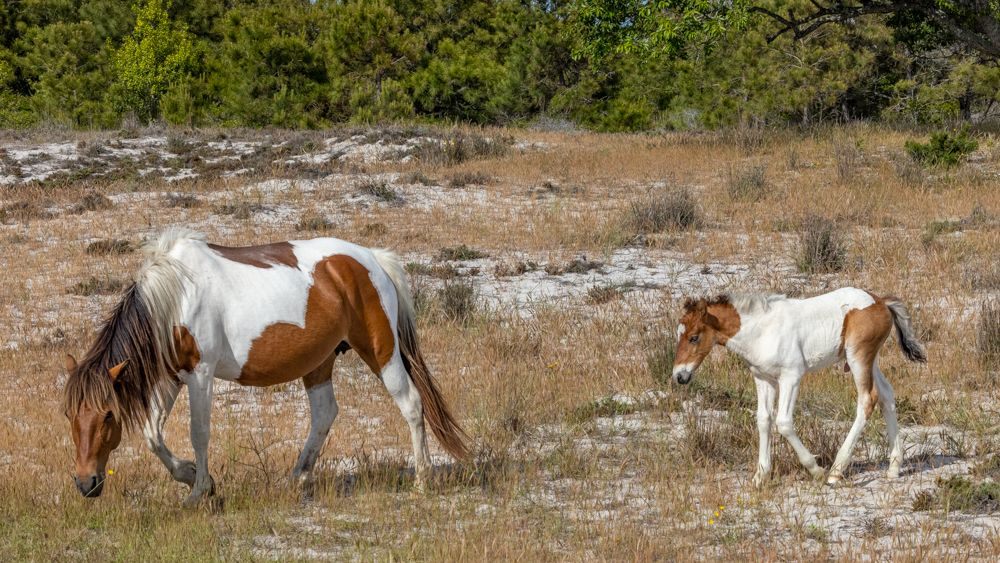
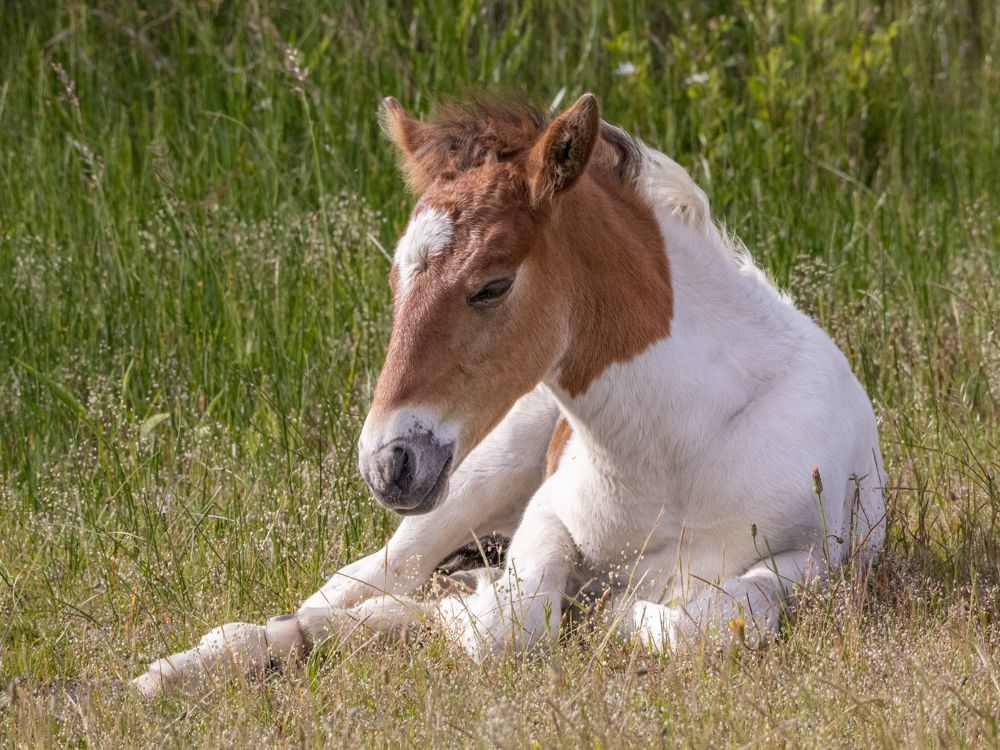
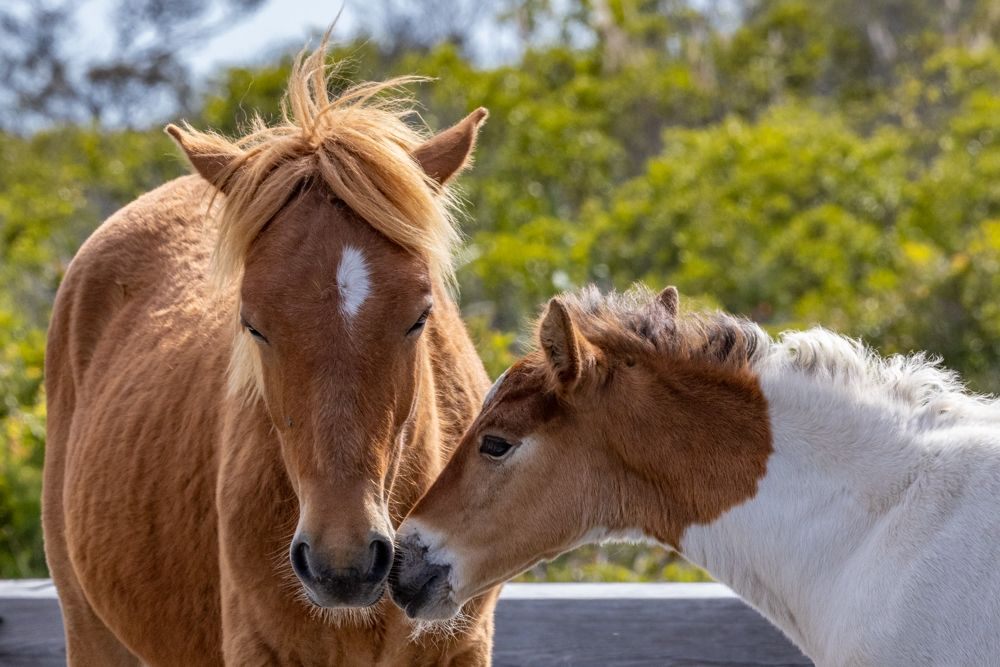
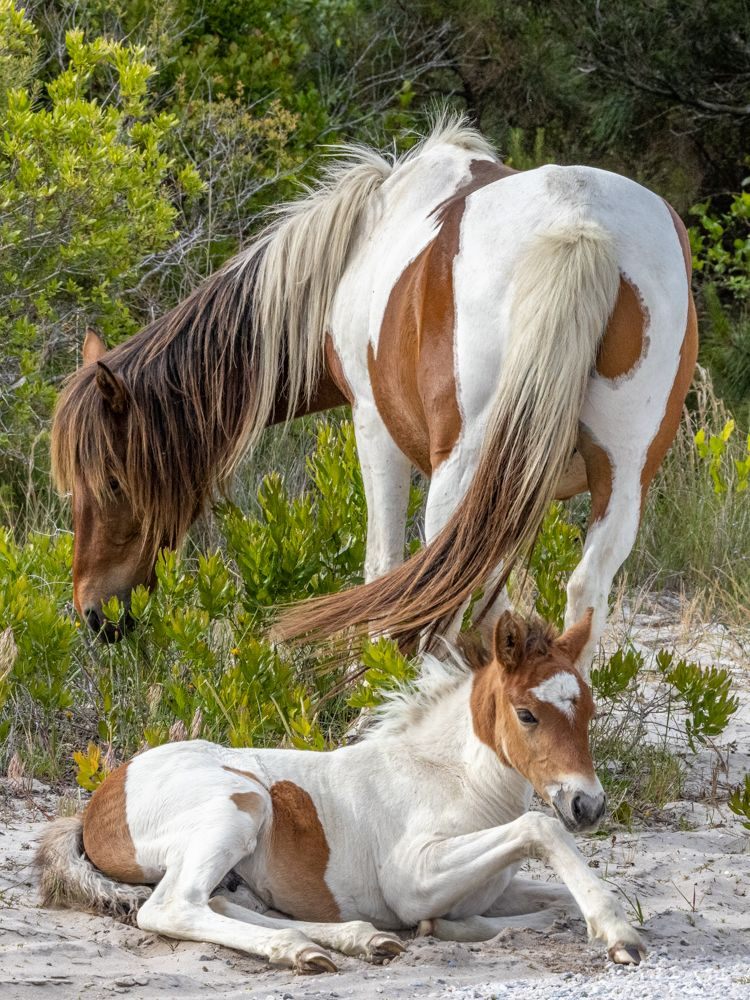
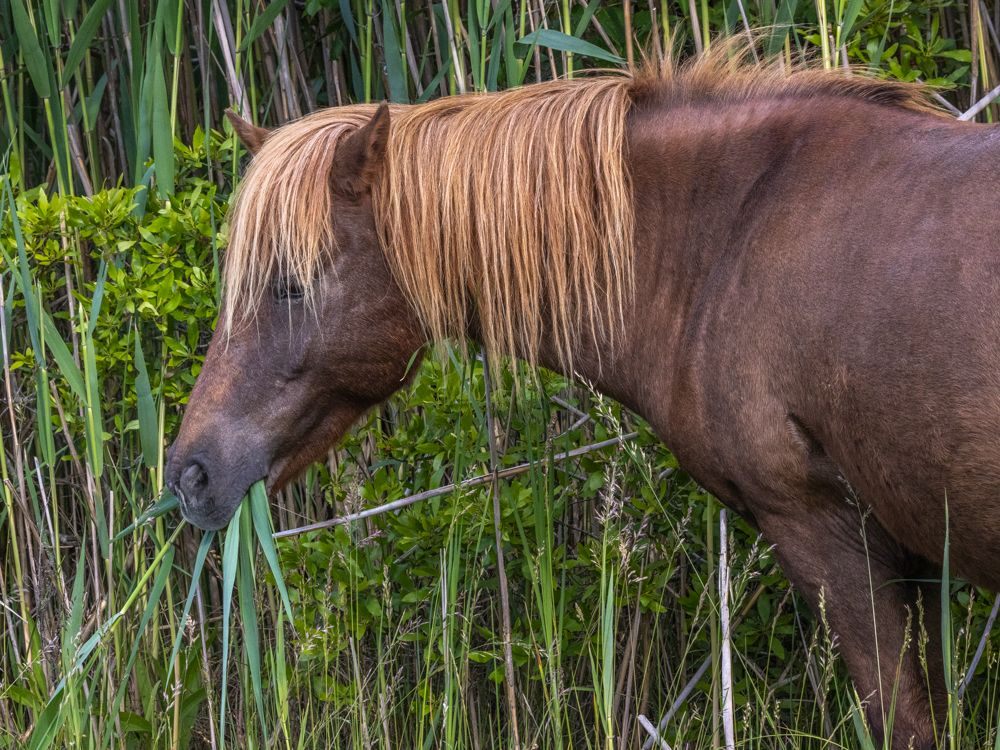
This morning I drove out to Assateague Island . A bit of history is in order. The “wild” horses for which Assatueague Island is advertised are actually feral horses, in other words descendants of domesticated horses that have reverted to a pseudo-wild state. According to the web site, the most plausible explanation is that they are the descendants of horses that were brought to barrier islands like Assateague in the late 17th century by mainland owners to avoid fencing laws and taxation of livestock.
Again, from the web site, the horses are split into two main herds, one on the Virginia side and one on the Maryland side of Assateague. They are separated by a fence at the Virginia - Maryland State line. The National Park Service manages the Maryland herd. The Chincoteague Volunteer Fire Company owns and manages the Virginia herd, which is allowed to graze on Chincoteague National Wildlife Refuge, through a special use permit issued by the U.S. Fish and Wildlife Service. It is the Virginia herd which is often referred to as the "Chincoteague" ponies.
I have been to many National Wildlife Refuges (these are administered by the U.S. Fish and Wildlife Service, Department of the Interior.) Typically these refuges are set up to, first, protect the animals and second, to allow viewing and photography. Assateague Island breaks that mold. The first priority appears to be camping. The entire East coast, and parts of the West coast are given over to permit camping. That means no one else can park or even enter the campgrounds. That severely limits viewing and photographic opportunities. And yes, it is enforced. I was chased out of a campground when I was trying to photograph some horses there.
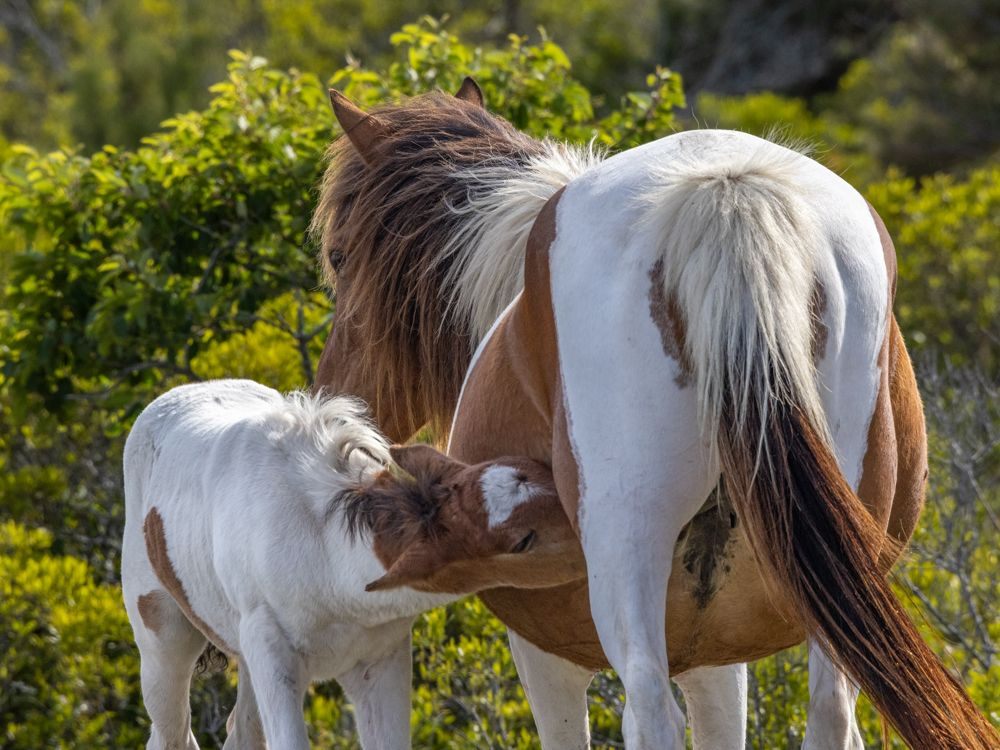
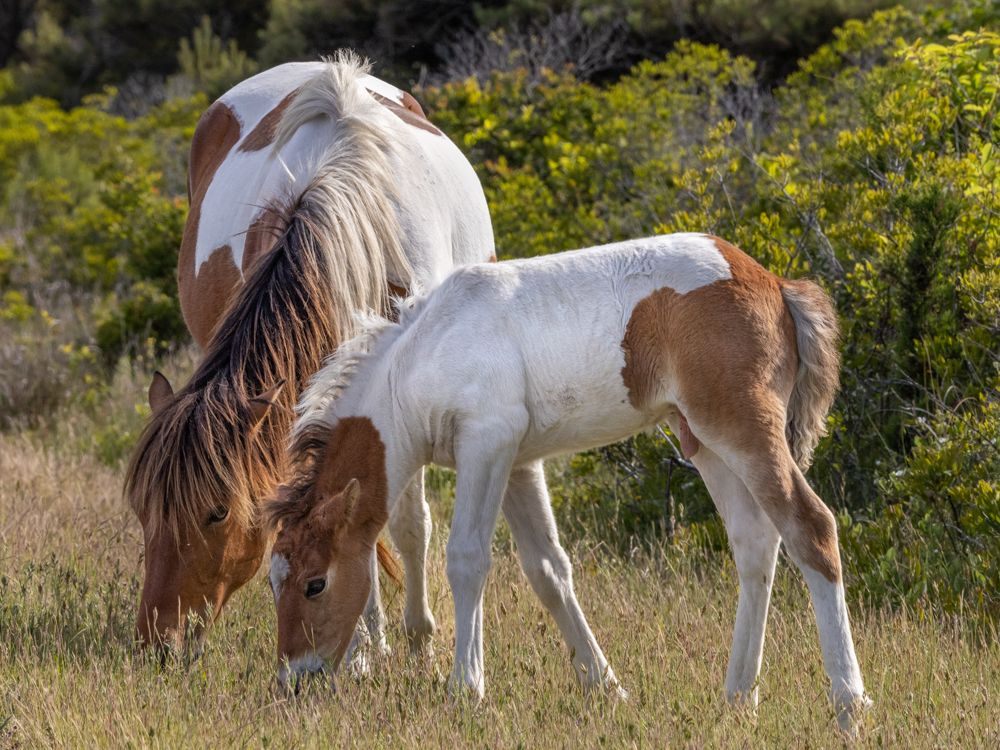
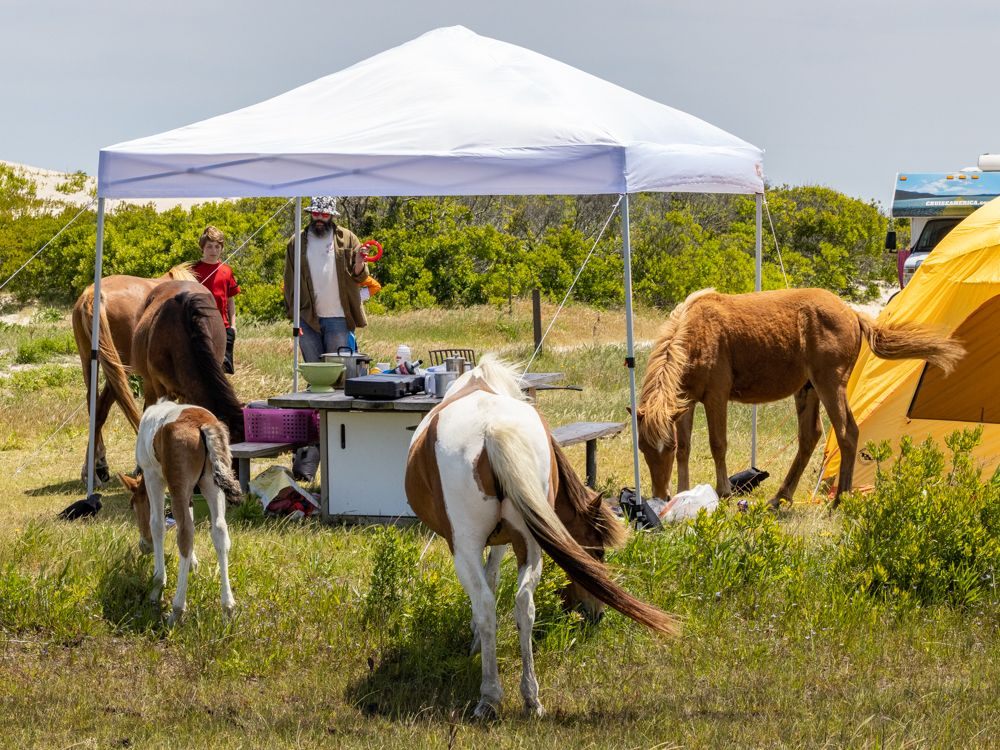
That brings me to my next point, which is that the horses congregate around the campsites. You can immediately guess the reasons - the campers, whether by intention or ignorance, feed the horses. And of course, that leads to aggressive behavior when the animals don’t get their expected handouts. Last year a stallion was removed from the Island and relocated to a sanctuary in Texas because his behavior had become dangerous. Apparently the last straw was when a bunch of young male idiots left, not only their food, but a bowl of beer out at their campsite. And it was ransacked by a band of horses led by this stallion. I did not hear of any punishment for the humans, just relocation of the horse. The family that was most visible today was actually the mare that had bred with this stallion along with some of her foals.
I actually witnessed a campsite being raided today. This family decided to cross the island around midday. Of course that created a major traffic jam as everyone wanted to get a photo. And the horses have no qualms about using the street as their main thoroughfare. They then turned into a campground and proceed to help themselves. The occupants uselessly tried to scare them away. They left when they had had their fill.
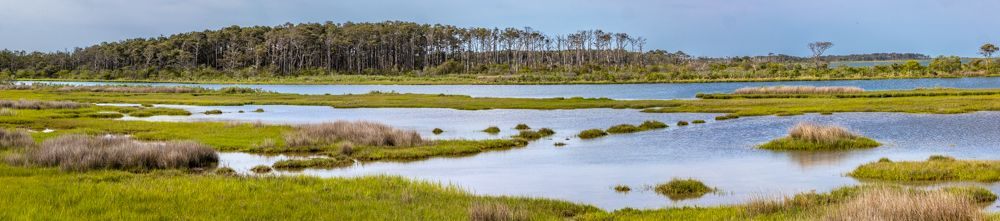
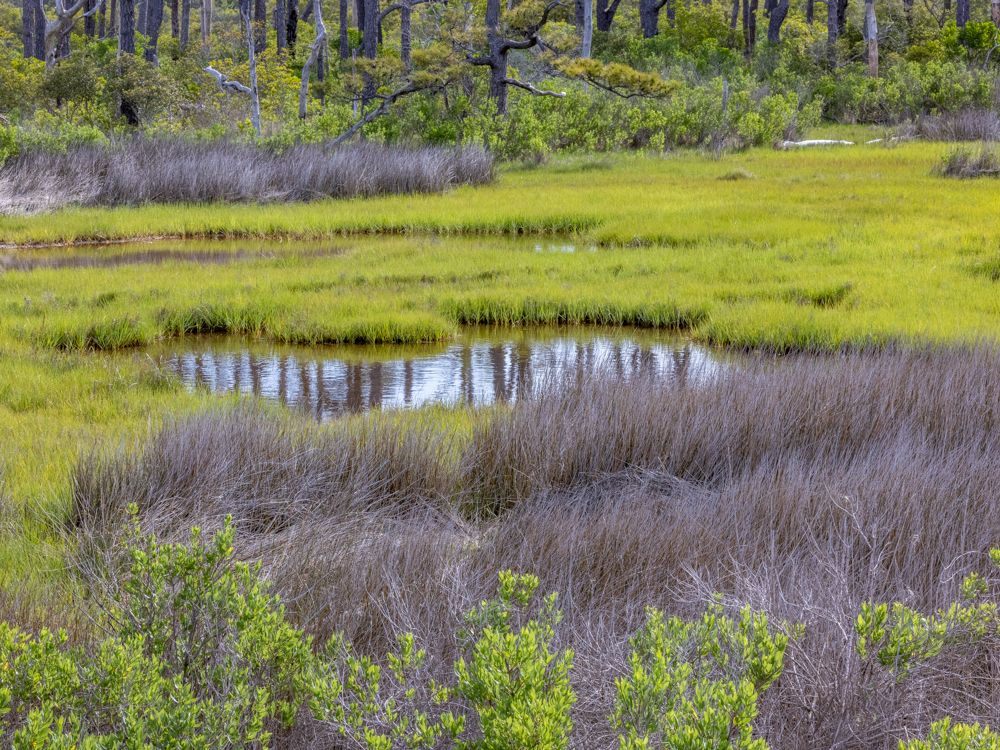
I spoke to a couple of women throughout the day, Wendy and Melanie, both of whom are regular visitors to the Island. They explained some of the history, politics and horse behavior to me. Both had suggested that this particular family tended to make their way to a marsh area on the West side of the island, away from the camp sites, in the afternoon. I decided to go over and wait. At 4:30, when I saw no horses, I decided to leave. They were waiting for me on the road just before the exit. Again, not a great photo opportunity, but I spent some more time with them before I gave up and returned to my hotel.
All in all, I am pretty disappointed with how this NWR is being managed. It seems to benefit campers, but not horses or wildlife enthusiasts, whether observers or photographers.
Tomorrow I bid farewell to Maryland and head North to Delaware.
Additional images are found in the Gallery .
Again, from the web site, the horses are split into two main herds, one on the Virginia side and one on the Maryland side of Assateague. They are separated by a fence at the Virginia - Maryland State line. The National Park Service manages the Maryland herd. The Chincoteague Volunteer Fire Company owns and manages the Virginia herd, which is allowed to graze on Chincoteague National Wildlife Refuge, through a special use permit issued by the U.S. Fish and Wildlife Service. It is the Virginia herd which is often referred to as the "Chincoteague" ponies.
I have been to many National Wildlife Refuges (these are administered by the U.S. Fish and Wildlife Service, Department of the Interior.) Typically these refuges are set up to, first, protect the animals and second, to allow viewing and photography. Assateague Island breaks that mold. The first priority appears to be camping. The entire East coast, and parts of the West coast are given over to permit camping. That means no one else can park or even enter the campgrounds. That severely limits viewing and photographic opportunities. And yes, it is enforced. I was chased out of a campground when I was trying to photograph some horses there.
That brings me to my next point, which is that the horses congregate around the campsites. You can immediately guess the reasons - the campers, whether by intention or ignorance, feed the horses. And of course, that leads to aggressive behavior when the animals don’t get their expected handouts. Last year a stallion was removed from the Island and relocated to a sanctuary in Texas because his behavior had become dangerous. Apparently the last straw was when a bunch of young male idiots left, not only their food, but a bowl of beer out at their campsite. And it was ransacked by a band of horses led by this stallion. I did not hear of any punishment for the humans, just relocation of the horse. The family that was most visible today was actually the mare that had bred with this stallion along with some of her foals.
I actually witnessed a campsite being raided today. This family decided to cross the island around midday. Of course that created a major traffic jam as everyone wanted to get a photo. And the horses have no qualms about using the street as their main thoroughfare. They then turned into a campground and proceed to help themselves. The occupants uselessly tried to scare them away. They left when they had had their fill.
I spoke to a couple of women throughout the day, Wendy and Melanie, both of whom are regular visitors to the Island. They explained some of the history, politics and horse behavior to me. Both had suggested that this particular family tended to make their way to a marsh area on the West side of the island, away from the camp sites, in the afternoon. I decided to go over and wait. At 4:30, when I saw no horses, I decided to leave. They were waiting for me on the road just before the exit. Again, not a great photo opportunity, but I spent some more time with them before I gave up and returned to my hotel.
All in all, I am pretty disappointed with how this NWR is being managed. It seems to benefit campers, but not horses or wildlife enthusiasts, whether observers or photographers.
Tomorrow I bid farewell to Maryland and head North to Delaware.
Additional images are found in the Gallery .
61 photo galleries
50 States
- Big Sur
- Salinas
- Laguna Beach
- San Diego
- California
- Grand Canyon
- Sedona
- Utah
- Syracuse
- Moab
- Denver
- Manitou Springs
- Calhan
- Mesa Verde
- Los Alamos
- Santa Fe
- Carlsbad
- New Mexico
- Eureka Springs
- Little Rock
- Birmingham
- Jackson
- Lottie
- Ten Thousand Islands
- Jerome
- Savannah
- White
- Asheville
- Sandstone Falls
- Baltimore
- Timonium
- Maryland
- Berlin
- Milton
- Smyrna
- Ocean City
- Detroit
- Upper Peninsula of Michigan
- Michigan
- Herod
- Ozark
- Two Harbors
- Carlton
- Madison County
- Oakley
- Valentine
- South Dakota
- United States
- Yellowstone National Park
- Lima
- Idaho
- Port Townsend
- Lincoln City
- Newport
- San Francisco