Newport 2
Alert: Long post to follow
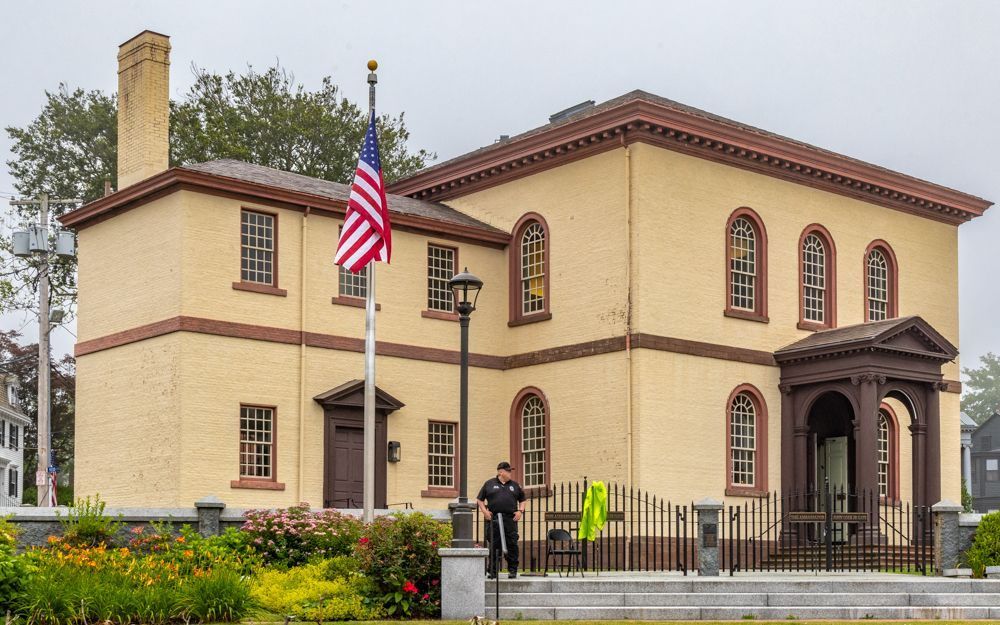
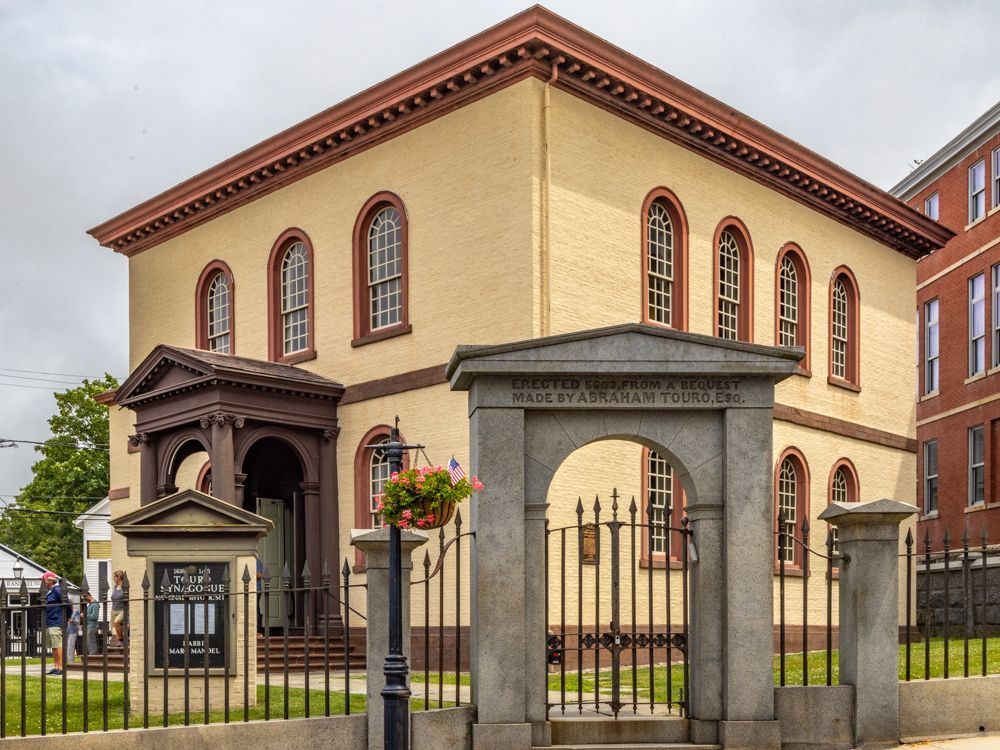
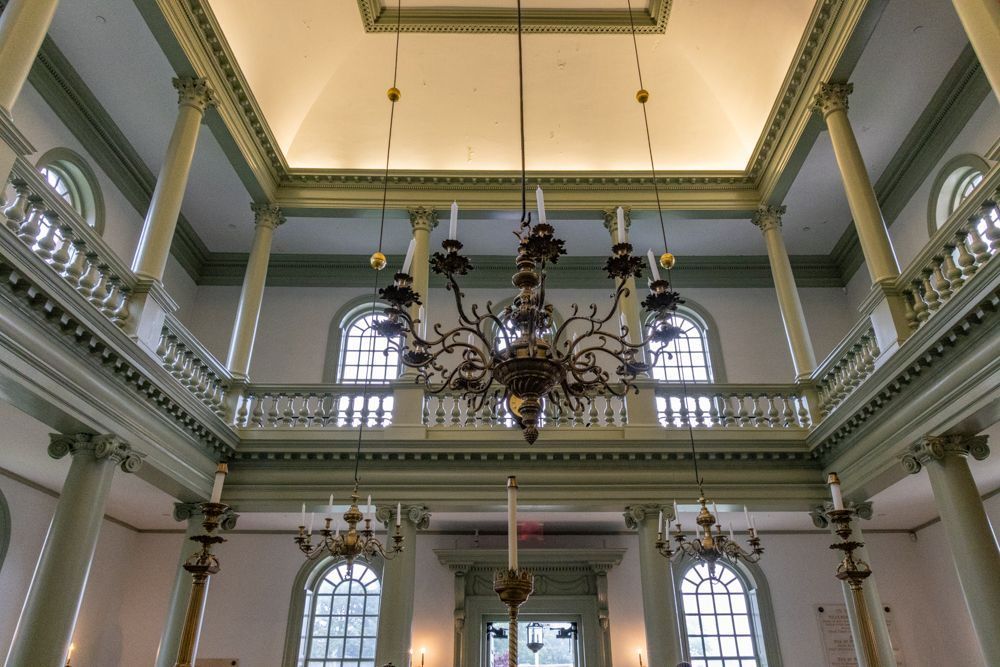
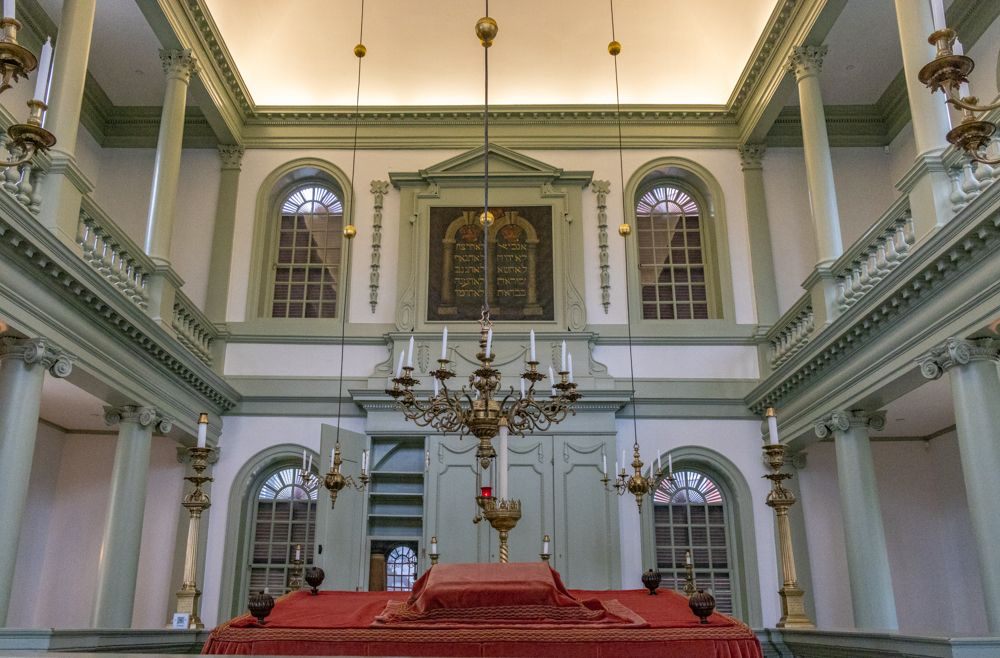
This morning I visited the Touro Synagogue in Newport. This is the oldest synagogue in America, but only the second oldest congregation. The distinction has to do with the physical building. The oldest congregation honors go to Shearith Israel in New York. You may recollect that some months back I wrote about the oldest synagogue in the Western Hemisphere, Mikve Israel-Emmanuel , interestingly in Curacao. This will actually track with today’s story as the same Sephardic Jews who had escaped the Spanish Inquisition to settle in the Netherlands and followed the Dutch West Indies Company to settle in the Caribbean are featured in the story of the Touro Synagogue of Newport.
The first Jewish immigrants to arrive to the small colony of Newport, Rhode Island, came from Barbados in the mid to late 17th century. Again, they were primarily Conversos (secret Jews) of Spanish and Portuguese origin who had landed in Amsterdam and also London to escape the Inquisition. Some families migrated first to Brazil, where they endured yet another inquisition from Portuguese colonists, which prompted yet another escape to the Dutch Caribbean.
Rhode Island was founded in 1663 on the principal of separation of Church and State , the first political entity in world history to do so. Roger Williams and John Clarke implemented what they called “a lively experiment” - a civil state that embodied full religious tolerance. Tolerance was the operative word. For example, the Jews, although successful businessmen and upright citizens, were not initially granted full rights. Although they were safe from religious persecution, they could not vote or hold office. Nevertheless they formed Congregation Nephuse Israel (Scattered of Israel). Eventually the name was changed to Jeshuat Israel (Salvation of Israel), land was purchased and Newport resident Peter Harrison was hired to design the synagogue building.
Around the same time, the congregation was seeking a Rabbi. Who they eventually found was not a Rabbi or even a Cantor, but a Hazzan (prayer leader) in the form of Isaac Touro who agreed to immigrate from Amsterdam, where he was studying in a Rabbinical college, to lead the nascent congregation. Touro and his descendants figure prominently in the story of the Jews of Newport.
At the onset of the American Revolution , the British occupied Newport and many of the Jewish residents of the city fled, removing their families and businesses to Massachusetts, Connecticut, and New York. Remaining behind was Isaac Touro, who kept watch over the synagogue as it became a hospital for the British military and a public assembly hall. In 1779 the King’s troops evacuated Newport, and within a year or two many of the Jewish families returned to town and reclaimed their businesses.
As mentioned in a previous blog post, Rhode Island was the last state to ratify the Constitution. That may have been in part because it had no explicit language codifying the separation of church and state. Shortly after Rhode Island signed, President George Washington chose to visit Newport for a public appearance to rally support for the new Bill of Rights. As part of the welcoming ceremonies for the President of the United States, Moses Mendes Seixas, then president of Congregation Yeshuat Israel, chose to raise the issues of religious liberties and the separation of church and state.
Seixas wrote:
Deprived as we heretofore have been of the invaluable rights of free Citizens, we now with a deep sense of gratitude to the Almighty disposer of all events behold a Government, erected by the Majesty of the People — a Government, which to bigotry gives no sanction, to persecution no assistance — but generously affording to All liberty of conscience, and immunities of Citizenship: deeming every one, of whatever Nation, tongue, or language equal parts of the great governmental Machine…
Ironically, many of Newport’s wealthy citizens, across religious lines, owned slaves and participated in the slave trade. In fact Newport was a major slave trade port. During the mid-eighteenth century, individuals of African descent, both free and enslaved, made up roughly 30 percent of Newport’s population. This fact highlights the hypocrisy that has existed over the history of America - the intermingling of noble proclamations about liberty of freedom alongside the existence of slavery and racism.
Washington’s response , quoting Seixas’ thoughts, became a key policy statement of the new government in support of First Amendment rights. An important excerpt reads:
... All possess alike liberty of conscience and immunities of citizenship. It is now no more that toleration is spoken of, as if it was by the indulgence of one class of people, that another enjoyed the exercise of their inherent natural rights. For happily the Government of the United States, which gives to bigotry no sanction, to persecution no assistance, requires only that they who live under its protection should demean themselves as good citizens, in giving it on all occasions their effectual support.
President George Washington’s letter to the Hebrew Congregation in Newport is relatively short in length, but its impact on American life is immense. In 340 well-chosen words, the letter reassured those who had fled religious tyranny that religious “toleration” would give way to religious liberty, and that the government would not interfere with individuals in matters of conscience and belief. It almost certainly led to the passage in the Bill of Rights that reads “Congress shall make no law respecting an establishment of religion or prohibiting the free exercise thereof.” This created what we now understand to be a wall of separation between church and state. Obviously it would be some time before similar protections would fully embrace gender and race.
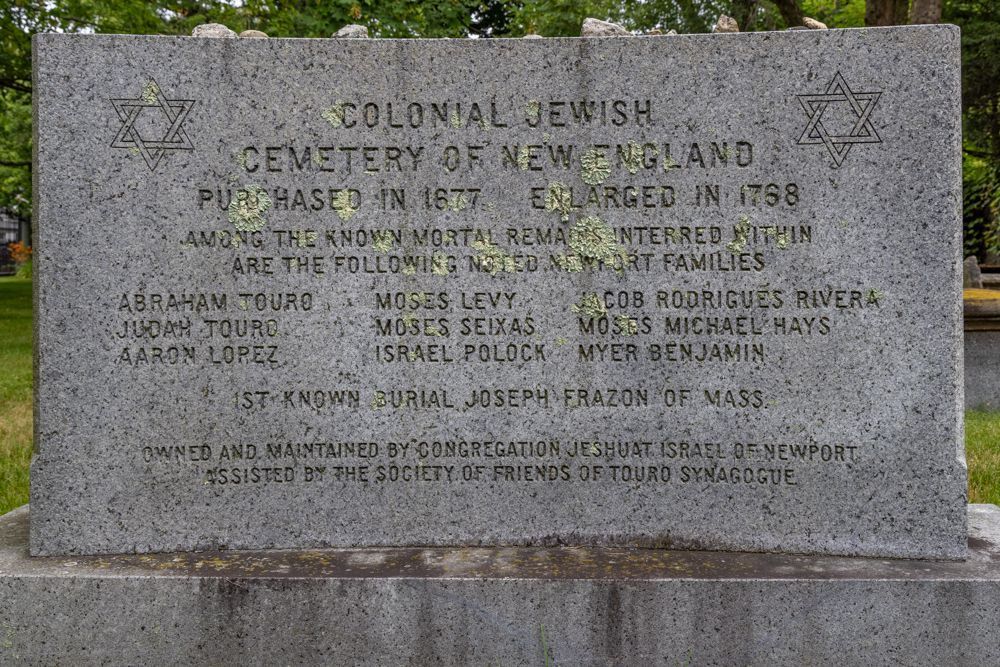
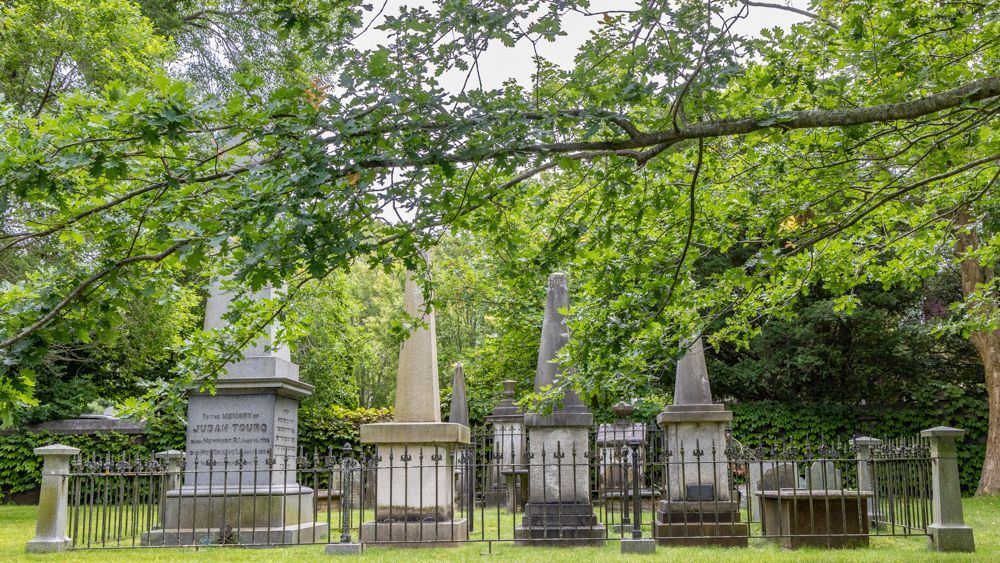
Newport never regained its stature as a leading seaport following the Revolutionary War. The Jewish community, long active in commerce, dispersed due to the lasting downturn in the economy. With few to no Jewish people in Newport by the early 19th century, the Synagogue closed for regular services but opened as needed for funerals, high holidays services, and special occasions . Congregation Shearith Israel in New York became trustees of the Synagogue, and Stephen Gould, a member of a local Quaker family and good friends to many of the former Jewish residents of Newport, was engaged as a caretaker. Through the first half of the 19th century, even as the Jews of Newport dispersed, they did not relinquish their sense of responsibility to their synagogue or to their burial ground. As members died, their bodies were returned to Yeshuat Israel for interment. Newport natives Abraham and Judah Touro, sons of Isaac Touro, both provided bequests to see to the perpetual care and maintenance of the Congregation’s properties, as well as bequests to the City of Newport itself.
At the end of the 19th century a wave Eastern European Jewry arrived to the United States. In 1881 the “new” Jewish community of Newport petitioned Congregation Shearith Israel to reopen the town’s synagogue for services and appoint a permanent rabbi. During and following this period, Congregation Shearith Israel in New York retained rights to the building, but an independent Congregation Jeshuat Israel was re-established. The building was leased to this new congregation for one dollar a year. That relationship has become fractured as of late.
As a last interesting tidbit, Ezra Stiles , Congregationalist Minister in Newport, formed a close friendship with Aaron Lopez, one of the prominent original Jewish immigrants to Newport and also with traveling Rabbi Haim Isaac Carigal, who presided over a service in Newport in 1773. He became fascinated with the Hebrew language and learned it well enough to trade letters with Carigal. When Stiles became president of Yale University, he also became the school’s first Semitics professor and delivered his first commencement address in Hebrew, Aramaic and Arabic . While his attempt to require all students to learn Hebrew ultimately failed, the valedictorians of 1785 and 1792 did deliver their orations in Hebrew. The official seal of Yale University contains the Hebrew words Hebrew words “Urim” and “Thummim,” (“light and perfection”) alongside the Latin “Lux et Veritas” (“light and truth”).
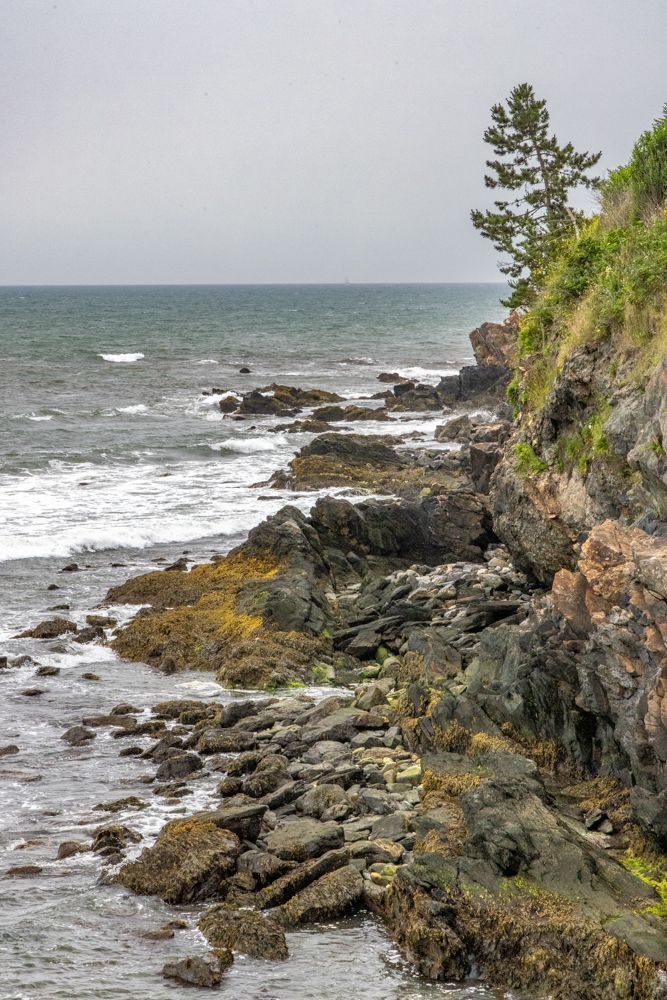
My planned afternoon activity was the famed Cliff Walk around the mansion alley. I had already decided to walk an abbreviated portion of the trail. The part at the far tip of the island was advertised as rocky and slippery with no guard rails and a 70 foot drop on one side and poison ivy on the other. Thanks, but no. Nevertheless, after spending $20 to park for a few hours in the transportation center garage, I then had to spend another $25 dollars to park in the Easton Beach parking lot as the few street parking spaces at the beginning of the cliff walk were all filled. Not unexpected on a Sunday afternoon of July 4th weekend. I didn’t mind as I thought I would be leaving the car for several hours, nor did I really have a choice. Rain had been threatening all day and it finally broke before I made it a mile into the walk. In spite of a light rain jacket and small umbrella I soon became completely soaked. The rain shower only lasted about 10 minutes, but at that point I was done. The mansions did not much interest me and the combination of haze and fog meant no visibility for any ocean views. Rain is also predicted tomorrow, and also on Tuesday for the 4th of July. Hopefully it won’t ruin the fireworks display.
Tomorrow I will hope - again depending on the weather - to visit one or more of the wildlife refuges in the area.
This morning I visited the Touro Synagogue in Newport. This is the oldest synagogue in America, but only the second oldest congregation. The distinction has to do with the physical building. The oldest congregation honors go to Shearith Israel in New York. You may recollect that some months back I wrote about the oldest synagogue in the Western Hemisphere, Mikve Israel-Emmanuel , interestingly in Curacao. This will actually track with today’s story as the same Sephardic Jews who had escaped the Spanish Inquisition to settle in the Netherlands and followed the Dutch West Indies Company to settle in the Caribbean are featured in the story of the Touro Synagogue of Newport.
The first Jewish immigrants to arrive to the small colony of Newport, Rhode Island, came from Barbados in the mid to late 17th century. Again, they were primarily Conversos (secret Jews) of Spanish and Portuguese origin who had landed in Amsterdam and also London to escape the Inquisition. Some families migrated first to Brazil, where they endured yet another inquisition from Portuguese colonists, which prompted yet another escape to the Dutch Caribbean.
Rhode Island was founded in 1663 on the principal of separation of Church and State , the first political entity in world history to do so. Roger Williams and John Clarke implemented what they called “a lively experiment” - a civil state that embodied full religious tolerance. Tolerance was the operative word. For example, the Jews, although successful businessmen and upright citizens, were not initially granted full rights. Although they were safe from religious persecution, they could not vote or hold office. Nevertheless they formed Congregation Nephuse Israel (Scattered of Israel). Eventually the name was changed to Jeshuat Israel (Salvation of Israel), land was purchased and Newport resident Peter Harrison was hired to design the synagogue building.
Around the same time, the congregation was seeking a Rabbi. Who they eventually found was not a Rabbi or even a Cantor, but a Hazzan (prayer leader) in the form of Isaac Touro who agreed to immigrate from Amsterdam, where he was studying in a Rabbinical college, to lead the nascent congregation. Touro and his descendants figure prominently in the story of the Jews of Newport.
At the onset of the American Revolution , the British occupied Newport and many of the Jewish residents of the city fled, removing their families and businesses to Massachusetts, Connecticut, and New York. Remaining behind was Isaac Touro, who kept watch over the synagogue as it became a hospital for the British military and a public assembly hall. In 1779 the King’s troops evacuated Newport, and within a year or two many of the Jewish families returned to town and reclaimed their businesses.
As mentioned in a previous blog post, Rhode Island was the last state to ratify the Constitution. That may have been in part because it had no explicit language codifying the separation of church and state. Shortly after Rhode Island signed, President George Washington chose to visit Newport for a public appearance to rally support for the new Bill of Rights. As part of the welcoming ceremonies for the President of the United States, Moses Mendes Seixas, then president of Congregation Yeshuat Israel, chose to raise the issues of religious liberties and the separation of church and state.
Seixas wrote:
Deprived as we heretofore have been of the invaluable rights of free Citizens, we now with a deep sense of gratitude to the Almighty disposer of all events behold a Government, erected by the Majesty of the People — a Government, which to bigotry gives no sanction, to persecution no assistance — but generously affording to All liberty of conscience, and immunities of Citizenship: deeming every one, of whatever Nation, tongue, or language equal parts of the great governmental Machine…
Ironically, many of Newport’s wealthy citizens, across religious lines, owned slaves and participated in the slave trade. In fact Newport was a major slave trade port. During the mid-eighteenth century, individuals of African descent, both free and enslaved, made up roughly 30 percent of Newport’s population. This fact highlights the hypocrisy that has existed over the history of America - the intermingling of noble proclamations about liberty of freedom alongside the existence of slavery and racism.
Washington’s response , quoting Seixas’ thoughts, became a key policy statement of the new government in support of First Amendment rights. An important excerpt reads:
... All possess alike liberty of conscience and immunities of citizenship. It is now no more that toleration is spoken of, as if it was by the indulgence of one class of people, that another enjoyed the exercise of their inherent natural rights. For happily the Government of the United States, which gives to bigotry no sanction, to persecution no assistance, requires only that they who live under its protection should demean themselves as good citizens, in giving it on all occasions their effectual support.
President George Washington’s letter to the Hebrew Congregation in Newport is relatively short in length, but its impact on American life is immense. In 340 well-chosen words, the letter reassured those who had fled religious tyranny that religious “toleration” would give way to religious liberty, and that the government would not interfere with individuals in matters of conscience and belief. It almost certainly led to the passage in the Bill of Rights that reads “Congress shall make no law respecting an establishment of religion or prohibiting the free exercise thereof.” This created what we now understand to be a wall of separation between church and state. Obviously it would be some time before similar protections would fully embrace gender and race.
Newport never regained its stature as a leading seaport following the Revolutionary War. The Jewish community, long active in commerce, dispersed due to the lasting downturn in the economy. With few to no Jewish people in Newport by the early 19th century, the Synagogue closed for regular services but opened as needed for funerals, high holidays services, and special occasions . Congregation Shearith Israel in New York became trustees of the Synagogue, and Stephen Gould, a member of a local Quaker family and good friends to many of the former Jewish residents of Newport, was engaged as a caretaker. Through the first half of the 19th century, even as the Jews of Newport dispersed, they did not relinquish their sense of responsibility to their synagogue or to their burial ground. As members died, their bodies were returned to Yeshuat Israel for interment. Newport natives Abraham and Judah Touro, sons of Isaac Touro, both provided bequests to see to the perpetual care and maintenance of the Congregation’s properties, as well as bequests to the City of Newport itself.
At the end of the 19th century a wave Eastern European Jewry arrived to the United States. In 1881 the “new” Jewish community of Newport petitioned Congregation Shearith Israel to reopen the town’s synagogue for services and appoint a permanent rabbi. During and following this period, Congregation Shearith Israel in New York retained rights to the building, but an independent Congregation Jeshuat Israel was re-established. The building was leased to this new congregation for one dollar a year. That relationship has become fractured as of late.
As a last interesting tidbit, Ezra Stiles , Congregationalist Minister in Newport, formed a close friendship with Aaron Lopez, one of the prominent original Jewish immigrants to Newport and also with traveling Rabbi Haim Isaac Carigal, who presided over a service in Newport in 1773. He became fascinated with the Hebrew language and learned it well enough to trade letters with Carigal. When Stiles became president of Yale University, he also became the school’s first Semitics professor and delivered his first commencement address in Hebrew, Aramaic and Arabic . While his attempt to require all students to learn Hebrew ultimately failed, the valedictorians of 1785 and 1792 did deliver their orations in Hebrew. The official seal of Yale University contains the Hebrew words Hebrew words “Urim” and “Thummim,” (“light and perfection”) alongside the Latin “Lux et Veritas” (“light and truth”).
My planned afternoon activity was the famed Cliff Walk around the mansion alley. I had already decided to walk an abbreviated portion of the trail. The part at the far tip of the island was advertised as rocky and slippery with no guard rails and a 70 foot drop on one side and poison ivy on the other. Thanks, but no. Nevertheless, after spending $20 to park for a few hours in the transportation center garage, I then had to spend another $25 dollars to park in the Easton Beach parking lot as the few street parking spaces at the beginning of the cliff walk were all filled. Not unexpected on a Sunday afternoon of July 4th weekend. I didn’t mind as I thought I would be leaving the car for several hours, nor did I really have a choice. Rain had been threatening all day and it finally broke before I made it a mile into the walk. In spite of a light rain jacket and small umbrella I soon became completely soaked. The rain shower only lasted about 10 minutes, but at that point I was done. The mansions did not much interest me and the combination of haze and fog meant no visibility for any ocean views. Rain is also predicted tomorrow, and also on Tuesday for the 4th of July. Hopefully it won’t ruin the fireworks display.
Tomorrow I will hope - again depending on the weather - to visit one or more of the wildlife refuges in the area.
61 photo galleries
50 States
- Big Sur
- Salinas
- Laguna Beach
- San Diego
- California
- Grand Canyon
- Sedona
- Utah
- Syracuse
- Moab
- Denver
- Manitou Springs
- Calhan
- Mesa Verde
- Los Alamos
- Santa Fe
- Carlsbad
- New Mexico
- Eureka Springs
- Little Rock
- Birmingham
- Jackson
- Lottie
- Ten Thousand Islands
- Jerome
- Savannah
- White
- Asheville
- Sandstone Falls
- Baltimore
- Timonium
- Maryland
- Berlin
- Milton
- Smyrna
- Ocean City
- Detroit
- Upper Peninsula of Michigan
- Michigan
- Herod
- Ozark
- Two Harbors
- Carlton
- Madison County
- Oakley
- Valentine
- South Dakota
- United States
- Yellowstone National Park
- Lima
- Idaho
- Port Townsend
- Lincoln City
- Newport
- San Francisco