Natick [Saugus]
I had thought to go back into Boston this morning to visit the Boston African American National Historic site on the back side of Beacon Hill. This would have been in keeping with a major theme of this trip, civil rights. However, one of the exhibits was closed and it proved difficult to secure a ticket to the Museum of African American History which holds much of the information. Their web site ticketing was broken; the instruction was to e-mail for tickets; my e-mail bounced; no phone number was provided. In addition, rain was predicted and I would have been facing Friday traffic and parking in downtown Boston. Without any way to know if I would be making the slog into the city for naught, I decided on a different course of action.
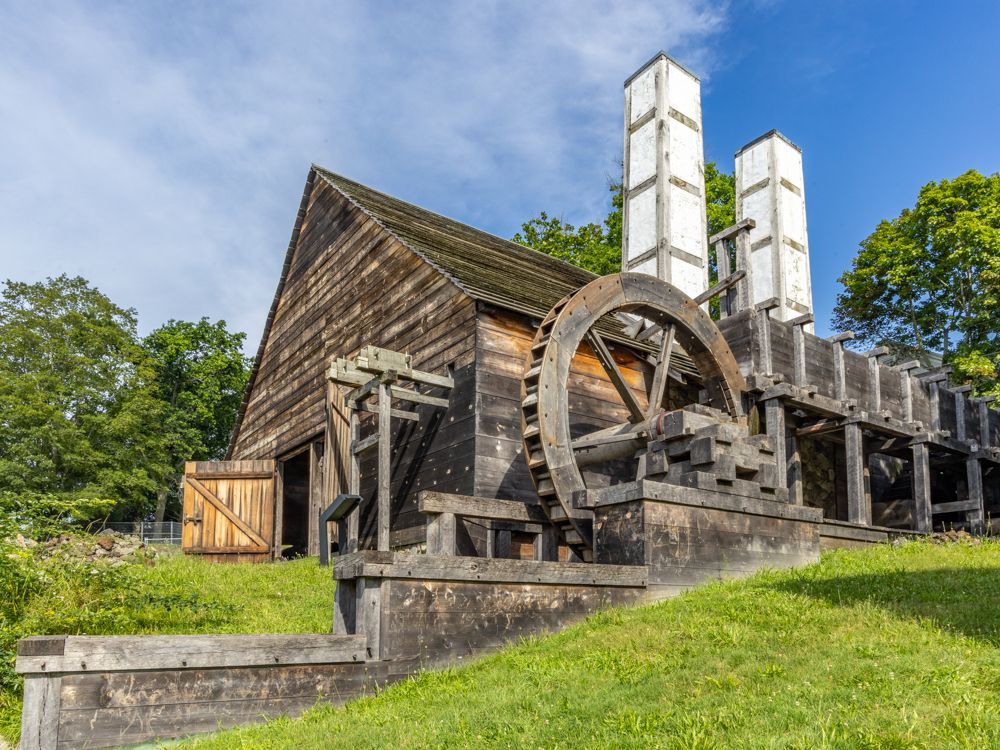
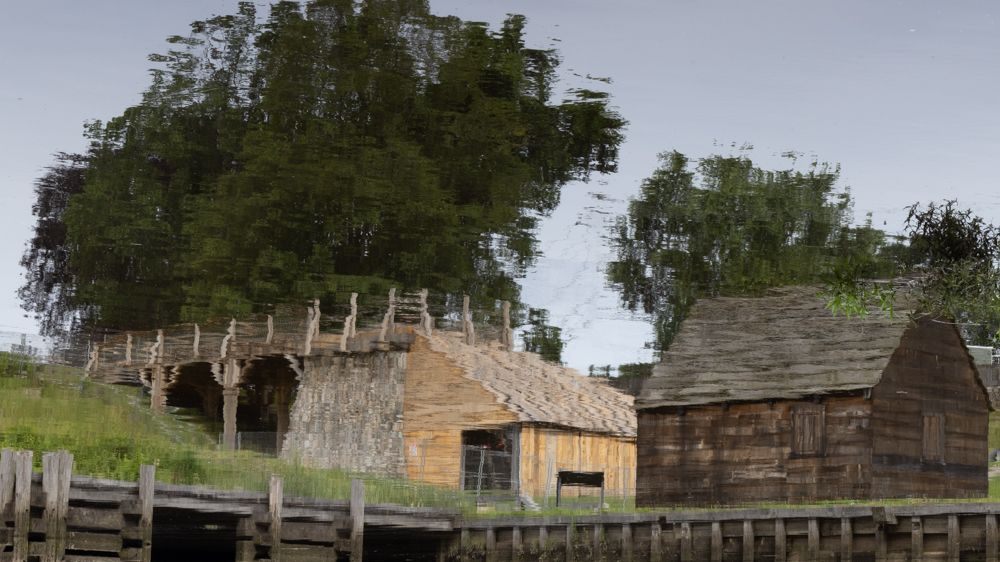
A secondary theme has become the Industrial Revolution and the labor movement. I decided to go back up North and make a stop at Saugus Iron Works National Historic Site . Although the factory only operated from 1646 to about 1670, it is significant as the first successful iron works in the New World. Tours of the site are available only on the weekends, but there was plenty of self-guiding information about the history and grounds. I first walked the grounds. Although some housing structures remain from the 1600s, none of the industrial buildings survived. However an archeological investigation uncovered what they probably looked like and replicas have been constructed. The archeological remnants are displayed in the museum.
The Saugus Iron Works was started by John Winthrop the Younger, son of then governor of Massachusetts, John Winthrop. Many of the initial ironworkers recruited by Winthrop passed down specialized iron working skills through many generations. The advanced skills and technology they brought to this site would forge the beginnings of the iron and steel industry in the United States.
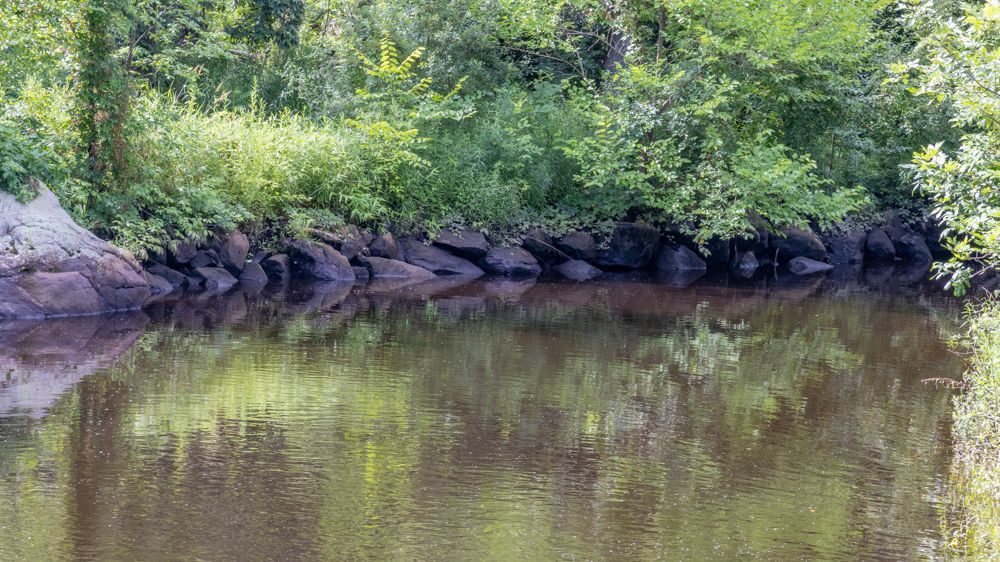
The location, topography, drainage and abundance of local natural resources at this site made it an ideal location for iron production. Like all early industry, the factory was build near a water source that could both provide power to run the equipment and allow access and egress to receive raw materials and distribute manufactured material, in this case wrought iron bar and case iron products. The Saugus river fulfilled all of these requirements. Additionally, bog iron ore was abundant and easily accessible and the forest provided wood to make charcoal to fuel the fires. Finally, Gabbro, an igneous rock used to purify the iron during the smelting process was available on the coast of Nahant, MA.
A tour of a house on the property that was actually built after the Iron Works closed was provided by Alyssa. The Iron Works House, is the only structure on the site that survives from the 1600s. The company agent may have lived in it while the iron works was in operation, but its date of construction is unknown. The earliest recorded occupant, Samuel Appleton Jr., bought the Saugus Iron Works in 1676 (after it closed) and lived in the house from 1681 to 1688. It provided an interesting example of a home from that era.
The Iron Works operated for only about 25 years. Apparently mismanagement and the inability to reliably make a profit doomed the operation. Nevertheless, its place in history stands as a major contributor to the Industrial Revolution.
One of the things I have found interesting is that each of these industries acquired their labor force in complete different ways, resulting in consequences to the local society. Many of the laborers in the Saugus Mill were Scottish captives from the War of Dunbar who had been brought over from England as indentured servants. They did not share the Puritan values of the settlers and liked to both work hard and party hard. This of course created friction with the surrounding community. Nevertheless, when the Saugus Iron Works closed around 1670, the workers disbursed to other mills and factories in the area and eventually integrated into the community.
This is my last day in Massachusetts. Tomorrow I head North to New Hampshire.
A secondary theme has become the Industrial Revolution and the labor movement. I decided to go back up North and make a stop at Saugus Iron Works National Historic Site . Although the factory only operated from 1646 to about 1670, it is significant as the first successful iron works in the New World. Tours of the site are available only on the weekends, but there was plenty of self-guiding information about the history and grounds. I first walked the grounds. Although some housing structures remain from the 1600s, none of the industrial buildings survived. However an archeological investigation uncovered what they probably looked like and replicas have been constructed. The archeological remnants are displayed in the museum.
The Saugus Iron Works was started by John Winthrop the Younger, son of then governor of Massachusetts, John Winthrop. Many of the initial ironworkers recruited by Winthrop passed down specialized iron working skills through many generations. The advanced skills and technology they brought to this site would forge the beginnings of the iron and steel industry in the United States.
The location, topography, drainage and abundance of local natural resources at this site made it an ideal location for iron production. Like all early industry, the factory was build near a water source that could both provide power to run the equipment and allow access and egress to receive raw materials and distribute manufactured material, in this case wrought iron bar and case iron products. The Saugus river fulfilled all of these requirements. Additionally, bog iron ore was abundant and easily accessible and the forest provided wood to make charcoal to fuel the fires. Finally, Gabbro, an igneous rock used to purify the iron during the smelting process was available on the coast of Nahant, MA.
A tour of a house on the property that was actually built after the Iron Works closed was provided by Alyssa. The Iron Works House, is the only structure on the site that survives from the 1600s. The company agent may have lived in it while the iron works was in operation, but its date of construction is unknown. The earliest recorded occupant, Samuel Appleton Jr., bought the Saugus Iron Works in 1676 (after it closed) and lived in the house from 1681 to 1688. It provided an interesting example of a home from that era.
The Iron Works operated for only about 25 years. Apparently mismanagement and the inability to reliably make a profit doomed the operation. Nevertheless, its place in history stands as a major contributor to the Industrial Revolution.
One of the things I have found interesting is that each of these industries acquired their labor force in complete different ways, resulting in consequences to the local society. Many of the laborers in the Saugus Mill were Scottish captives from the War of Dunbar who had been brought over from England as indentured servants. They did not share the Puritan values of the settlers and liked to both work hard and party hard. This of course created friction with the surrounding community. Nevertheless, when the Saugus Iron Works closed around 1670, the workers disbursed to other mills and factories in the area and eventually integrated into the community.
This is my last day in Massachusetts. Tomorrow I head North to New Hampshire.

61 photo galleries
50 States
- Big Sur
- Salinas
- Laguna Beach
- San Diego
- California
- Grand Canyon
- Sedona
- Utah
- Syracuse
- Moab
- Denver
- Manitou Springs
- Calhan
- Mesa Verde
- Los Alamos
- Santa Fe
- Carlsbad
- New Mexico
- Eureka Springs
- Little Rock
- Birmingham
- Jackson
- Lottie
- Ten Thousand Islands
- Jerome
- Savannah
- White
- Asheville
- Sandstone Falls
- Baltimore
- Timonium
- Maryland
- Berlin
- Milton
- Smyrna
- Ocean City
- Detroit
- Upper Peninsula of Michigan
- Michigan
- Herod
- Ozark
- Two Harbors
- Carlton
- Madison County
- Oakley
- Valentine
- South Dakota
- United States
- Yellowstone National Park
- Lima
- Idaho
- Port Townsend
- Lincoln City
- Newport
- San Francisco