Natick [Lexington and Concord]
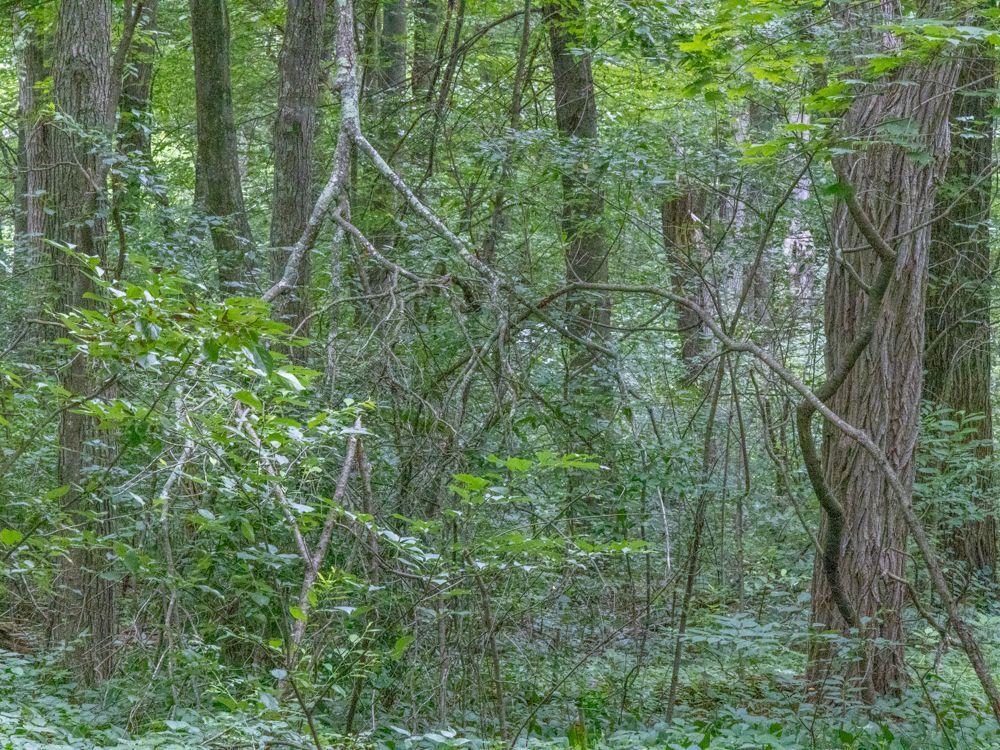
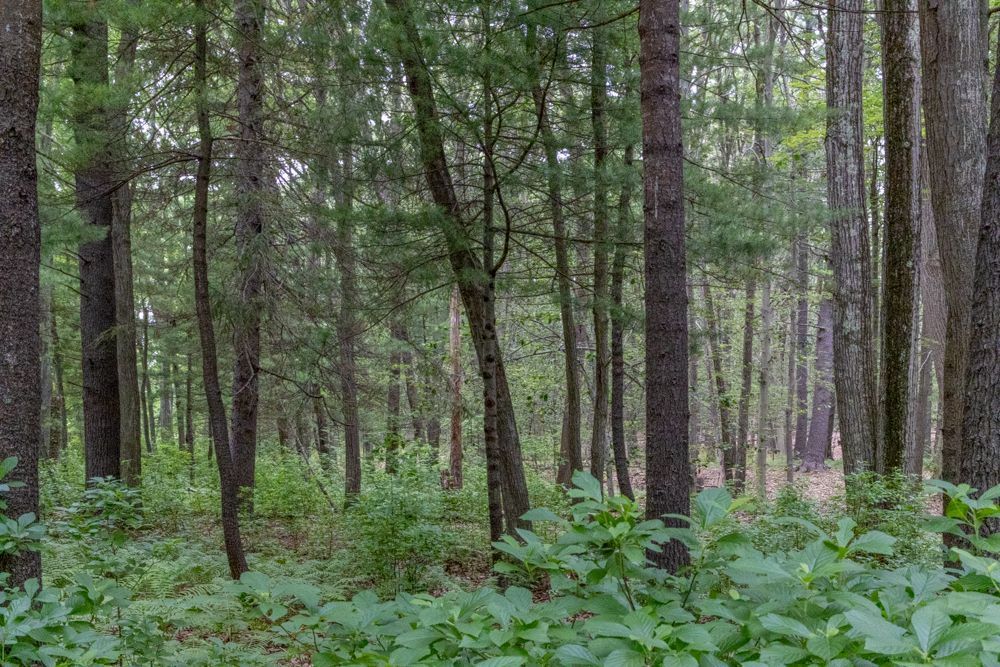
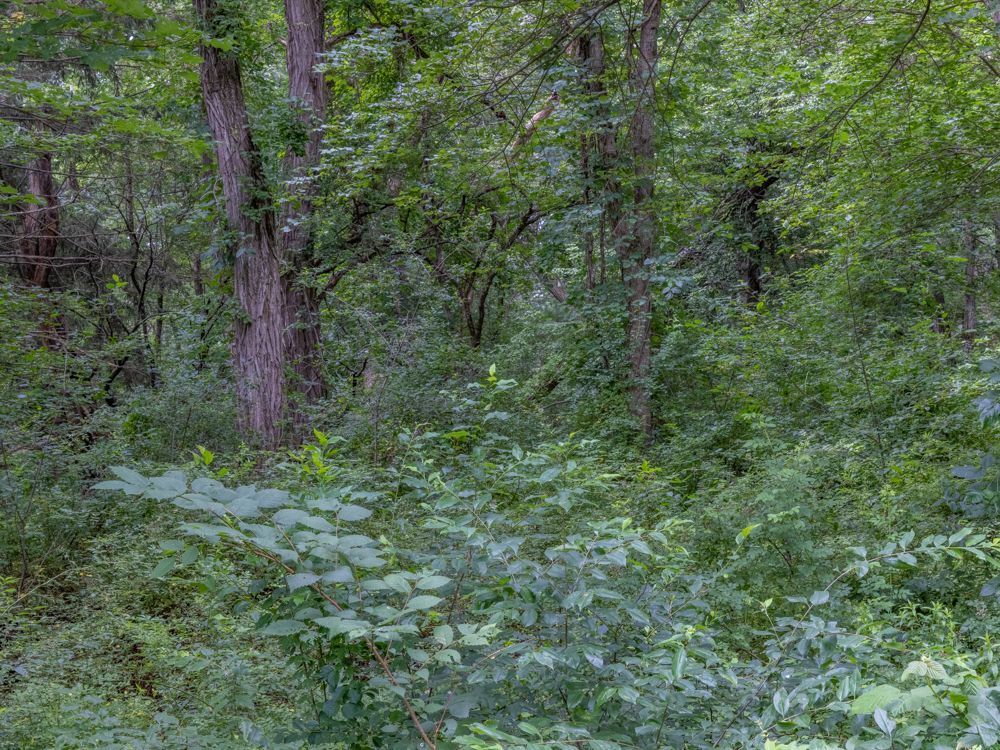
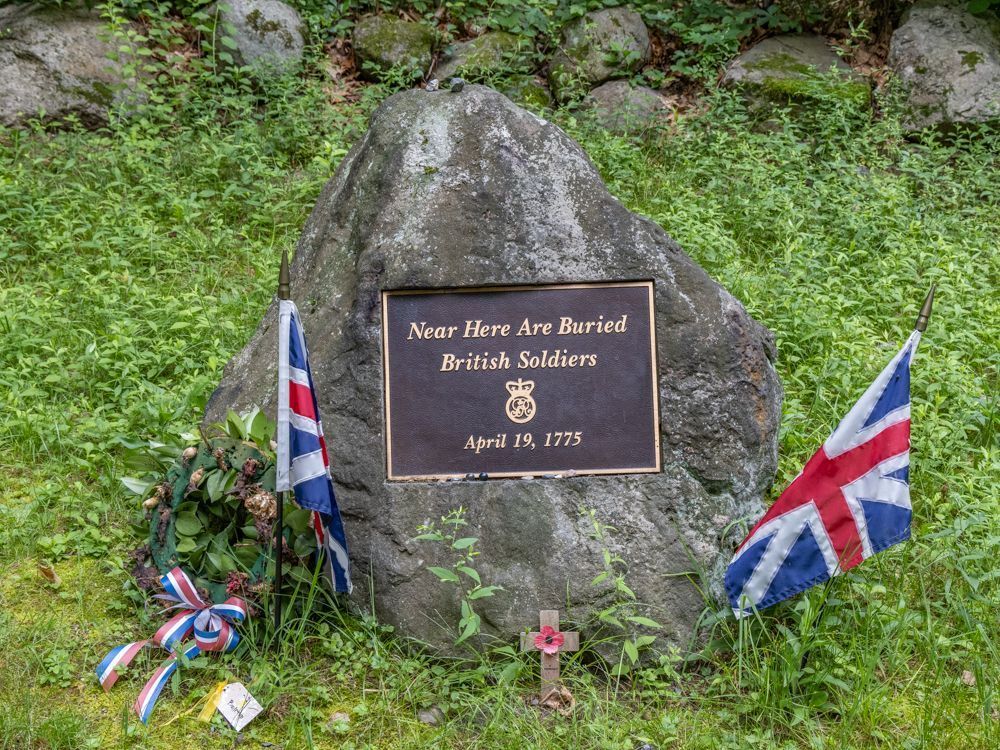
This morning I visited Minute Man National Historic Park . This park spans Lexington and Concord and tells the story of the first day of the American Revolution on April 19, 1775. For further information, an excellent interactive map is available on the site.
After the British were defeated by the French in the Seven Years War, their funds were badly depleted. The wanted to tax the colonists to generate funds. They sent British solders (possibly unnecessarily) to help keep Native Tribes under control and wanted to use that as an excuse to charge the colonials for their services.
The colonies had never gained representation in the British Parliament. And tensions had been mounting since 1773, when a group of Boston residents dumped chests of tea into Boston Harbor. England responded to the Boston Tea Party with the Coercive Laws of 1774 , which closed the port and banned most town meetings. Not surprisingly, the colonists found a way to meet anyway and began organizing a plot to achieve independence from England. They organized Minute Companies - Minute Men ready to fight at a moments notice. And all men between 16 and 60 were expected to participate in the general Militia should it be necessary. They also stockpiled weapons and other military supplies in Concord.
When the British heard of these activities, they decided to send troops to Concord to confiscate the weapons and teach the Colonists a lesson. This effort did not turn out as they hoped and expected. British soldiers planned to travel from Boston to Concord to seize the stockpiled weapons. However the Colonists had gotten wind of the planned raid and made plans of their own.
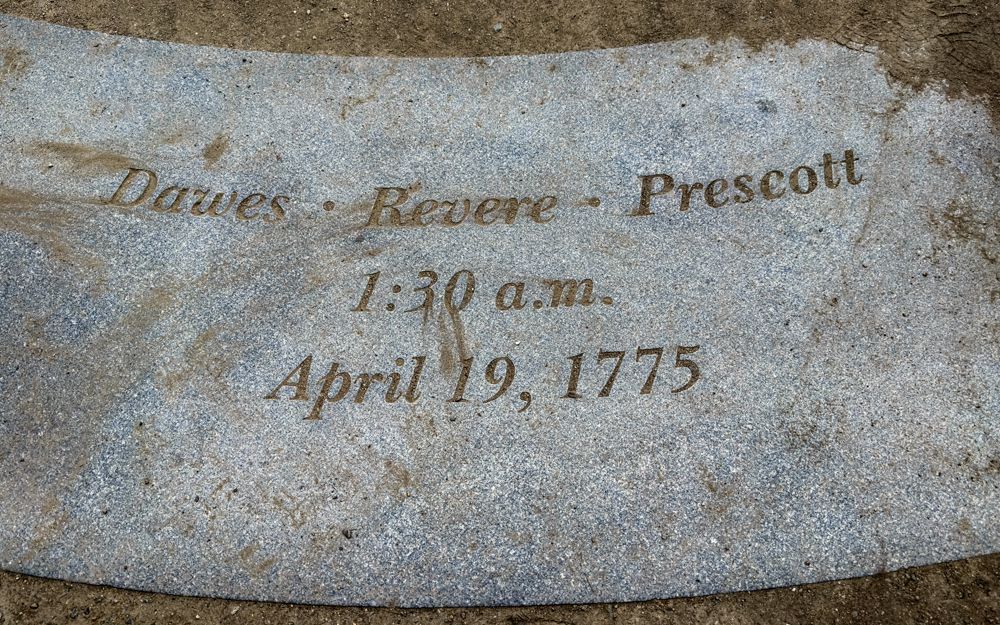
On April 18, 1775, Paul Revere and William Dawes set out from Boston to suss out the route the British troops would be taking and to warn the populace. William Dawes took the Southern overland route and Paul Revere took the Northern route across the Charles River where he then mounted a waiting horse. Revere saw that the British regulars were taking the more direct route across the Charles River to Cambridge - “One if by and, two if by sea.” By prearranged signal, two dimly lit lanterns were shone from the Old North Church tower. Hence began the infamous midnight ride of Paul Revere. We know of this story as Paul Revere’s Ride because of the poem of the same name written by Henry Wadsworth Longfellow .
Dawes and Revere met in Lexington and stopped to warn Patriot leaders John Hancock and Samuel Adams, then headed on to Concord. Along the way they met a young doctor, Dr. Samuel Prescott, who joined them to sound the alert. They ran into a British patrol and Revere was captured (but shortly thereafter released without his horse). Dawes continued to Concord to sound the alarm. Prescott also traveled the countryside he knew well to alert the populace. The first skirmish took place on Lexington Green at 5:00 AM on April 19; someone - it was never clear who - fired a shot and British troops responded by firing haphazardly, without orders. Eight colonials were killed, and the British regulars resumed their march to Concord.
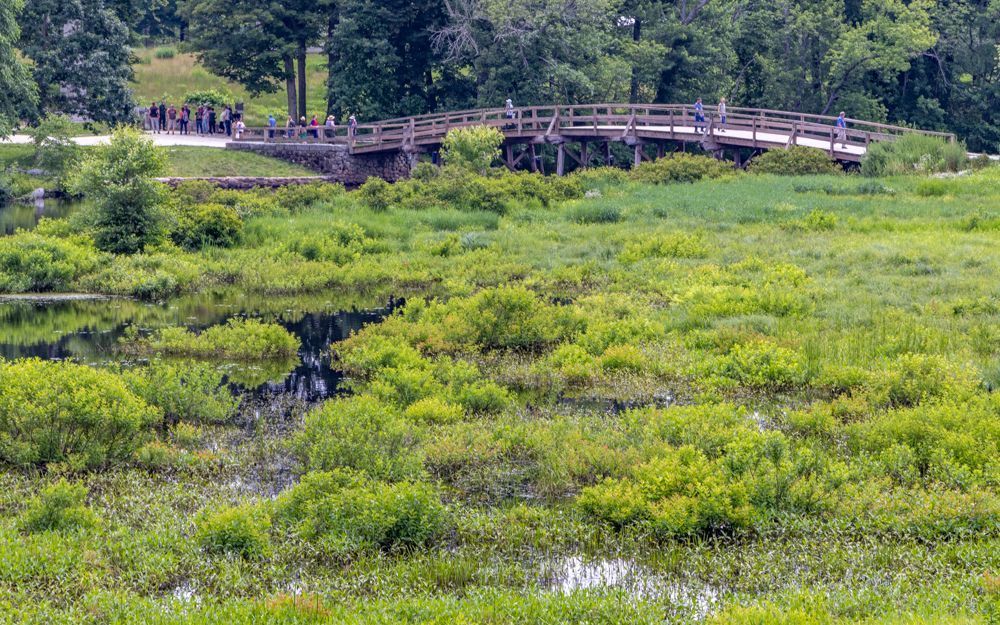
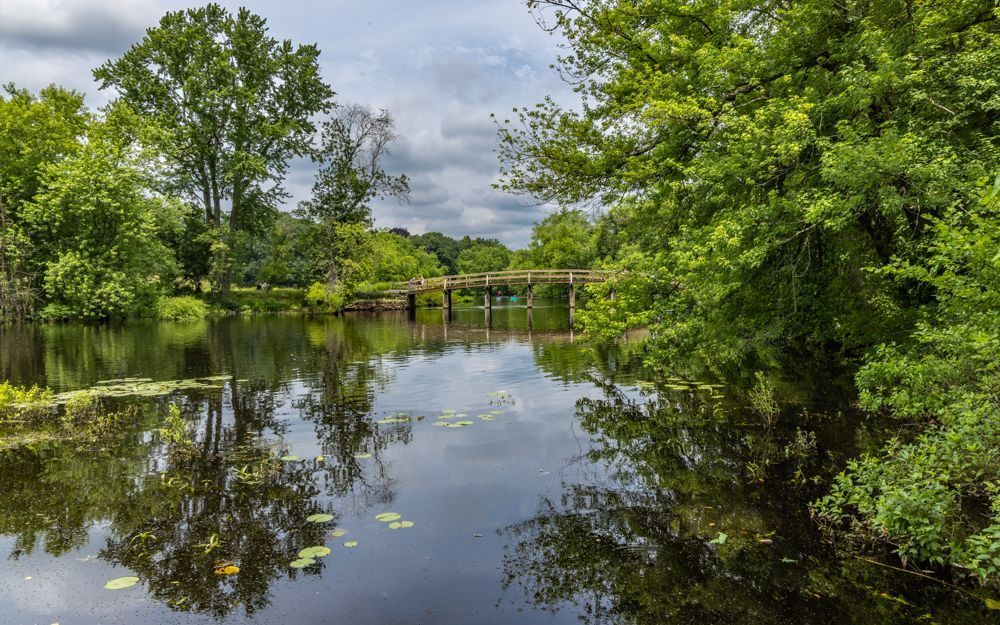
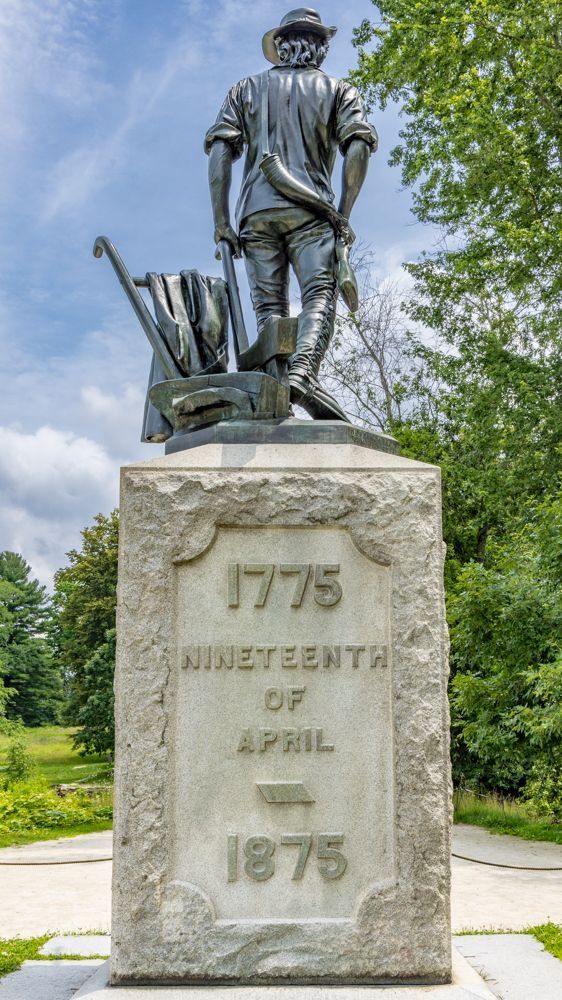
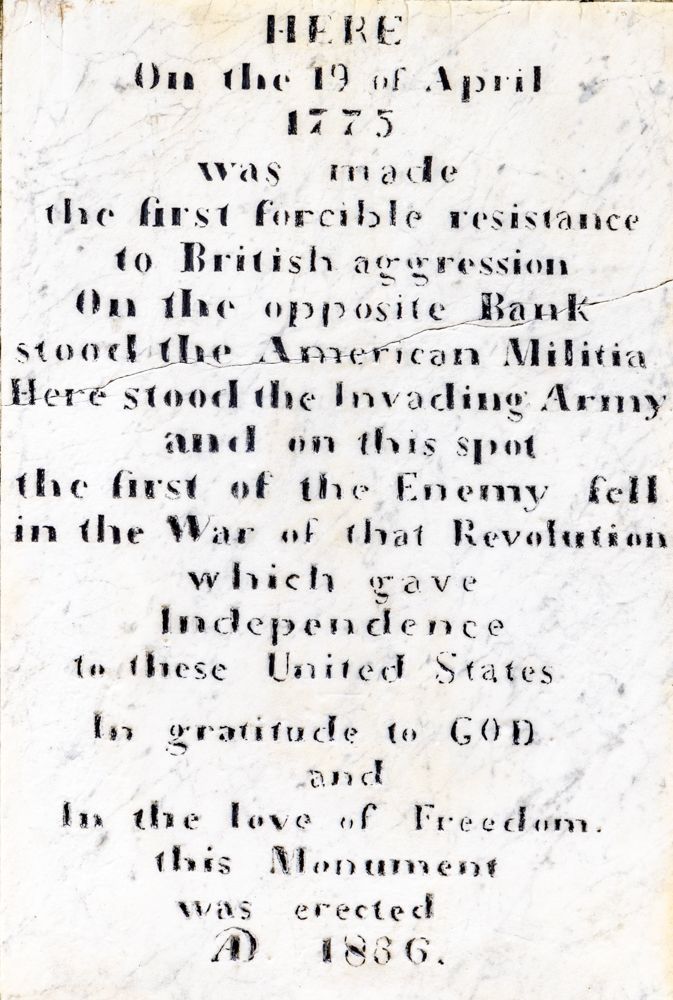
The tide of battle changed at North Bridge in Concord. Until then, the colonists had been on the defensive, participating in small skirmishes along the way. The Colonial Minute Men and Militia had assembled on Concord’s North Bridge. Major John Buttrick held his troops’ fire until the first shot was fired by the British. Then, at 9:30 AM, he ordered his troops to fire. For the first time colonists were commanded to open fire on the King's troops. Commemorated by Ralph Waldo Emerson in his poem “Concord Hymn ” the action was memorialized as “the shot heard round the world .” The American Revolution had begun.
As an aside, it is significant that Emerson’s grandfather, Rev. William Emerson, lived in a manse that had a clear view of the North Bridge. Rev. Emerson was vociferous in his criticizism of Parliment’s colonial policies, and the house was a gathering place for writers, philosophers, and social reformers throughout the 18th century.
As the British retreated back towards Boston Harbor, the Colonial Minute Men and Militia began to surround them from three sides and effectively heard them East. Other significant battles along the way took place at:
12:30 PM at Meriam’s corner
1:00 PM in Lincoln
2:30 PM back in Lexington
5:30 PM in Cambridge
By 7:00 PM the battle had arrived back at Charleston, and troops were met by a British relief column. However, even that was insufficient, as the Colonial troops now far outnumbered the British regulars. By the end of the day on April 19, the Minute Men and Militia had surrounded Boston and laid siege to the port city. The British army had been defeated, at least on this day. They were victorious, but still somewhat rough and disorganized. On July 2, 1775, George Washington was assigned by the second Continental Congress to take command of this army. Eight months later, on March 17, 1776, British troops evacuated Boston. In Massachusetts the fighting was over, but the War for Independence had only begun.
After the British were defeated by the French in the Seven Years War, their funds were badly depleted. The wanted to tax the colonists to generate funds. They sent British solders (possibly unnecessarily) to help keep Native Tribes under control and wanted to use that as an excuse to charge the colonials for their services.
The colonies had never gained representation in the British Parliament. And tensions had been mounting since 1773, when a group of Boston residents dumped chests of tea into Boston Harbor. England responded to the Boston Tea Party with the Coercive Laws of 1774 , which closed the port and banned most town meetings. Not surprisingly, the colonists found a way to meet anyway and began organizing a plot to achieve independence from England. They organized Minute Companies - Minute Men ready to fight at a moments notice. And all men between 16 and 60 were expected to participate in the general Militia should it be necessary. They also stockpiled weapons and other military supplies in Concord.
When the British heard of these activities, they decided to send troops to Concord to confiscate the weapons and teach the Colonists a lesson. This effort did not turn out as they hoped and expected. British soldiers planned to travel from Boston to Concord to seize the stockpiled weapons. However the Colonists had gotten wind of the planned raid and made plans of their own.
On April 18, 1775, Paul Revere and William Dawes set out from Boston to suss out the route the British troops would be taking and to warn the populace. William Dawes took the Southern overland route and Paul Revere took the Northern route across the Charles River where he then mounted a waiting horse. Revere saw that the British regulars were taking the more direct route across the Charles River to Cambridge - “One if by and, two if by sea.” By prearranged signal, two dimly lit lanterns were shone from the Old North Church tower. Hence began the infamous midnight ride of Paul Revere. We know of this story as Paul Revere’s Ride because of the poem of the same name written by Henry Wadsworth Longfellow .
Dawes and Revere met in Lexington and stopped to warn Patriot leaders John Hancock and Samuel Adams, then headed on to Concord. Along the way they met a young doctor, Dr. Samuel Prescott, who joined them to sound the alert. They ran into a British patrol and Revere was captured (but shortly thereafter released without his horse). Dawes continued to Concord to sound the alarm. Prescott also traveled the countryside he knew well to alert the populace. The first skirmish took place on Lexington Green at 5:00 AM on April 19; someone - it was never clear who - fired a shot and British troops responded by firing haphazardly, without orders. Eight colonials were killed, and the British regulars resumed their march to Concord.
The tide of battle changed at North Bridge in Concord. Until then, the colonists had been on the defensive, participating in small skirmishes along the way. The Colonial Minute Men and Militia had assembled on Concord’s North Bridge. Major John Buttrick held his troops’ fire until the first shot was fired by the British. Then, at 9:30 AM, he ordered his troops to fire. For the first time colonists were commanded to open fire on the King's troops. Commemorated by Ralph Waldo Emerson in his poem “Concord Hymn ” the action was memorialized as “the shot heard round the world .” The American Revolution had begun.
As an aside, it is significant that Emerson’s grandfather, Rev. William Emerson, lived in a manse that had a clear view of the North Bridge. Rev. Emerson was vociferous in his criticizism of Parliment’s colonial policies, and the house was a gathering place for writers, philosophers, and social reformers throughout the 18th century.
As the British retreated back towards Boston Harbor, the Colonial Minute Men and Militia began to surround them from three sides and effectively heard them East. Other significant battles along the way took place at:
12:30 PM at Meriam’s corner
1:00 PM in Lincoln
2:30 PM back in Lexington
5:30 PM in Cambridge
By 7:00 PM the battle had arrived back at Charleston, and troops were met by a British relief column. However, even that was insufficient, as the Colonial troops now far outnumbered the British regulars. By the end of the day on April 19, the Minute Men and Militia had surrounded Boston and laid siege to the port city. The British army had been defeated, at least on this day. They were victorious, but still somewhat rough and disorganized. On July 2, 1775, George Washington was assigned by the second Continental Congress to take command of this army. Eight months later, on March 17, 1776, British troops evacuated Boston. In Massachusetts the fighting was over, but the War for Independence had only begun.

61 photo galleries
50 States
- Big Sur
- Salinas
- Laguna Beach
- San Diego
- California
- Grand Canyon
- Sedona
- Utah
- Syracuse
- Moab
- Denver
- Manitou Springs
- Calhan
- Mesa Verde
- Los Alamos
- Santa Fe
- Carlsbad
- New Mexico
- Eureka Springs
- Little Rock
- Birmingham
- Jackson
- Lottie
- Ten Thousand Islands
- Jerome
- Savannah
- White
- Asheville
- Sandstone Falls
- Baltimore
- Timonium
- Maryland
- Berlin
- Milton
- Smyrna
- Ocean City
- Detroit
- Upper Peninsula of Michigan
- Michigan
- Herod
- Ozark
- Two Harbors
- Carlton
- Madison County
- Oakley
- Valentine
- South Dakota
- United States
- Yellowstone National Park
- Lima
- Idaho
- Port Townsend
- Lincoln City
- Newport
- San Francisco