Memphis
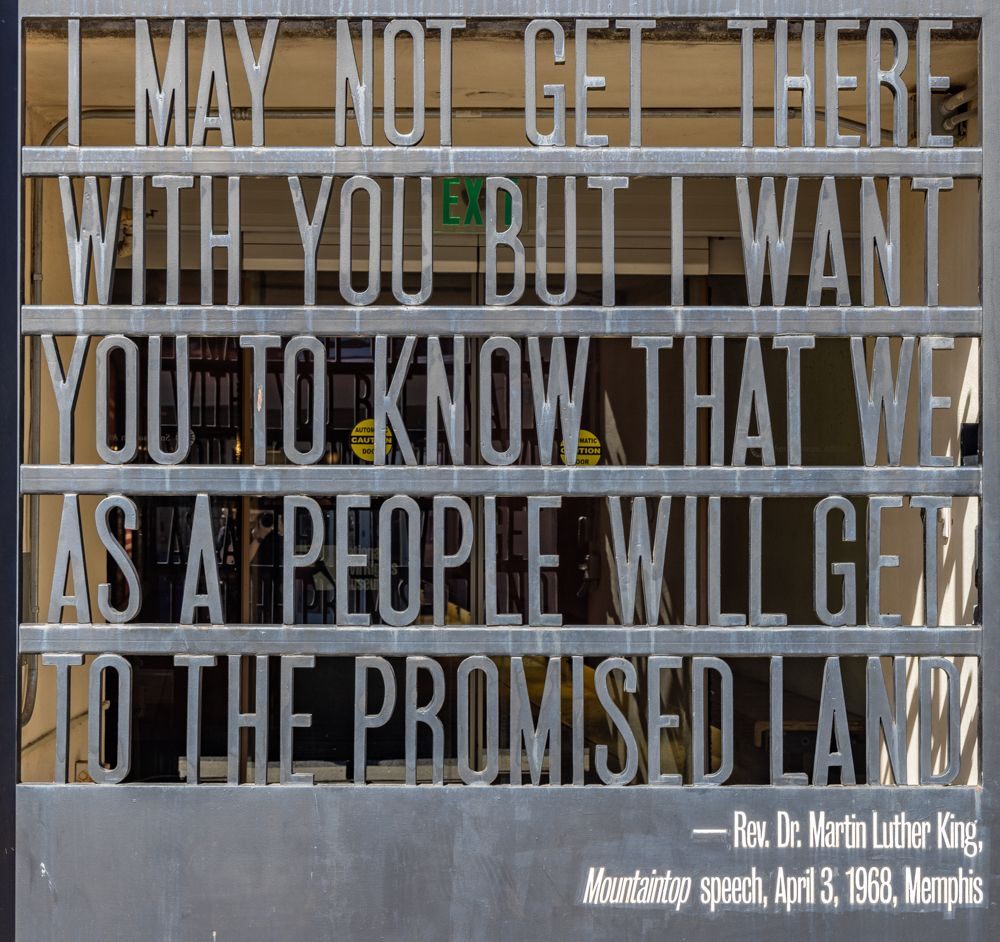
I started this morning with a visit to the National Civil Rights Museum . I had visited this museum several years ago when I was in Memphis on a work trip. As I recollect, there was some significant anniversary and it was very crowded. Today, even though it was a Saturday, was much less crowded and allowed a more leisurely walk through the museum.
This history I already knew quite well, so there were no particular surprises, just another reminder of the shameful attitudes and actions perpetrated by the - mostly male - descendants of European settlers. Unfortunately those attitudes persist today, perhaps in an even more insidious form that is even more difficult to combat.
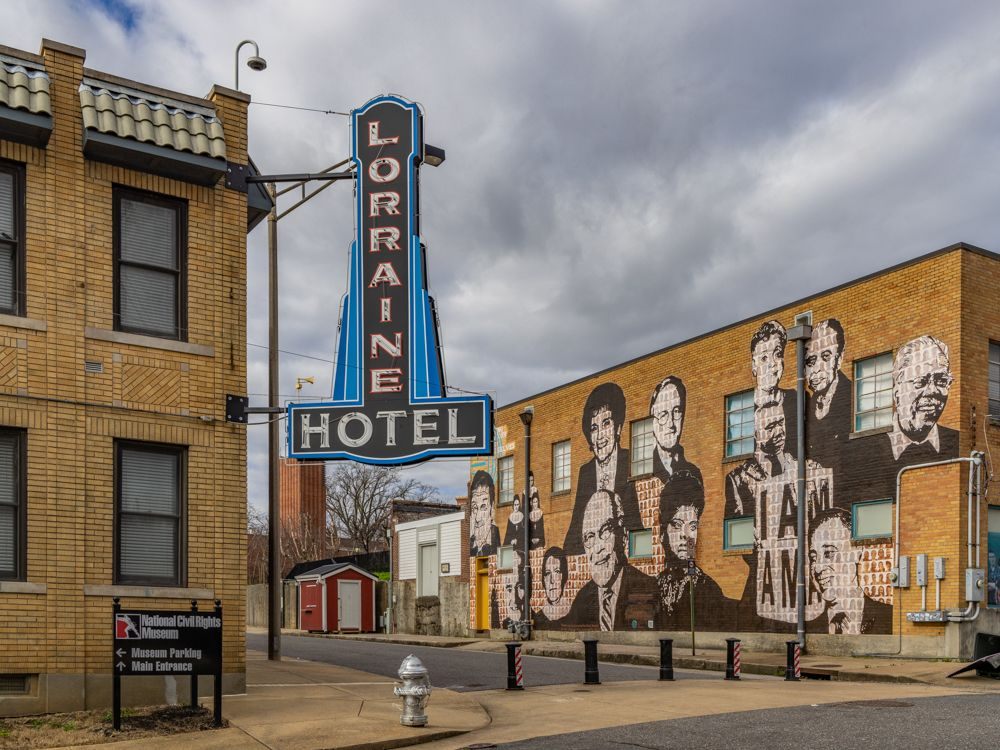
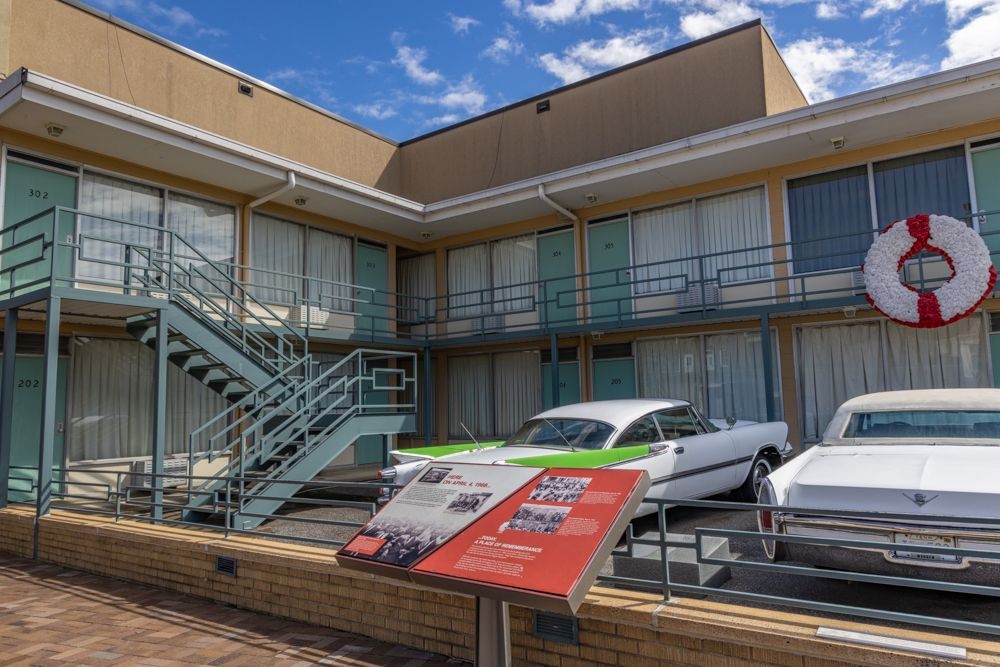
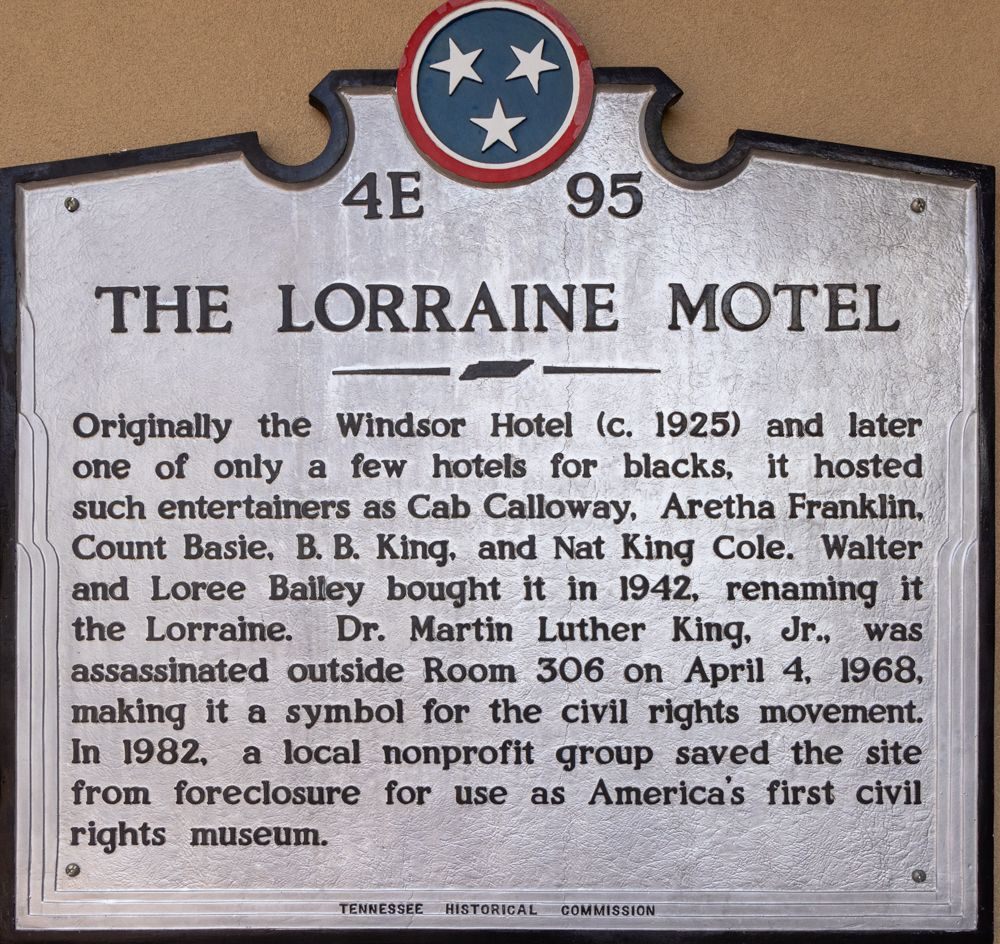
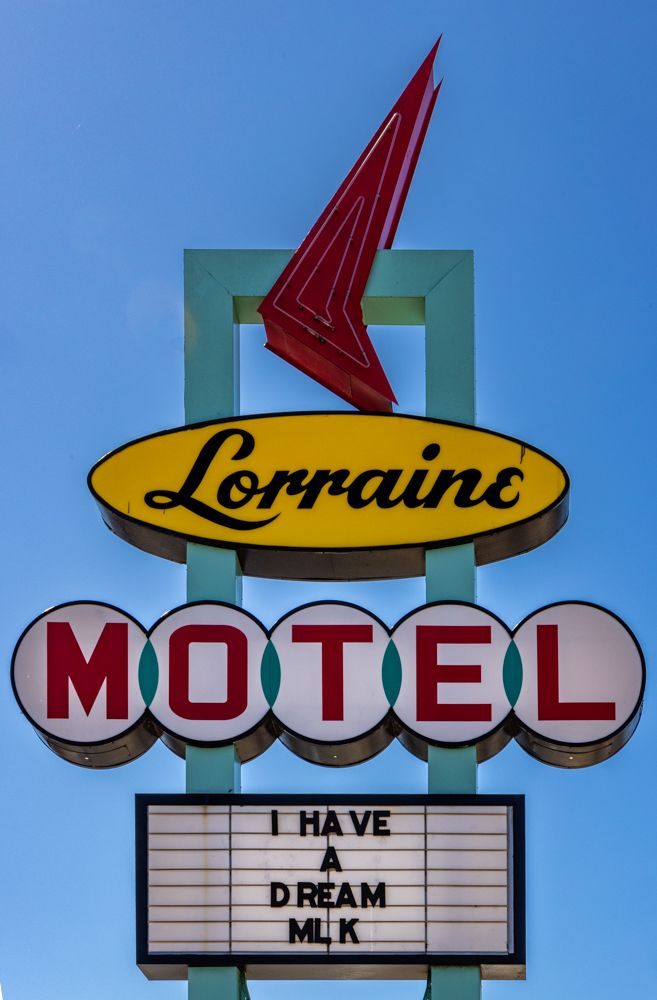
The Lorraine Hotel was the site of the Dr. Martin Luther King assassination on April 4, 1968; the hotel has been preserved, and the rooms incorporated into the museum as exhibits. The boarding house across the street, from which James Earl Ray (almost certainly) fired the fatal bullet, is also preserved. That space is dedicated to documenting the investigation and evidence in the case. You can see the bathroom from which Ray is presumed to have fired the shot, and much of the physical and investigative evidence is displayed. A key piece of physical evidence was a package that was abandoned close to the site that included a rifle and binoculars, both containing Ray's fingerprints.
Interestingly, after Ray pled guilty and was convicted of the murder of Dr. King, several additional inquiries were conducted.
In 1978, The House Select Committee on Assassinations reviewed the evidence from the original investigation. They ultimately agreed with the initial FBI report in 1968 that the bullet and rifle could not conclusively be linked. Although critical of both the investigative process and the governmental abuses against King, the report affirmed that Ray was the assassin.
In 1997, Judge Joe Brown presided over a petition for post-conviction relief that was based mainly on attempting to show that the bullet pulled from the body of King could not be associated with the recovered rifle connected with Ray. Brown not only continued to conduct his own investigations, he became an advocate for Ray’s innocence, and ultimately testified as a firearms “expert” in King v. Jowers. The King family had also become convinced that Ray was not the shooter, but rather Memphis restaurant owner Loyd Jowers, whose restaurant was near the Lorraine Motel.
Attorney William Pepper represented both Ray in Ray v. Dutton and, in 1999, the King Family in King v. Jowers , in which they won a wrongful death civil suit against Jowers. In 2000, the Justice Department concluded a limited re-investigation that considered evidence from the original 1968 investigation and both subsequent trials, and confirmed the 1968 judicial decision that Ray was the lone assassin.
I hope I got all of that right as it is complex and circuitous. Feel free to correct me if you find something amiss.
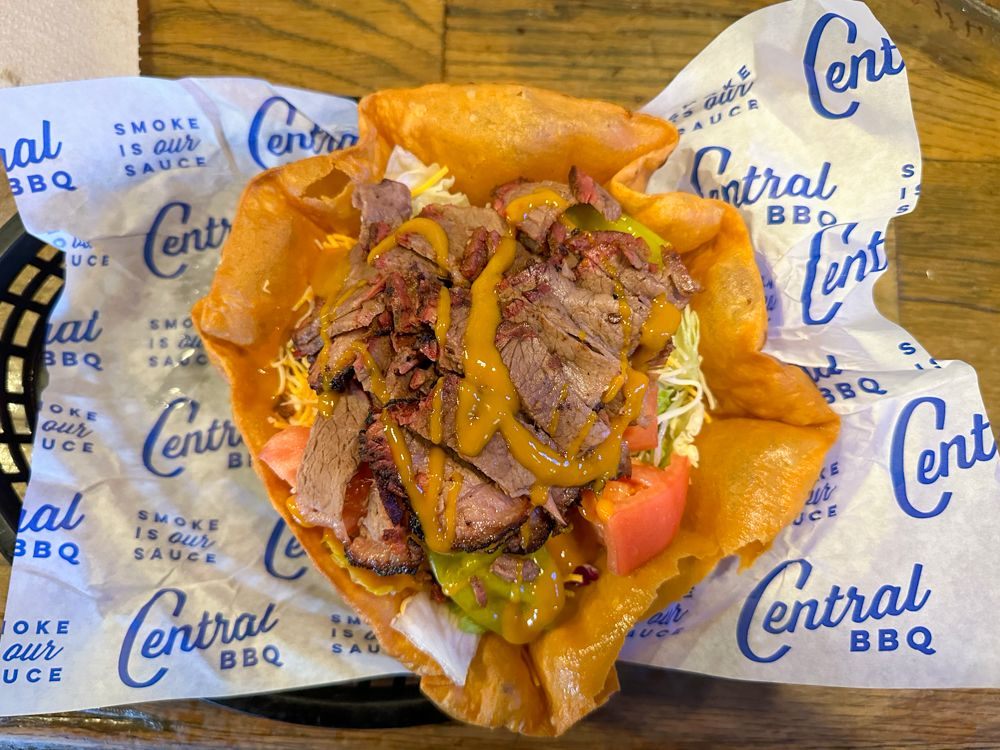
After all of this, I was ready for lunch and headed over to Central BBQ , reputedly the best in Memphis, and a block away from the museum. It did not disappoint, and the portion of my salad with brisket, even unfinished, served as both lunch and dinner.
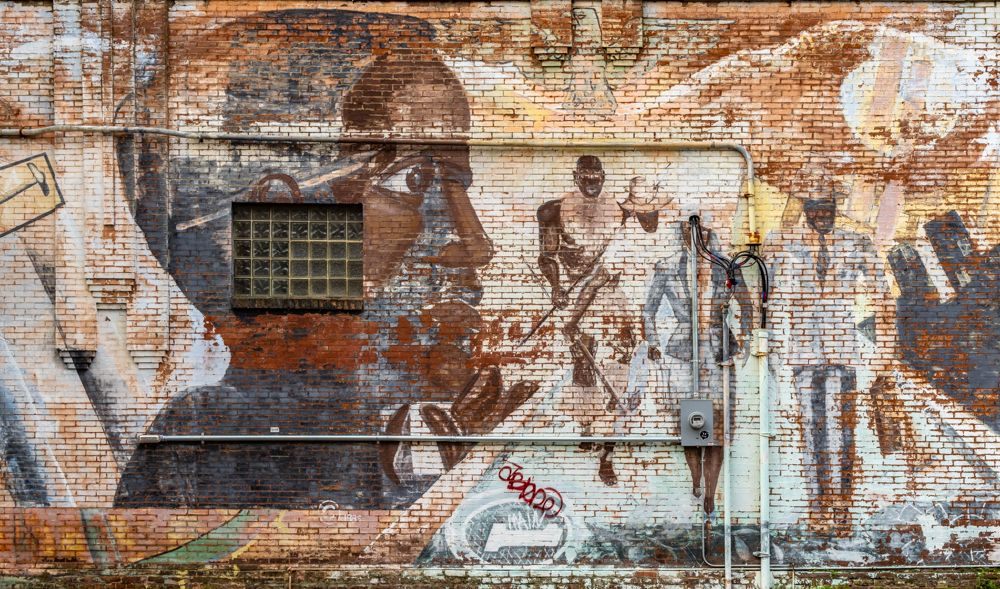
I then countered the morning with a couple of lighter activities. I walked Beale Street, the home of B.B. King and the Blues. The most interesting store on the street was The Withers Collection Museum & Gallery . Withers was a black photographer who documented the civil rights movement extensively and capture many of the defining moment. He also documented music, sports politics and everyday life. The collection is not only impressive it is extensive and only a small portion is displayed in the storefront.
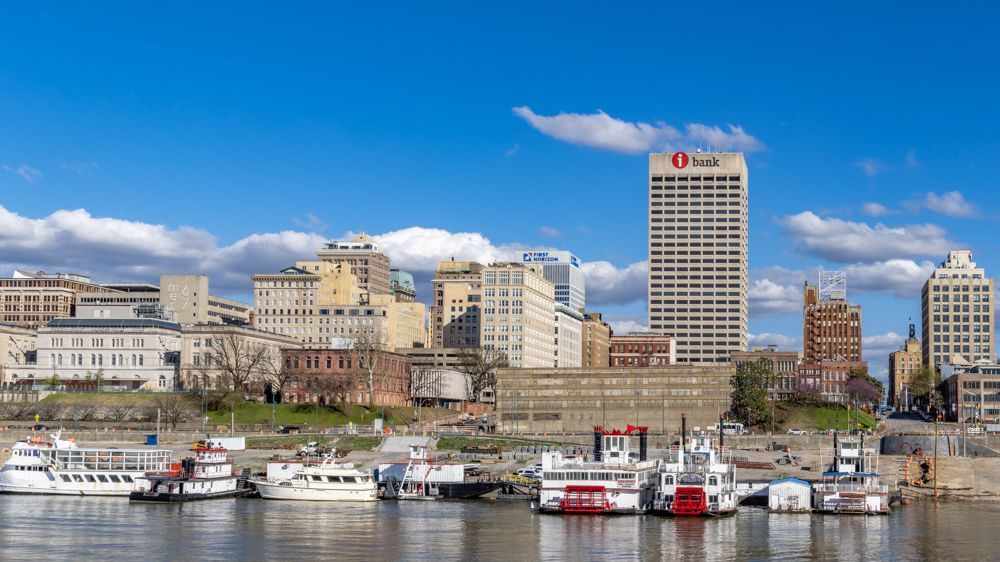
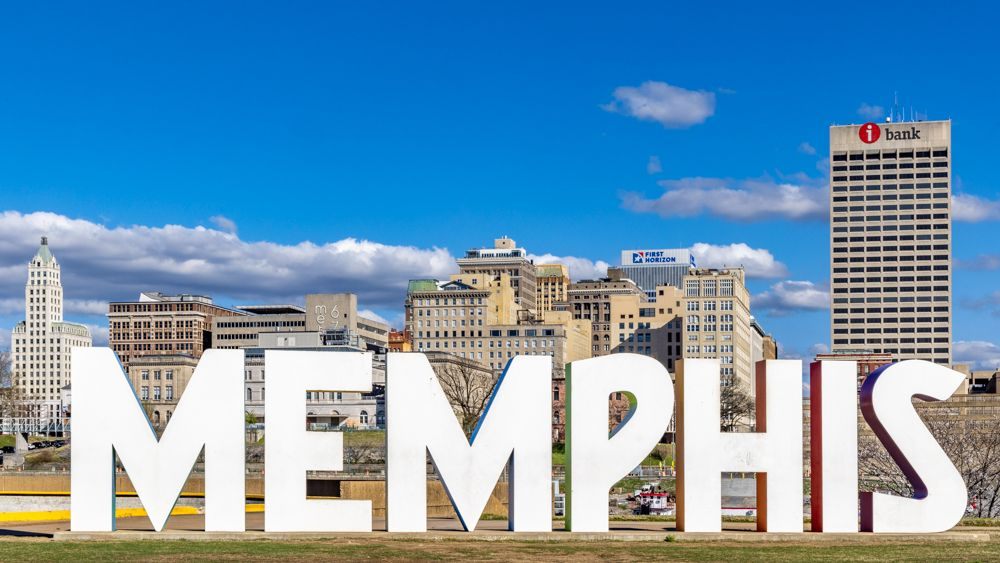
Finally, I walked over the bridge to Mud Island (by the way, the website lists closing at 7 PM, not 5 PM as happened yesterday) Oh, and the museum, which is listed as reopening in 2022 is still closed. Regardless, it did provide a view of Memphis, the Memphis-Arkansas bridge, and the Memphis sign facing the right way. I was also able to view the impressive reproduction of the Lower Mississippi River in miniature. It is reproduced as a half mile concrete topographical sculpture that meanders through much of Mud Island.
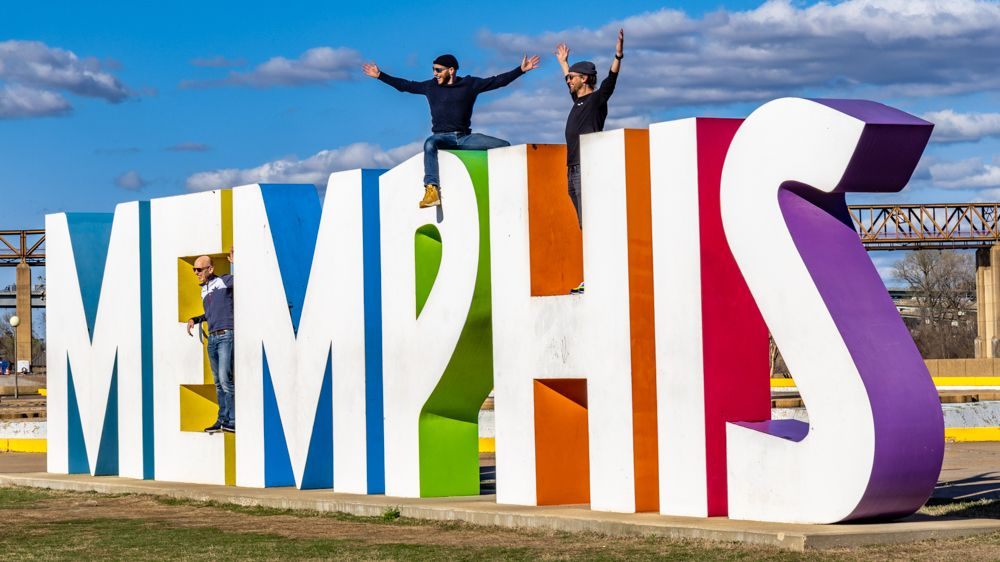
At the Memphis sign I ran into Charlie, Steve and Herb of Autodesk.com (currently based in San Fransisco). They were climbing on the sign for photos, so I took advantage of the opportunity and took some as well. Herb is originally from Germany and Steve and Charlie from the UK. We had a nice conversation about travel and I promised to send the images I took of them.
I headed back to the Moxy and took my computer down to the bar to work. Trudy and Steve from South Carolina sat next to me and we also traded travel stories.
Tomorrow I will visit some of the lesser known destinations in Memphis.
This history I already knew quite well, so there were no particular surprises, just another reminder of the shameful attitudes and actions perpetrated by the - mostly male - descendants of European settlers. Unfortunately those attitudes persist today, perhaps in an even more insidious form that is even more difficult to combat.
The Lorraine Hotel was the site of the Dr. Martin Luther King assassination on April 4, 1968; the hotel has been preserved, and the rooms incorporated into the museum as exhibits. The boarding house across the street, from which James Earl Ray (almost certainly) fired the fatal bullet, is also preserved. That space is dedicated to documenting the investigation and evidence in the case. You can see the bathroom from which Ray is presumed to have fired the shot, and much of the physical and investigative evidence is displayed. A key piece of physical evidence was a package that was abandoned close to the site that included a rifle and binoculars, both containing Ray's fingerprints.
Interestingly, after Ray pled guilty and was convicted of the murder of Dr. King, several additional inquiries were conducted.
In 1978, The House Select Committee on Assassinations reviewed the evidence from the original investigation. They ultimately agreed with the initial FBI report in 1968 that the bullet and rifle could not conclusively be linked. Although critical of both the investigative process and the governmental abuses against King, the report affirmed that Ray was the assassin.
In 1997, Judge Joe Brown presided over a petition for post-conviction relief that was based mainly on attempting to show that the bullet pulled from the body of King could not be associated with the recovered rifle connected with Ray. Brown not only continued to conduct his own investigations, he became an advocate for Ray’s innocence, and ultimately testified as a firearms “expert” in King v. Jowers. The King family had also become convinced that Ray was not the shooter, but rather Memphis restaurant owner Loyd Jowers, whose restaurant was near the Lorraine Motel.
Attorney William Pepper represented both Ray in Ray v. Dutton and, in 1999, the King Family in King v. Jowers , in which they won a wrongful death civil suit against Jowers. In 2000, the Justice Department concluded a limited re-investigation that considered evidence from the original 1968 investigation and both subsequent trials, and confirmed the 1968 judicial decision that Ray was the lone assassin.
I hope I got all of that right as it is complex and circuitous. Feel free to correct me if you find something amiss.
After all of this, I was ready for lunch and headed over to Central BBQ , reputedly the best in Memphis, and a block away from the museum. It did not disappoint, and the portion of my salad with brisket, even unfinished, served as both lunch and dinner.
I then countered the morning with a couple of lighter activities. I walked Beale Street, the home of B.B. King and the Blues. The most interesting store on the street was The Withers Collection Museum & Gallery . Withers was a black photographer who documented the civil rights movement extensively and capture many of the defining moment. He also documented music, sports politics and everyday life. The collection is not only impressive it is extensive and only a small portion is displayed in the storefront.
Finally, I walked over the bridge to Mud Island (by the way, the website lists closing at 7 PM, not 5 PM as happened yesterday) Oh, and the museum, which is listed as reopening in 2022 is still closed. Regardless, it did provide a view of Memphis, the Memphis-Arkansas bridge, and the Memphis sign facing the right way. I was also able to view the impressive reproduction of the Lower Mississippi River in miniature. It is reproduced as a half mile concrete topographical sculpture that meanders through much of Mud Island.
At the Memphis sign I ran into Charlie, Steve and Herb of Autodesk.com (currently based in San Fransisco). They were climbing on the sign for photos, so I took advantage of the opportunity and took some as well. Herb is originally from Germany and Steve and Charlie from the UK. We had a nice conversation about travel and I promised to send the images I took of them.
I headed back to the Moxy and took my computer down to the bar to work. Trudy and Steve from South Carolina sat next to me and we also traded travel stories.
Tomorrow I will visit some of the lesser known destinations in Memphis.

61 photo galleries
50 States
- Big Sur
- Salinas
- Laguna Beach
- San Diego
- California
- Grand Canyon
- Sedona
- Utah
- Syracuse
- Moab
- Denver
- Manitou Springs
- Calhan
- Mesa Verde
- Los Alamos
- Santa Fe
- Carlsbad
- New Mexico
- Eureka Springs
- Little Rock
- Birmingham
- Jackson
- Lottie
- Ten Thousand Islands
- Jerome
- Savannah
- White
- Asheville
- Sandstone Falls
- Baltimore
- Timonium
- Maryland
- Berlin
- Milton
- Smyrna
- Ocean City
- Detroit
- Upper Peninsula of Michigan
- Michigan
- Herod
- Ozark
- Two Harbors
- Carlton
- Madison County
- Oakley
- Valentine
- South Dakota
- United States
- Yellowstone National Park
- Lima
- Idaho
- Port Townsend
- Lincoln City
- Newport
- San Francisco