Lexington [museums]
(Alert - long post)
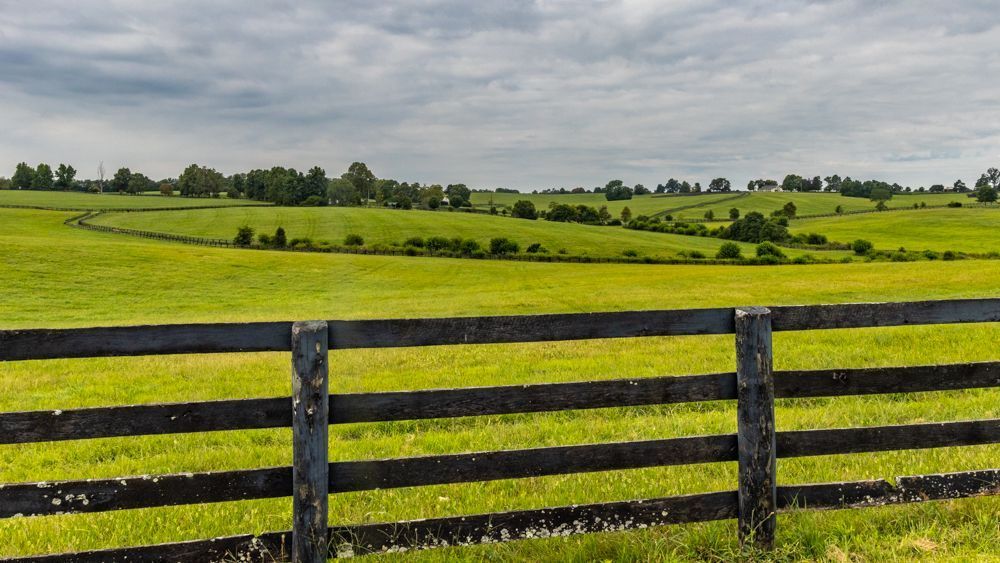
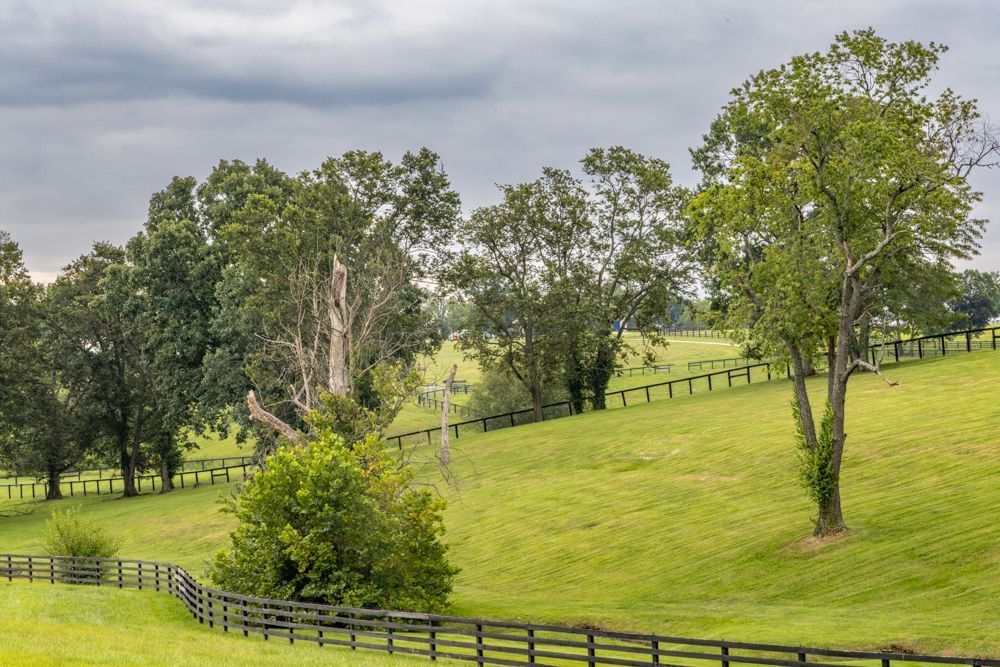
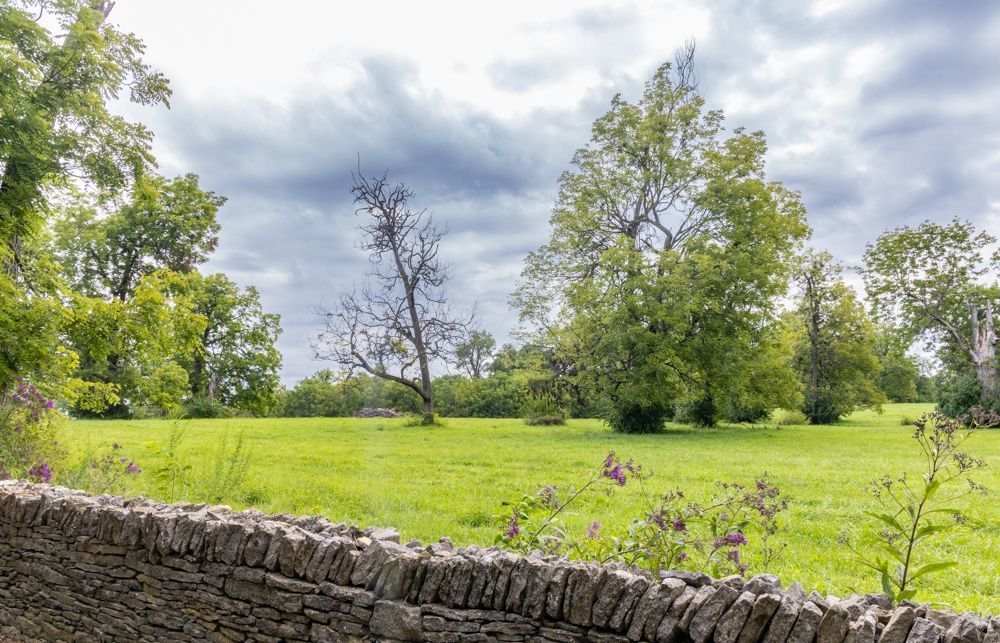
My first destination this morning was the Thomas D. Clark Center for Kentucky History . As the museum only opened at 10 AM, I took the scenic route, again meandering among the horse farms in an attempt to capture a few more images. The horses themselves were scarce, but I found a few additional fence patterns.
Roger greeted me at the museum and we chatted for a while about both Kentucky and California, where he had visited family at one point. He asked me about news stories that reported an increase in homelessness in S.F. as well as an exodus from the city. I confirmed that both were accurate, but also clarified that these issues were not unique to San Franciso, the same situation was present in many cities in the U.S. As I have traveled throughout the country, I’ve seen homeless encampments everywhere. How to address the problem is a complex multifactorial issues beyond this blog, other than to note that it is pervasive. It is also true that the work-from-home trend that exploded during the worst of the Pandemic is here to stay. Many office buildings in downtown areas remain empty and are being abandoned by the thriving businesses that once in inhabited them. Empty building mean that landlords are not receiving income, and also that other downtown businesses like retail and restaurants are seeing severely reduced traffic, affecting their ability to maintain a presence as well. Again, the solution is unclear and beyond further discussion in this forum. Roger the oriented me to the museum and I began my visit to learn about KY history .
The earliest known human inhabitants of the Kentucky region were hunter-gatherers who hunted and fished along the Green River. They left huge mounds of mussel shells for the archeologists to ponder over. As the Archaic period gave way to the Woodland period, they became less nomadic and more settled and began to grow crops. During this period, from about B.C. 300 to A.D. 500, the Arena culture developed in what are today Kentucky, Ohio and Virginia. These people built the large earthen burial mounds are typical of prehistoric cultures and also apparently traveled great distances to trade for non-local goods. From about A.D. 1000-1700 both the Mississipian and the Fort Ancient Cultures began to form villages and a more complex society.
By the 1600s, European explorers and traders began to arrive and interact with what were now the Shawnee, Cherokee and Chickasaw tribes. Again, trade gave way to conflict, and a century later, most indigenous peoples had left or were forcibly removed to other areas. Prior to 1763, all of trans-Appalachia including what was later to be known as Kentucke country was part of Louisiana, an administrative district of New France. The remnants of this occupation are seen in the names of towns such as Versaille (pronounced “versales” by the locals). Like other areas, the French lost their claim to the lands to the British after their defeat in the French and Indian war.
Kentucky’s favorite son, Daniel Boone, is credited with traversing the Cumberland gap from Virginia into what is now Kentucky and leading exploration and settlement of the region.
Starting in 1775, Kentucky grew rapidly as the first settlements west of the Appalachian Mountains were founded. Tobacco, corn, and hemp were major cash crops. In 1775, Boone along with Judge Richard Henderson and the investors of the Louisa Company merged to become the Transylvania Company. They negotiated - although not without dissent from various actors on both sides - The Treaty of Sycamore Shoals in which they acquired large swaths of Native lands. On this land, they founded the Colony of Transylvania where they met for the Transylvania Convention on May 23, 1775, to write the "Kentucke Magna Charta". In 1776 the Virginia Assembly established Kentucky County with no mention of the Transylvania claim, and in 1778, the Treaty of Sycamore Shoals and the Transylvania land purchase were invalidated by the Virginia General Assembly.
In 1776, due to ongoing Native American resistance to white settlement, fewer than 200 settlers resided in the Kentucky area. Over the next 15 years, Kentucky County was subdivided into 9 counties, but continued to be administered as the District of Kentucky until its admission to the union as the state of Kentucky. During the American Revolutionary War, settlers began pouring into the region, precipitating the Cherokee-American wars. By the Treaty of Holston (1791), the Cherokee Nation became a suzerainty under the United States, perhaps a prelude to reservations, and the Cherokee-American wars were finally ended by the follow-on Treaty of Tellico Blockhouse in 1794.
Kentuckians wished to to separate from Virginia for a number of reasons. Traveling to the Virginia state capital from Kentucky was long and dangerous. The use of local militias against Indian raids required authorization from the governor of Virginia, and Virginia refused to recognize the importance of Mississippi River trade to Kentucky's economy. It forbade trade with the Spanish colony of New Orleans (which controlled the mouth of the Mississippi), important to Kentucky communities. In 1788, Virginia finally consented to Kentucky statehood.
By 1860, Kentucky's population had exceeded a million, twenty-five percent of which were slaves. Kentucky was a border state during the American Civil War; the state voted against secession and remained loyal to the Union, although individual opinions were divided. Kentucky remained neutral until a legislature with strong Union sympathies took office in 1861; most residents also favored the Union. In 1861, the confederates violated Kentucky neutrality by invading Columbus, leading to Union general Ulysses S. Grant entered Paducah. The Kentucky state legislature, angered by the Confederate invasion, ordered the Union flag raised over the state capitol in Frankfort.
Kentucky became internationally known in the late 19th century for its violent feuds, the most famous of which was the Hatfield–McCoy feud. A precipitating event was apparently the disputed ownership of a pig that swam across the Tug Fork in 1878. This led to shootouts, assassinations, massacres, and a hanging in which 60 Hatfield and McCoy family members, associates, neighbors, law enforcement and others were killed or injured. The feud ended with the hanging of Ellison Mounts, a Hatfield, in 1890 after being sentenced to death.
Kentucky followed the rest of the country in the boom-bust cycle precipitated by Prohibition, the Great Depression, WWII and the New Deal. From what I have seen in my few days observing the state, it seems to be thriving, likely due in no small part to the well-established and apparently recession-proof industries of horse breeding and racing as well as bourbon production.
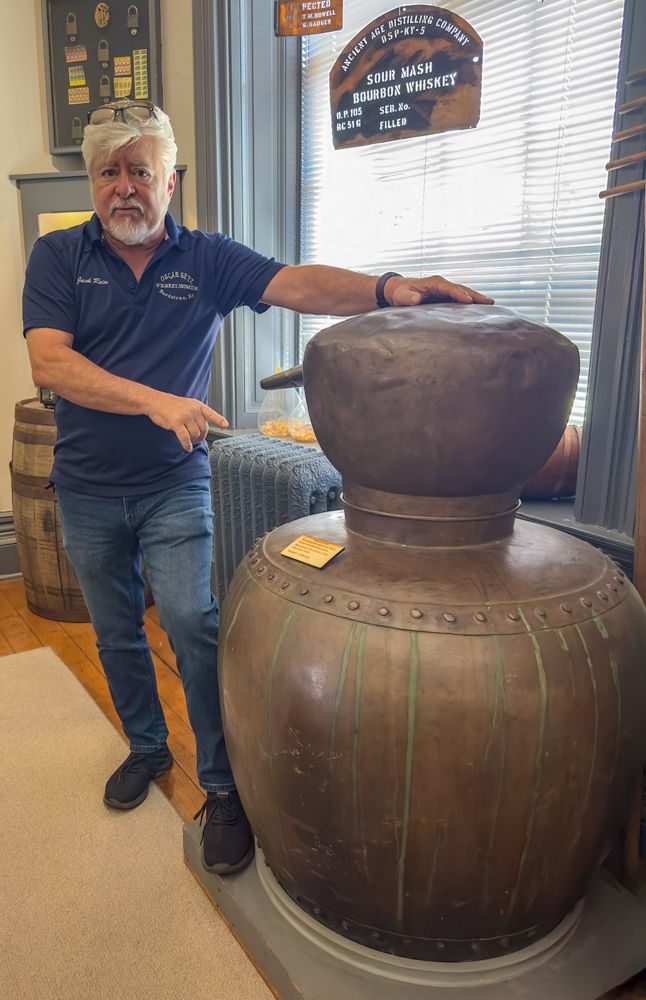
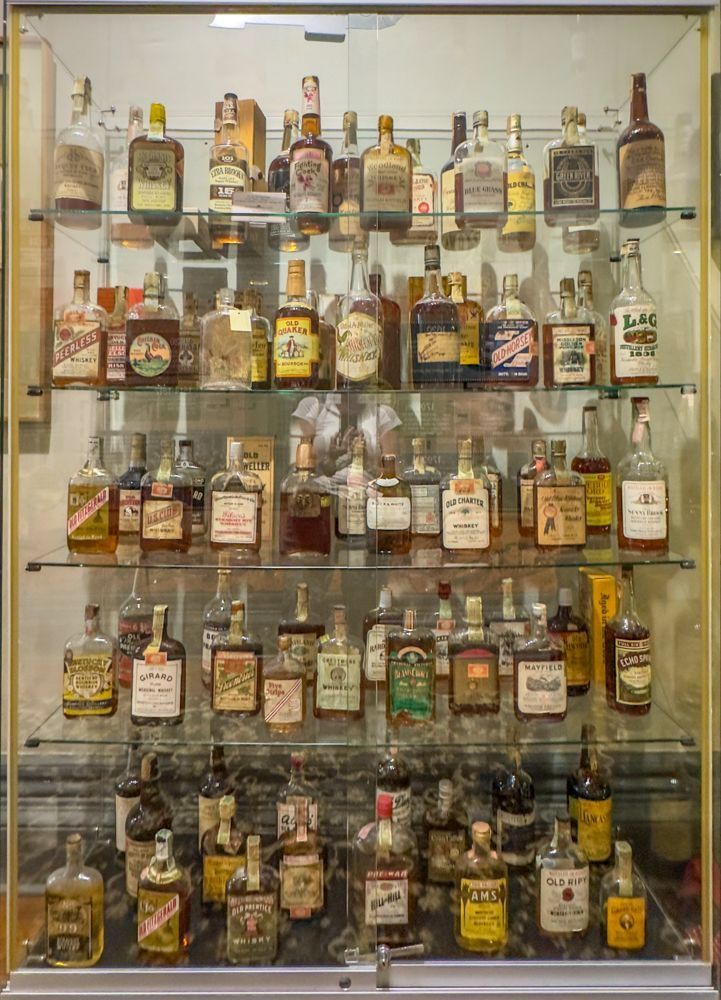
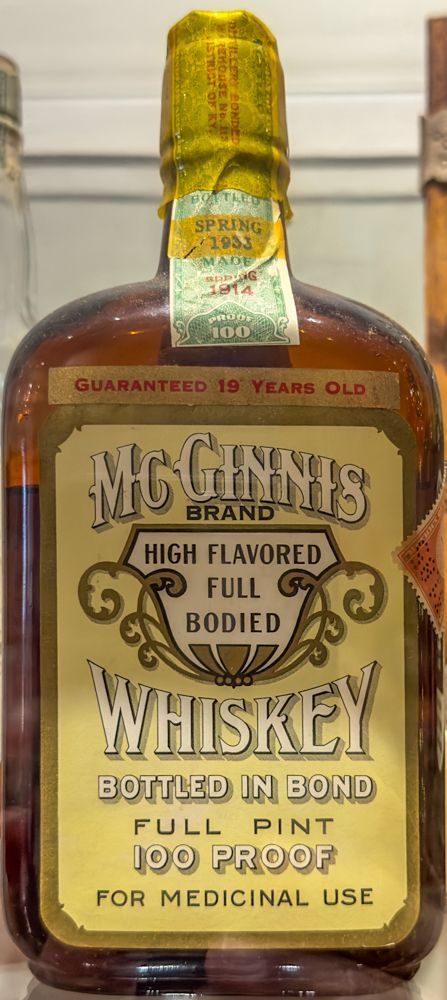
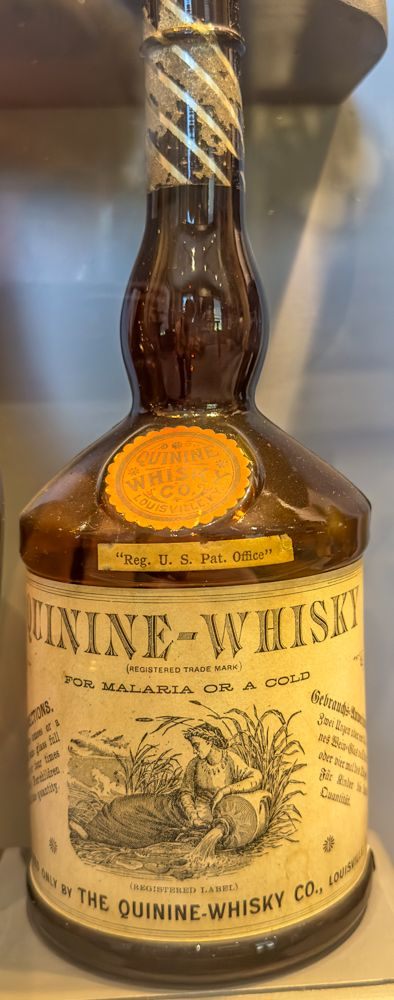
After completing my lesson in Kentucky history, I decided to give the Oscar Getz Museum of Bourbon history one more try. Before driving out, I called to make sure they were open. The woman who answered insisted that they had been open on Sunday, but I think that was an expectation rather than a confirmation. Soon after arrival, I was greeted by Roger. Roger is originally from Chicago, but lived in California for some time before moving to Bardstown to become involved Bourbon culture and the museum. The museum contains the largest collection of whisky and Bourbon artifacts in the world, and Roger had many stories to accompany the collection. He showed me the still that had been recovered from a descendent of George Washington (whiskey sales had been used to finance the Revolutionary War effort) and a particular bottle that had been barreled prior to Prohibition and bottled after, as evidenced by the dates on the label. He also told me about the history of Oscar Getz and of the building before it was acquired from the museum.
After talking with Roger for some time, I asked for his opinions about the political and social climate of Kentucky. I wondered how he felt living here. His impression is very different than the one I received from speaking to Sim a couple of days ago. Although Bardstown is likely a bit of an oasis, he feels that Kentucky in general is far more purple politically and more socially liberal than I had come to understand. He reminded me that the current Governor of Kentucky is a Democrat. In fact, according to Wiki, since 1931, sixteen of the twenty elected governors have been Democrats. Interesting information.
Tomorrow I will visit a horse farm (hopefully I will finally be able to photograph horses) before heading over to Louisville.
My first destination this morning was the Thomas D. Clark Center for Kentucky History . As the museum only opened at 10 AM, I took the scenic route, again meandering among the horse farms in an attempt to capture a few more images. The horses themselves were scarce, but I found a few additional fence patterns.
Roger greeted me at the museum and we chatted for a while about both Kentucky and California, where he had visited family at one point. He asked me about news stories that reported an increase in homelessness in S.F. as well as an exodus from the city. I confirmed that both were accurate, but also clarified that these issues were not unique to San Franciso, the same situation was present in many cities in the U.S. As I have traveled throughout the country, I’ve seen homeless encampments everywhere. How to address the problem is a complex multifactorial issues beyond this blog, other than to note that it is pervasive. It is also true that the work-from-home trend that exploded during the worst of the Pandemic is here to stay. Many office buildings in downtown areas remain empty and are being abandoned by the thriving businesses that once in inhabited them. Empty building mean that landlords are not receiving income, and also that other downtown businesses like retail and restaurants are seeing severely reduced traffic, affecting their ability to maintain a presence as well. Again, the solution is unclear and beyond further discussion in this forum. Roger the oriented me to the museum and I began my visit to learn about KY history .
The earliest known human inhabitants of the Kentucky region were hunter-gatherers who hunted and fished along the Green River. They left huge mounds of mussel shells for the archeologists to ponder over. As the Archaic period gave way to the Woodland period, they became less nomadic and more settled and began to grow crops. During this period, from about B.C. 300 to A.D. 500, the Arena culture developed in what are today Kentucky, Ohio and Virginia. These people built the large earthen burial mounds are typical of prehistoric cultures and also apparently traveled great distances to trade for non-local goods. From about A.D. 1000-1700 both the Mississipian and the Fort Ancient Cultures began to form villages and a more complex society.
By the 1600s, European explorers and traders began to arrive and interact with what were now the Shawnee, Cherokee and Chickasaw tribes. Again, trade gave way to conflict, and a century later, most indigenous peoples had left or were forcibly removed to other areas. Prior to 1763, all of trans-Appalachia including what was later to be known as Kentucke country was part of Louisiana, an administrative district of New France. The remnants of this occupation are seen in the names of towns such as Versaille (pronounced “versales” by the locals). Like other areas, the French lost their claim to the lands to the British after their defeat in the French and Indian war.
Kentucky’s favorite son, Daniel Boone, is credited with traversing the Cumberland gap from Virginia into what is now Kentucky and leading exploration and settlement of the region.
Starting in 1775, Kentucky grew rapidly as the first settlements west of the Appalachian Mountains were founded. Tobacco, corn, and hemp were major cash crops. In 1775, Boone along with Judge Richard Henderson and the investors of the Louisa Company merged to become the Transylvania Company. They negotiated - although not without dissent from various actors on both sides - The Treaty of Sycamore Shoals in which they acquired large swaths of Native lands. On this land, they founded the Colony of Transylvania where they met for the Transylvania Convention on May 23, 1775, to write the "Kentucke Magna Charta". In 1776 the Virginia Assembly established Kentucky County with no mention of the Transylvania claim, and in 1778, the Treaty of Sycamore Shoals and the Transylvania land purchase were invalidated by the Virginia General Assembly.
In 1776, due to ongoing Native American resistance to white settlement, fewer than 200 settlers resided in the Kentucky area. Over the next 15 years, Kentucky County was subdivided into 9 counties, but continued to be administered as the District of Kentucky until its admission to the union as the state of Kentucky. During the American Revolutionary War, settlers began pouring into the region, precipitating the Cherokee-American wars. By the Treaty of Holston (1791), the Cherokee Nation became a suzerainty under the United States, perhaps a prelude to reservations, and the Cherokee-American wars were finally ended by the follow-on Treaty of Tellico Blockhouse in 1794.
Kentuckians wished to to separate from Virginia for a number of reasons. Traveling to the Virginia state capital from Kentucky was long and dangerous. The use of local militias against Indian raids required authorization from the governor of Virginia, and Virginia refused to recognize the importance of Mississippi River trade to Kentucky's economy. It forbade trade with the Spanish colony of New Orleans (which controlled the mouth of the Mississippi), important to Kentucky communities. In 1788, Virginia finally consented to Kentucky statehood.
By 1860, Kentucky's population had exceeded a million, twenty-five percent of which were slaves. Kentucky was a border state during the American Civil War; the state voted against secession and remained loyal to the Union, although individual opinions were divided. Kentucky remained neutral until a legislature with strong Union sympathies took office in 1861; most residents also favored the Union. In 1861, the confederates violated Kentucky neutrality by invading Columbus, leading to Union general Ulysses S. Grant entered Paducah. The Kentucky state legislature, angered by the Confederate invasion, ordered the Union flag raised over the state capitol in Frankfort.
Kentucky became internationally known in the late 19th century for its violent feuds, the most famous of which was the Hatfield–McCoy feud. A precipitating event was apparently the disputed ownership of a pig that swam across the Tug Fork in 1878. This led to shootouts, assassinations, massacres, and a hanging in which 60 Hatfield and McCoy family members, associates, neighbors, law enforcement and others were killed or injured. The feud ended with the hanging of Ellison Mounts, a Hatfield, in 1890 after being sentenced to death.
Kentucky followed the rest of the country in the boom-bust cycle precipitated by Prohibition, the Great Depression, WWII and the New Deal. From what I have seen in my few days observing the state, it seems to be thriving, likely due in no small part to the well-established and apparently recession-proof industries of horse breeding and racing as well as bourbon production.
After completing my lesson in Kentucky history, I decided to give the Oscar Getz Museum of Bourbon history one more try. Before driving out, I called to make sure they were open. The woman who answered insisted that they had been open on Sunday, but I think that was an expectation rather than a confirmation. Soon after arrival, I was greeted by Roger. Roger is originally from Chicago, but lived in California for some time before moving to Bardstown to become involved Bourbon culture and the museum. The museum contains the largest collection of whisky and Bourbon artifacts in the world, and Roger had many stories to accompany the collection. He showed me the still that had been recovered from a descendent of George Washington (whiskey sales had been used to finance the Revolutionary War effort) and a particular bottle that had been barreled prior to Prohibition and bottled after, as evidenced by the dates on the label. He also told me about the history of Oscar Getz and of the building before it was acquired from the museum.
After talking with Roger for some time, I asked for his opinions about the political and social climate of Kentucky. I wondered how he felt living here. His impression is very different than the one I received from speaking to Sim a couple of days ago. Although Bardstown is likely a bit of an oasis, he feels that Kentucky in general is far more purple politically and more socially liberal than I had come to understand. He reminded me that the current Governor of Kentucky is a Democrat. In fact, according to Wiki, since 1931, sixteen of the twenty elected governors have been Democrats. Interesting information.
Tomorrow I will visit a horse farm (hopefully I will finally be able to photograph horses) before heading over to Louisville.
61 photo galleries
50 States
- Big Sur
- Salinas
- Laguna Beach
- San Diego
- California
- Grand Canyon
- Sedona
- Utah
- Syracuse
- Moab
- Denver
- Manitou Springs
- Calhan
- Mesa Verde
- Los Alamos
- Santa Fe
- Carlsbad
- New Mexico
- Eureka Springs
- Little Rock
- Birmingham
- Jackson
- Lottie
- Ten Thousand Islands
- Jerome
- Savannah
- White
- Asheville
- Sandstone Falls
- Baltimore
- Timonium
- Maryland
- Berlin
- Milton
- Smyrna
- Ocean City
- Detroit
- Upper Peninsula of Michigan
- Michigan
- Herod
- Ozark
- Two Harbors
- Carlton
- Madison County
- Oakley
- Valentine
- South Dakota
- United States
- Yellowstone National Park
- Lima
- Idaho
- Port Townsend
- Lincoln City
- Newport
- San Francisco