Lancaster to Philadelphia
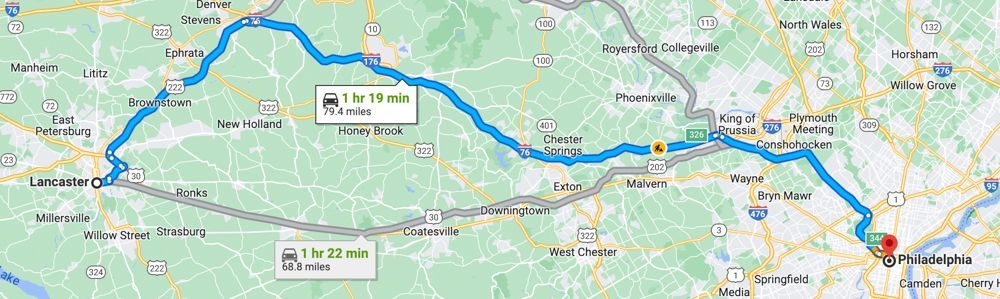
This morning I drove from Lancaster to Philadelphia. Like all big cities, I was relieved to navigate the city without major incident and park the car for the duration.
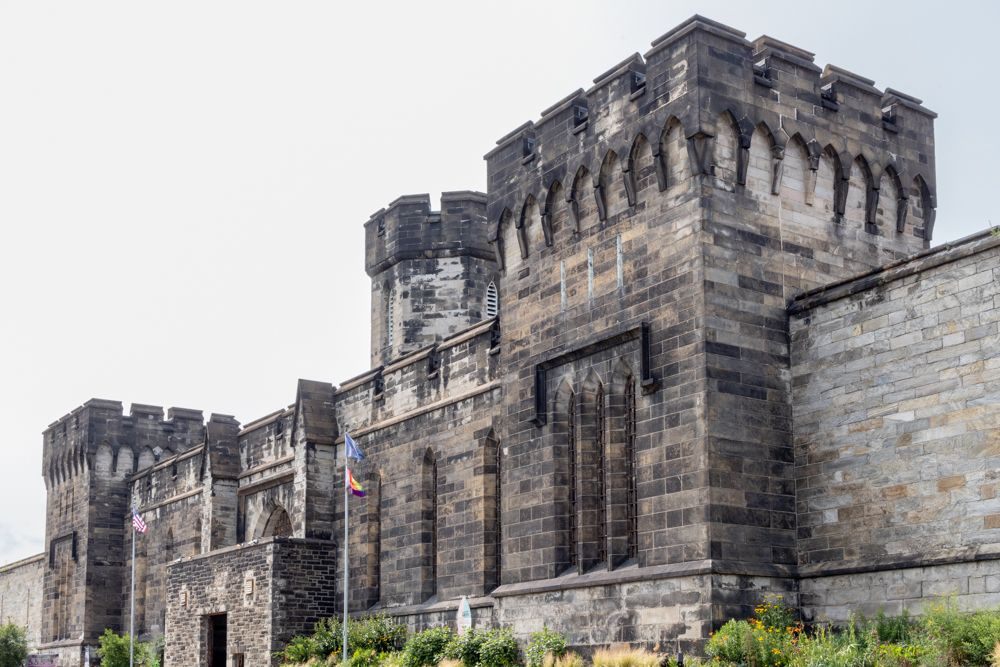
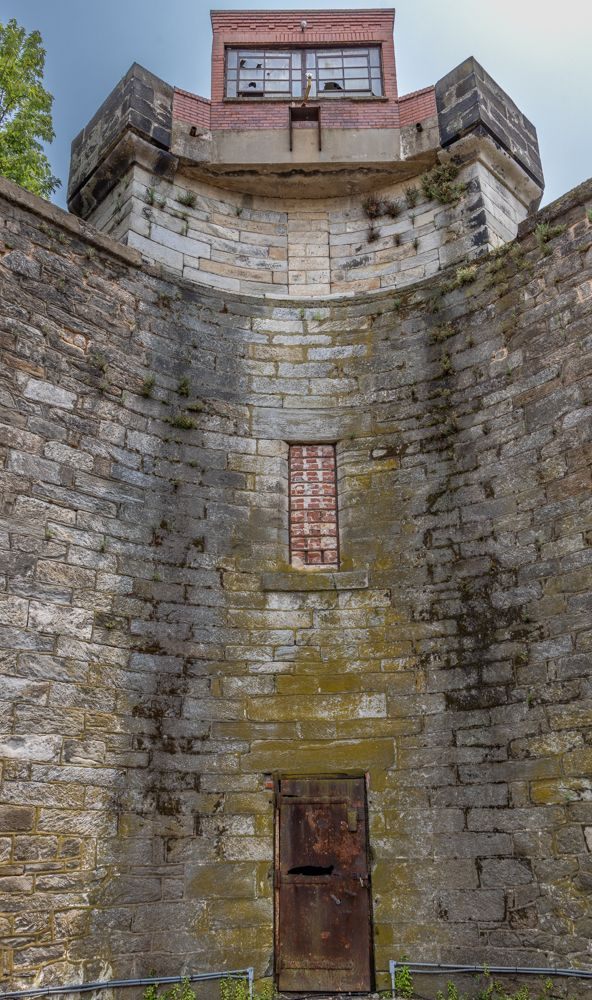
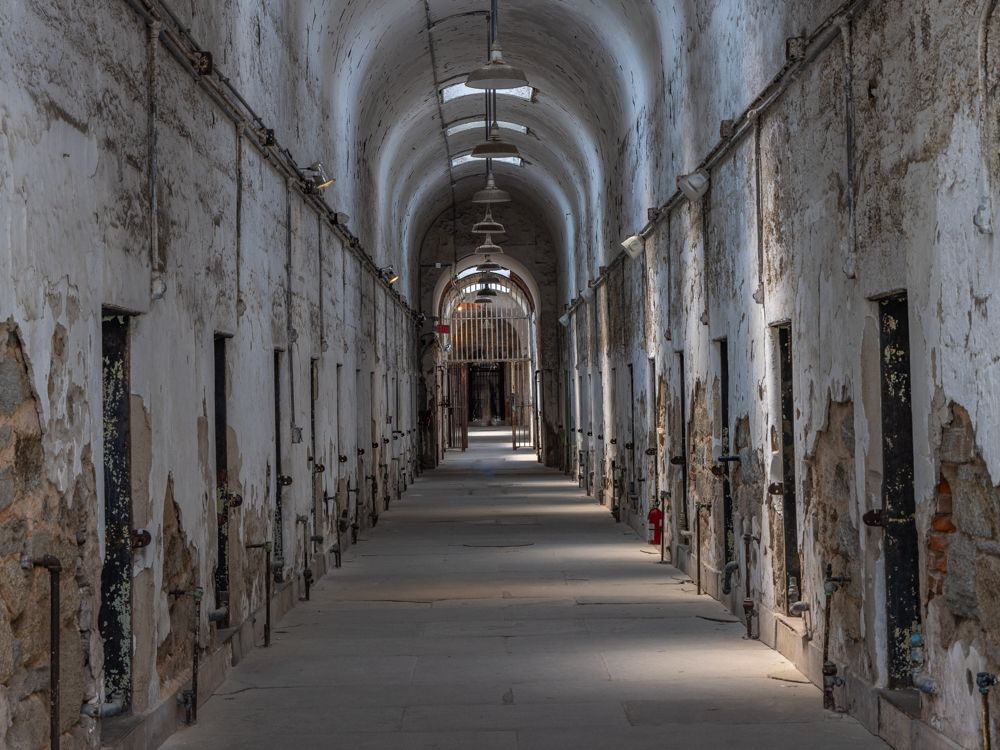
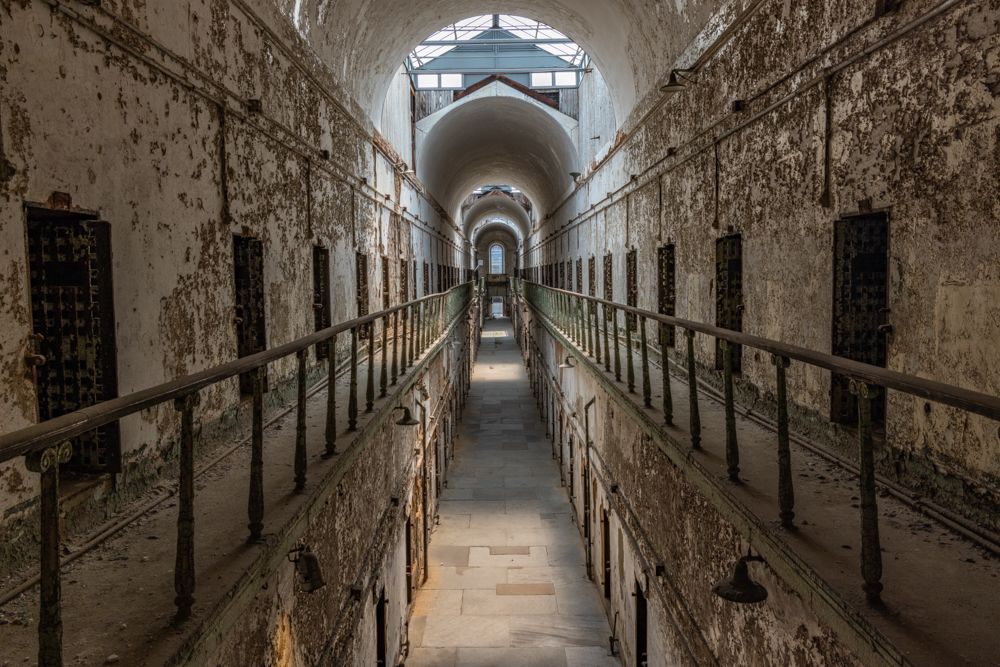
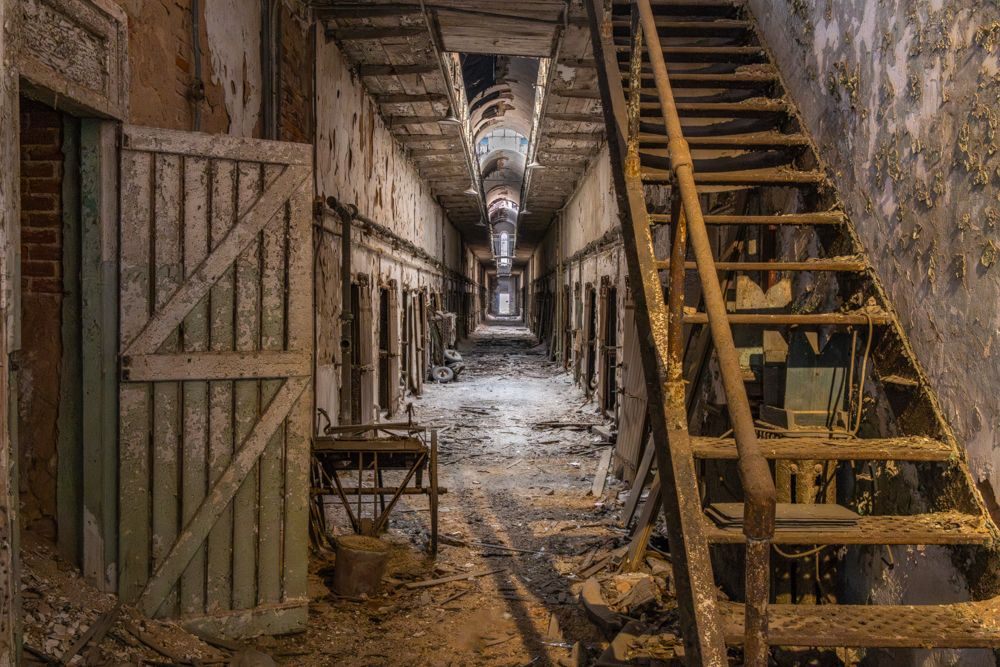
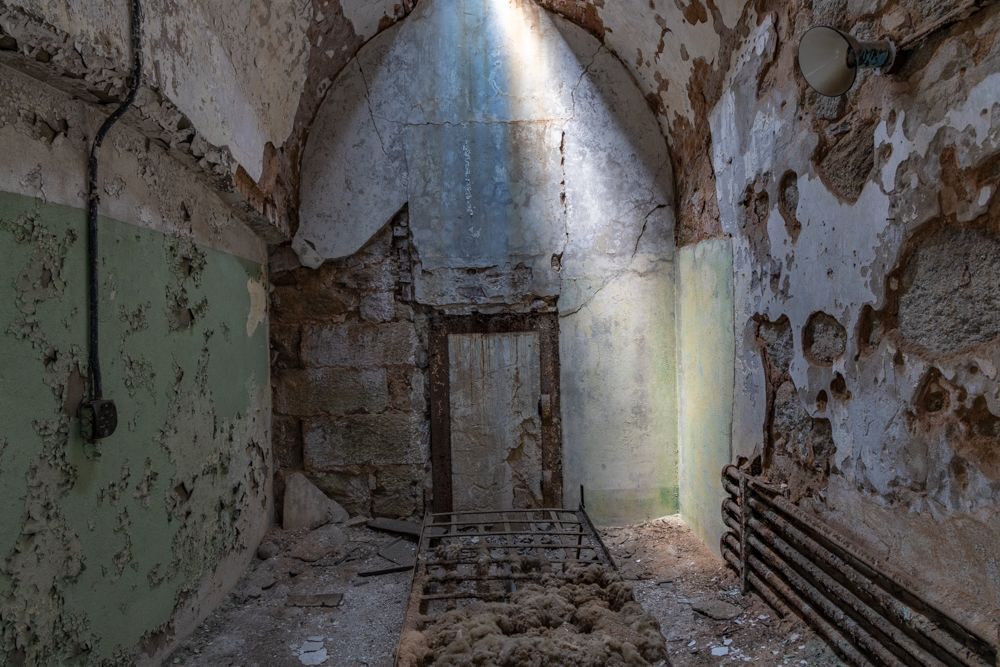
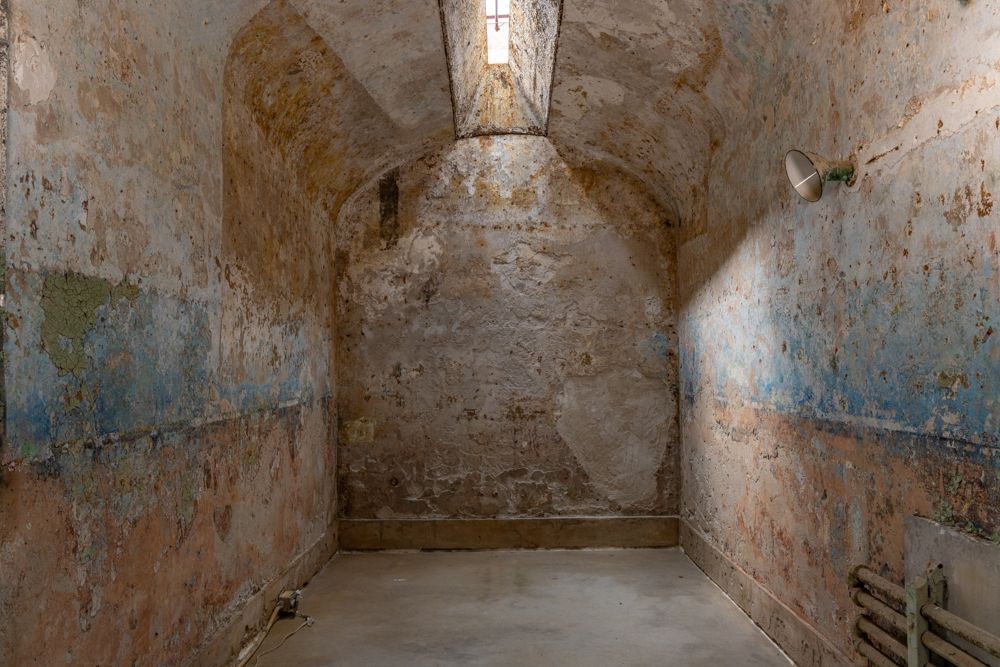
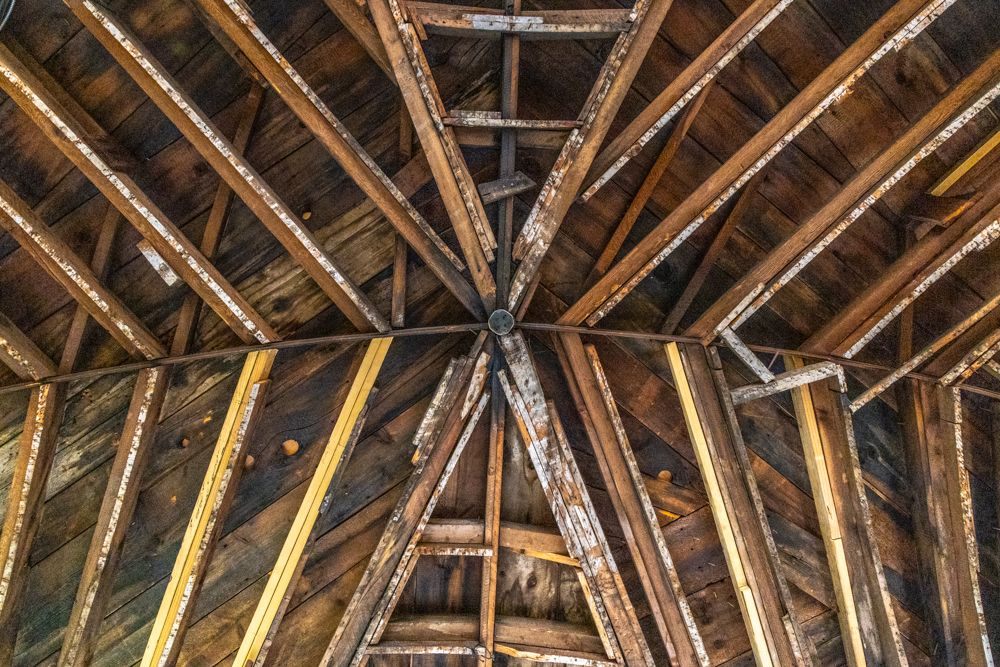
My destination this afternoon was the Historic Eastern State Penitentiary . This was a rather unusual prison in a number of respects. Opened in 1829 as part of a controversial movement to change the behavior of people convicted of crimes through "confinement in solitude with labor," Eastern State Penitentiary quickly became one of the most expensive and most copied buildings in the U.S. Known for its grand architecture and strict discipline, this was the world’s first true “penitentiary,” a prison designed to inspire penitence, or true regret, in the hearts of prisoners. The building itself was ahead to its time; it was built to look like a castle and it had running water, flush toilets and central heat even before the White House, and attracted visitors from around the globe. The building was arranged with the cell blocks radiating as spokes from a central room, the better for one guard to view all of the blocks just by rotating in place.
The Penitentiary was intended not simply to punish, but to inspire spiritual reflection and change. Our tour guide, Gary, mentioned that the Pennsylvania system was Quaker-inspired, however other sources disagree . According to Wiki, the organization that promoted Eastern State's creation, the Society for Alleviating the Miseries of Public Prisons (today's Pennsylvania Prison Society) was less than half Quaker, and was led for nearly fifty years by Philadelphia's Anglican bishop, William White. Regardless, proponents of the system believed that the convicts, left in silence to contemplate of behavior and crimes, would become genuinely penitent. The efficacy and humanity of these methods is the subject of great controversy.
Perhaps the most famous inmate was Al Capone . Chicago’s most famous mob boss spent eight months at Eastern State in 1929-1930. Arrested for carrying a concealed, deadly weapon, this was Capone’s first prison sentence. His time in Eastern State was spent in relative luxury. His cell on the Park Avenue Block had fine furniture, oriental rugs, and a cabinet radio.
The prison was closed in 1971, in large part because the city of Philadelphia had grown up around it and the location was becoming unfit to house dangerous prisoners.
An installation on the grounds - The Big Graph - documents the stark rise in the prison population starting in the 1980s. It is no surprise that contributing factors were the “war on drugs” and the closing of mental institutions. A special exhibition was also on display, entitled “Prisons Today, Questions in the Age of Mass Incarceration .” It did a very good job of exploring the many factors that have led to, not only the massive increase in incarcerated individuals, but the disproportionate incarceration of people of color.
Interestingly, the neighborhood around the penitentiary is now a trendy hip place, with many cute bars, restaurants and shops. I stopped just across the street for dinner and a drink at Fare Restaurant , before heading back to my hotel.
Tomorrow I will make the rounds of the classic historical sites in Philadelphia, likely while dodging raindrops.
My destination this afternoon was the Historic Eastern State Penitentiary . This was a rather unusual prison in a number of respects. Opened in 1829 as part of a controversial movement to change the behavior of people convicted of crimes through "confinement in solitude with labor," Eastern State Penitentiary quickly became one of the most expensive and most copied buildings in the U.S. Known for its grand architecture and strict discipline, this was the world’s first true “penitentiary,” a prison designed to inspire penitence, or true regret, in the hearts of prisoners. The building itself was ahead to its time; it was built to look like a castle and it had running water, flush toilets and central heat even before the White House, and attracted visitors from around the globe. The building was arranged with the cell blocks radiating as spokes from a central room, the better for one guard to view all of the blocks just by rotating in place.
The Penitentiary was intended not simply to punish, but to inspire spiritual reflection and change. Our tour guide, Gary, mentioned that the Pennsylvania system was Quaker-inspired, however other sources disagree . According to Wiki, the organization that promoted Eastern State's creation, the Society for Alleviating the Miseries of Public Prisons (today's Pennsylvania Prison Society) was less than half Quaker, and was led for nearly fifty years by Philadelphia's Anglican bishop, William White. Regardless, proponents of the system believed that the convicts, left in silence to contemplate of behavior and crimes, would become genuinely penitent. The efficacy and humanity of these methods is the subject of great controversy.
Perhaps the most famous inmate was Al Capone . Chicago’s most famous mob boss spent eight months at Eastern State in 1929-1930. Arrested for carrying a concealed, deadly weapon, this was Capone’s first prison sentence. His time in Eastern State was spent in relative luxury. His cell on the Park Avenue Block had fine furniture, oriental rugs, and a cabinet radio.
The prison was closed in 1971, in large part because the city of Philadelphia had grown up around it and the location was becoming unfit to house dangerous prisoners.
An installation on the grounds - The Big Graph - documents the stark rise in the prison population starting in the 1980s. It is no surprise that contributing factors were the “war on drugs” and the closing of mental institutions. A special exhibition was also on display, entitled “Prisons Today, Questions in the Age of Mass Incarceration .” It did a very good job of exploring the many factors that have led to, not only the massive increase in incarcerated individuals, but the disproportionate incarceration of people of color.
Interestingly, the neighborhood around the penitentiary is now a trendy hip place, with many cute bars, restaurants and shops. I stopped just across the street for dinner and a drink at Fare Restaurant , before heading back to my hotel.
Tomorrow I will make the rounds of the classic historical sites in Philadelphia, likely while dodging raindrops.
61 photo galleries
50 States
- Big Sur
- Salinas
- Laguna Beach
- San Diego
- California
- Grand Canyon
- Sedona
- Utah
- Syracuse
- Moab
- Denver
- Manitou Springs
- Calhan
- Mesa Verde
- Los Alamos
- Santa Fe
- Carlsbad
- New Mexico
- Eureka Springs
- Little Rock
- Birmingham
- Jackson
- Lottie
- Ten Thousand Islands
- Jerome
- Savannah
- White
- Asheville
- Sandstone Falls
- Baltimore
- Timonium
- Maryland
- Berlin
- Milton
- Smyrna
- Ocean City
- Detroit
- Upper Peninsula of Michigan
- Michigan
- Herod
- Ozark
- Two Harbors
- Carlton
- Madison County
- Oakley
- Valentine
- South Dakota
- United States
- Yellowstone National Park
- Lima
- Idaho
- Port Townsend
- Lincoln City
- Newport
- San Francisco