Kansas City (A tale of two cities in more ways than one)
First thing first, I wanted to find out why two Kansas Cities exist side by side, one in Kansas, one in Missouri. Even a couple of centuries later, some animosity and accusations of name stealing appear to linger. In 1838, John McCoy and a baker’s dozen of additional investors purchased property on the bluffs of the Missouri River, in part to develop a riverboat landing. McCoy had already established Westport landing to outfit parties heading South on the Santa Fe trail. This location was situated at a bend in the Missouri, where it intersects with the Kansas River. In 1850, it was incorporated as the town of Kansas City, the name taken from the Kansas River, which itself was named for the Kansa Indians.
At the time, what would eventually become the State of Kansas would have been known as the Nebraska Territory. In 1872, some of the small towns developing on the other side of the Kansas River incorporated as Kansas City, Kansas. The author of the article attributes the duplicate name either to an attempt to capitalize on the success of the existing Kansas City in Missouri, or a pissing contest as to naming rights. I did not find any convincing evidence one way or the other. Today Kansas City, Kansas, and Kansas City, Missouri, remain two separately incorporated cities but together, along with a number of other cities and suburbs, make up the Kansas City Metropolitan area.
That out of the way, I started this morning with a personal appointment, after which I stopped at The Roasterie Brookside Cafe for a cup of coffee and a breakfast snack. I have really enjoyed finding independent coffee shops all over the country. They are always little oases of friendliness and warmth.
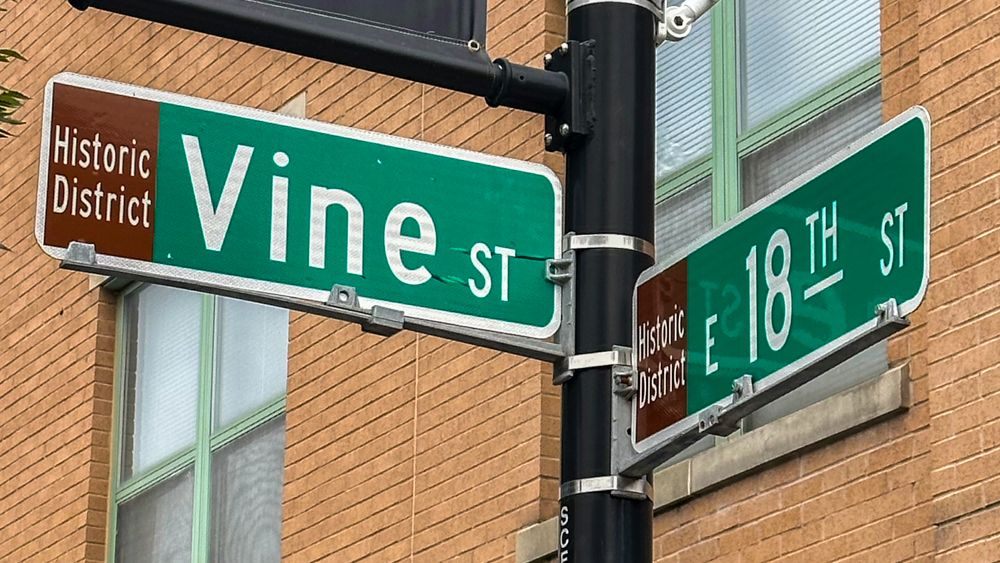
Thus fueled, I headed over to the 18th & Vine historic district to visit both the Negro Leagues Baseball Museum and the American Jazz Museum . These two museums share a building separated by a lobby that features exhibits and a film about the history of the neighborhood. The Great Migration saw former enslaved people head to the Northeast and the Midwest in search of opportunity and better circumstances. While they were no longer enslaved by other individuals, they were still not accepted as equal citizens in American society. This neighborhood was the historically Black area during the Segregationist era and constituted both the social and business hob of the community. As happened in other cities, because African-Americans were denied access to services in other parts of the city, they created their own self-sufficient and thriving neighborhood which had clubs, restaurants, shops, barbers, doctors, lawyers etc. The film features many first person accounts of those times.
In the 1950s, the defeat of legal segregation enabled African Americans to move beyond the boundaries of the 18th & Vine neighborhood. Today, the 18th & Vine district is being revitalized in celebration of the vital community African Americans built here.
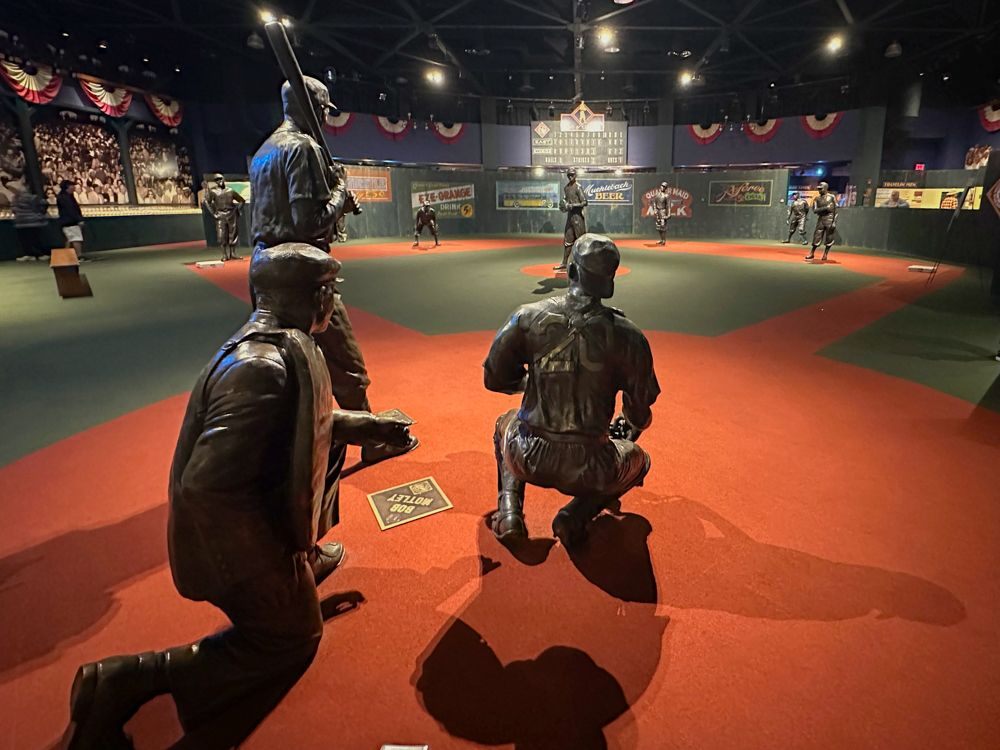
The Negro Leagues Baseball Museum chronicles the rise, and eventual fall, of the highly successful African-American baseball teams starting in the post civil war mid 19th century through the mid 20th century. Black teams, barred from joining existing professional baseball teams, played on their own informally until 1920, when the first Negro league was formed. The failure of reconstruction and ensuing Jim Crow atmosphere drove a gentlemen’s agreement that professional teams would not recruit black players, however talented. (Not particularly gentlemanly, I would say) And they were - talented. The teams were located primarily in the Northeast, Midwest and South. For obvious reasons, this museum particularly highlighted the Kansas City Monarchs. One of the innovations the Negro Leagues pioneered was night games, soon coopted by existing White franchises once they realized that they attracted a larger audience even than Sunday games.
While calls for integration came from many sources over the years, a main driving force came in the form of a sports editor who wrote for The Daily Worker, a Communist newspaper published in New York City. After Jesse Owens won four gold medals at the Summer Olympics in Berlin, Lester Rodney began a one-man campaign, targeting Branch Rickey, the general manager of his beloved New York Dodgers. Especially at that time in history, American Jews could readily sympathize with the persecution of African Americans, and it was a short street for a young Jewish intellectual to appreciate the contradiction of the fight against Hitler's racism and the continued oppression of black people in the United States.
In 1946, U.S. Representative Vito Marcantonio, who represented East Harlem in New York City, introduced House Joint Resolution 173 that directed the U.S. Commerce Department to investigate racial discrimination in Major League Baseball. That same year, the New York State legislature passed the Ives-Quinn Act that banned discrimination in hiring. New York became the first state in the country to enact legislation prohibiting discrimination in employment based on race, creed, color, and national origin. The law, renamed the Human Rights Law, has expanded over the years to include people with disabilities, religious practices, family housing and sexual orientation.
In 1947, Jackie Robinson of the Kansas City Monarchs famously was the first Black player recruited by NLB. He was joined by Dan Bankhead as a member of the Brooklyn Dodgers. Many others soon followed, including Satchel Paige as the first MLB Black pitcher for the Cleveland Indians. It took 12 more years for every Major league team to have at least one minority member.
The American Jazz Museum first discussed the evolution of Jazz. It comes as no surprise that it has roots in spirituals and blues, and even further back in African rhythm and vocal traditions. Jazz also represents a merger of sacred and secular music, and gave voice to the African-American community during tumultuous times. A number of well-known stars were highlighted, including Duke Ellington, Ella Fitzgerald, Louis Armstrong and Charlie Parker.
After a short break, I took Lucy II in for an interim inspection to make sure she was in good shape for the upcoming months in which I will be visiting remote areas in potentially challenging weather. I was surprised to learn that I had put on another 4K since my last oil change in Louisville. Good to know as I will anticipate another oil change at 5K. They said everything else looked good, including belts and hoses and they topped off all fluids. For all that, Firestone Complete Auto Care charged me $9.99. Yes the decimal is in the right place.
Tomorrow I will visit a few more museums in Kansas City. So far I am favorably impressed with this city. It is pleasant, clean, vital and interesting. And the people have been exceedingly welcoming and friendly. This extends to the Aloft Hotel at Country Club Plaza. On this Friday night, the lounge is featuring a pleasant singer and a lively bar scene. I would definitely stay here again.
At the time, what would eventually become the State of Kansas would have been known as the Nebraska Territory. In 1872, some of the small towns developing on the other side of the Kansas River incorporated as Kansas City, Kansas. The author of the article attributes the duplicate name either to an attempt to capitalize on the success of the existing Kansas City in Missouri, or a pissing contest as to naming rights. I did not find any convincing evidence one way or the other. Today Kansas City, Kansas, and Kansas City, Missouri, remain two separately incorporated cities but together, along with a number of other cities and suburbs, make up the Kansas City Metropolitan area.
That out of the way, I started this morning with a personal appointment, after which I stopped at The Roasterie Brookside Cafe for a cup of coffee and a breakfast snack. I have really enjoyed finding independent coffee shops all over the country. They are always little oases of friendliness and warmth.
Thus fueled, I headed over to the 18th & Vine historic district to visit both the Negro Leagues Baseball Museum and the American Jazz Museum . These two museums share a building separated by a lobby that features exhibits and a film about the history of the neighborhood. The Great Migration saw former enslaved people head to the Northeast and the Midwest in search of opportunity and better circumstances. While they were no longer enslaved by other individuals, they were still not accepted as equal citizens in American society. This neighborhood was the historically Black area during the Segregationist era and constituted both the social and business hob of the community. As happened in other cities, because African-Americans were denied access to services in other parts of the city, they created their own self-sufficient and thriving neighborhood which had clubs, restaurants, shops, barbers, doctors, lawyers etc. The film features many first person accounts of those times.
In the 1950s, the defeat of legal segregation enabled African Americans to move beyond the boundaries of the 18th & Vine neighborhood. Today, the 18th & Vine district is being revitalized in celebration of the vital community African Americans built here.
The Negro Leagues Baseball Museum chronicles the rise, and eventual fall, of the highly successful African-American baseball teams starting in the post civil war mid 19th century through the mid 20th century. Black teams, barred from joining existing professional baseball teams, played on their own informally until 1920, when the first Negro league was formed. The failure of reconstruction and ensuing Jim Crow atmosphere drove a gentlemen’s agreement that professional teams would not recruit black players, however talented. (Not particularly gentlemanly, I would say) And they were - talented. The teams were located primarily in the Northeast, Midwest and South. For obvious reasons, this museum particularly highlighted the Kansas City Monarchs. One of the innovations the Negro Leagues pioneered was night games, soon coopted by existing White franchises once they realized that they attracted a larger audience even than Sunday games.
While calls for integration came from many sources over the years, a main driving force came in the form of a sports editor who wrote for The Daily Worker, a Communist newspaper published in New York City. After Jesse Owens won four gold medals at the Summer Olympics in Berlin, Lester Rodney began a one-man campaign, targeting Branch Rickey, the general manager of his beloved New York Dodgers. Especially at that time in history, American Jews could readily sympathize with the persecution of African Americans, and it was a short street for a young Jewish intellectual to appreciate the contradiction of the fight against Hitler's racism and the continued oppression of black people in the United States.
In 1946, U.S. Representative Vito Marcantonio, who represented East Harlem in New York City, introduced House Joint Resolution 173 that directed the U.S. Commerce Department to investigate racial discrimination in Major League Baseball. That same year, the New York State legislature passed the Ives-Quinn Act that banned discrimination in hiring. New York became the first state in the country to enact legislation prohibiting discrimination in employment based on race, creed, color, and national origin. The law, renamed the Human Rights Law, has expanded over the years to include people with disabilities, religious practices, family housing and sexual orientation.
In 1947, Jackie Robinson of the Kansas City Monarchs famously was the first Black player recruited by NLB. He was joined by Dan Bankhead as a member of the Brooklyn Dodgers. Many others soon followed, including Satchel Paige as the first MLB Black pitcher for the Cleveland Indians. It took 12 more years for every Major league team to have at least one minority member.
The American Jazz Museum first discussed the evolution of Jazz. It comes as no surprise that it has roots in spirituals and blues, and even further back in African rhythm and vocal traditions. Jazz also represents a merger of sacred and secular music, and gave voice to the African-American community during tumultuous times. A number of well-known stars were highlighted, including Duke Ellington, Ella Fitzgerald, Louis Armstrong and Charlie Parker.
After a short break, I took Lucy II in for an interim inspection to make sure she was in good shape for the upcoming months in which I will be visiting remote areas in potentially challenging weather. I was surprised to learn that I had put on another 4K since my last oil change in Louisville. Good to know as I will anticipate another oil change at 5K. They said everything else looked good, including belts and hoses and they topped off all fluids. For all that, Firestone Complete Auto Care charged me $9.99. Yes the decimal is in the right place.
Tomorrow I will visit a few more museums in Kansas City. So far I am favorably impressed with this city. It is pleasant, clean, vital and interesting. And the people have been exceedingly welcoming and friendly. This extends to the Aloft Hotel at Country Club Plaza. On this Friday night, the lounge is featuring a pleasant singer and a lively bar scene. I would definitely stay here again.
61 photo galleries
50 States
- Big Sur
- Salinas
- Laguna Beach
- San Diego
- California
- Grand Canyon
- Sedona
- Utah
- Syracuse
- Moab
- Denver
- Manitou Springs
- Calhan
- Mesa Verde
- Los Alamos
- Santa Fe
- Carlsbad
- New Mexico
- Eureka Springs
- Little Rock
- Birmingham
- Jackson
- Lottie
- Ten Thousand Islands
- Jerome
- Savannah
- White
- Asheville
- Sandstone Falls
- Baltimore
- Timonium
- Maryland
- Berlin
- Milton
- Smyrna
- Ocean City
- Detroit
- Upper Peninsula of Michigan
- Michigan
- Herod
- Ozark
- Two Harbors
- Carlton
- Madison County
- Oakley
- Valentine
- South Dakota
- United States
- Yellowstone National Park
- Lima
- Idaho
- Port Townsend
- Lincoln City
- Newport
- San Francisco