Hailey to Boise
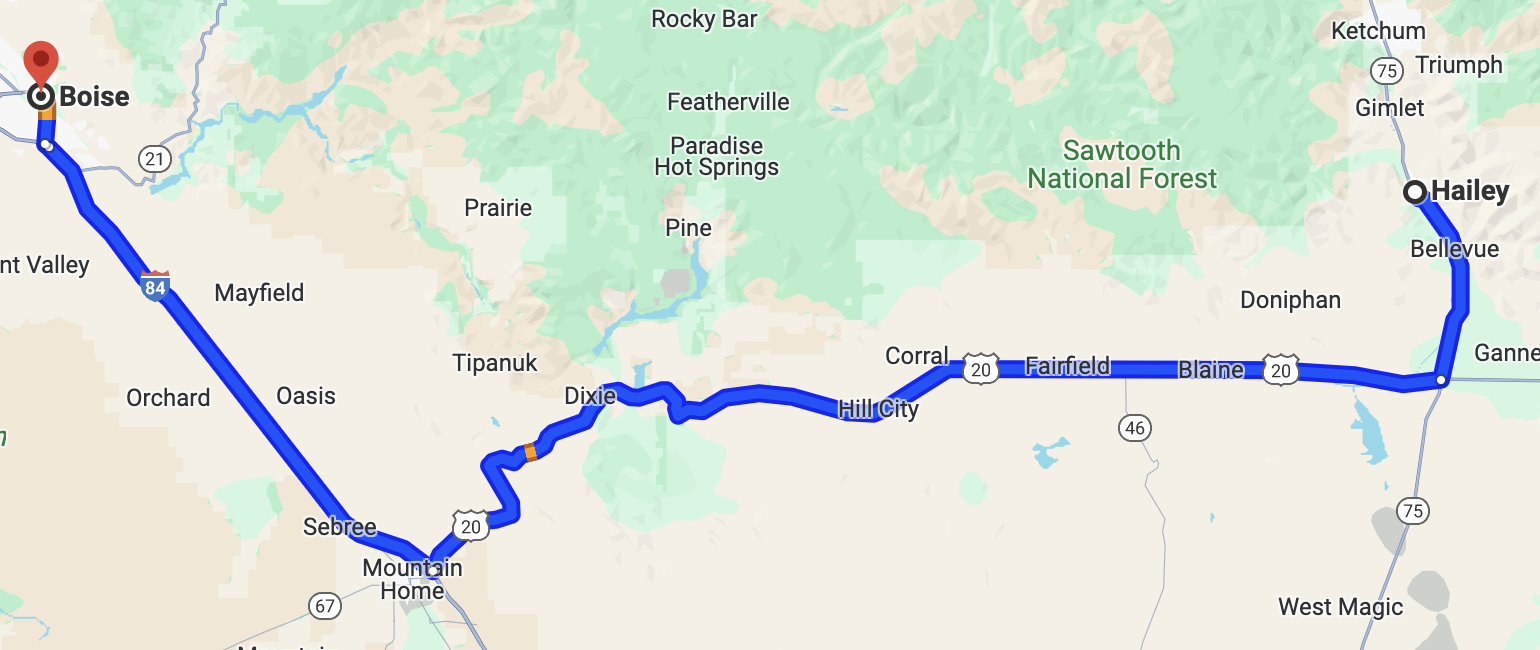
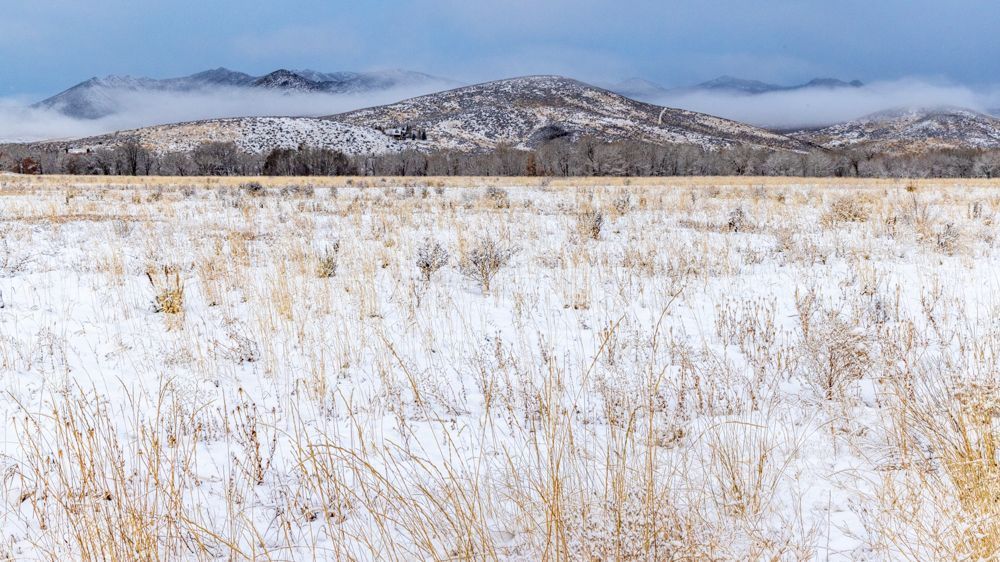
This morning I continued west, driving from Hailey to Boise. There has actually been some light snow and driving over the pass felt hazardous enough that I slowed down and put on my 4-wheel drive. It might not have been necessary - I had a lot of annoyed drivers speeding past me - but it felt safer to me. Oh well, I arrived in one piece and and everyone else is welcome to pass at their own risk.
My first stop was the Firestone Complete Autocare to give Lucy II her last oil change of the trip. If I’m not mistaken, this is oil change number seven, marking 35K miles that I have driven so far on this trip. Given that I have only two and a half states of driving remaining, I should come in under 40K for the entire trip.
I then check in at the Residence Inn in downtown Boise. This is a newer Residence Inn and is very pleasant. It is the first one I have encountered that has an actual desk in addition to a dining table. They upgraded me to a two bedroom unit, which always makes me laugh - what am I going to do with the second bedroom?
I then walked the couple of blocks to the Idaho State History Museum. It has been a couple of states since I have visited a history museum; the one in Montana was closed for renovation and the one in Wyoming - in Cheyenne - was many hours drive the wrong direction from anything else I was visiting. Unlike most state agencies, the Idaho museum charged a nominal fee of $8.00. I don’t object to paying it, I just wonder about a government institution charging an admission fee. Regardless, the exhibits were well-presented and the museum was generally well-curated - well worth the small fee.
The entry level was devoted to Indigenous history, including a series of short animations documenting the creation stories of the five main tribes inhabiting the area. The five federally recognized tribes in Idaho are the Coeur d'Alene, Kootenai, Nez Perce, Shoshone-Bannock, and Shoshone-Paiute. I always enjoy these creation stories. They emphasize the equal status of the land, animals and humans, and the allegories relate respectful and compassionate stewardship of nature and interactions between human beings. They somehow feel more humble and attuned to the natural world than the standard Judeo-Christian narrative.
Ostensibly to protect Oregon Trail emigrants, Fort Boise was established in 1863. The city of Boise soon followed and the Native Americans and settlers inevitably clashed. In 1864, the U.S. forced the Shoshone, Bannock, and Paiute to give up their Boise Valley lands and, in a story we now know all to well, the Senate never ratified the Treaty of Fort Boise and the federal government never compensated the tribes. In one set of exhibits, the intergenerational trauma precipitated by the loss of land, culture, language and identity was explored. The narrative mentioned the confusion and shame generated by the tension between European-American values and culture and Native traditions, and how the alcohol that was introduced to reservations began to be used to numb the pain. I thought this was a very courageous and informative exhibit.
Idaho comprises three distinct ecosystems, the northern lake and forests, the middle mountains and rivers and the southern high desert and canyons. The north was where mining resources were exploited - primarily silver, zinc and lead. The small gold supply was quickly exhausted. The forests also became infamous for the disastrous big burn of 1910. Although the short term response was to be highly vigilant and extinguish any small fire that was spotted from the newly erected towers, the experience ultimately led to a more measured and effective way to manage forests by judicious thinning and allowing small undergrowth fires to burn themselves out.
Idaho was the last state entered by Euro-Americans and was the most difficult barrier for the Lewis and Clark expedition before they emerged on the Pacific Coast. They were unable to navigate the wild Salmon river and ultimately traded for horses with the Lemhi Shoshone to continue their journey west. On the way back they were delayed for months by snow in the Bitterroot Mountains.
Idaho’s first territorial capitol, established in 1863, was Lewiston, which sat at the Northern edge of a territory that then included Idaho, Montana and much of present day Wyoming. Legislators got tired of slogging through the mountains to reach the capitol and, in 1864, pushed through a bill to move it to Boise. Northerners in the panhandle sued and spent the next couple of decades trying to secede and join Washington.
Idaho’s mountains, including the famous Sun Valley region are, of course, famous for winter sports. The first chair lift in the U.S. was built in Sun Valley. Southern Idaho, once irrigated, generated agriculture and commerce. The Skaggs family opened grocery stores and drug stores that eventually merged, respectively, with the Safeway and Albertsons grocery chains and the Payless and Longs drugstore chains.
Early Basques followed the 19th-century gold rush to Idaho. When that resource faltered, many found work as sheepherders. Boise is home to one of the largest Basque communities in the U.S. I did try to stop at the Basque museum and cultural center but, unfortunately, it was closed for the long Thanksgiving weekend. I did walk up and down the Basque block. If I had more time, it would be a great place to enjoy a meal.
In the 1890s, businessmen began to exploit the local hot springs to generate geothermal heat, creating the first geothermal district in the country. Since then, hundreds of Boise buildings and homes, including the history museum, have joined the geothermal system. Idaho has the only state capitol heated with natural hot water, and Boise features the largest geothermal heating network in the United States.
A special exhibit highlighted the life and career of Bob Hope, entertainer to the troops. I’m still not sure what was the relevance to this museum as he had no particular connection to Idaho. Still it was an interesting story.
Many more topics were covered in this museum, from ecology to politics, but this post is already getting long, so this is a good place to stop.
Tomorrow I plan to visit the Morley Nelson Snake River Birds of Prey National Conservation Area.
My first stop was the Firestone Complete Autocare to give Lucy II her last oil change of the trip. If I’m not mistaken, this is oil change number seven, marking 35K miles that I have driven so far on this trip. Given that I have only two and a half states of driving remaining, I should come in under 40K for the entire trip.
I then check in at the Residence Inn in downtown Boise. This is a newer Residence Inn and is very pleasant. It is the first one I have encountered that has an actual desk in addition to a dining table. They upgraded me to a two bedroom unit, which always makes me laugh - what am I going to do with the second bedroom?
I then walked the couple of blocks to the Idaho State History Museum. It has been a couple of states since I have visited a history museum; the one in Montana was closed for renovation and the one in Wyoming - in Cheyenne - was many hours drive the wrong direction from anything else I was visiting. Unlike most state agencies, the Idaho museum charged a nominal fee of $8.00. I don’t object to paying it, I just wonder about a government institution charging an admission fee. Regardless, the exhibits were well-presented and the museum was generally well-curated - well worth the small fee.
The entry level was devoted to Indigenous history, including a series of short animations documenting the creation stories of the five main tribes inhabiting the area. The five federally recognized tribes in Idaho are the Coeur d'Alene, Kootenai, Nez Perce, Shoshone-Bannock, and Shoshone-Paiute. I always enjoy these creation stories. They emphasize the equal status of the land, animals and humans, and the allegories relate respectful and compassionate stewardship of nature and interactions between human beings. They somehow feel more humble and attuned to the natural world than the standard Judeo-Christian narrative.
Ostensibly to protect Oregon Trail emigrants, Fort Boise was established in 1863. The city of Boise soon followed and the Native Americans and settlers inevitably clashed. In 1864, the U.S. forced the Shoshone, Bannock, and Paiute to give up their Boise Valley lands and, in a story we now know all to well, the Senate never ratified the Treaty of Fort Boise and the federal government never compensated the tribes. In one set of exhibits, the intergenerational trauma precipitated by the loss of land, culture, language and identity was explored. The narrative mentioned the confusion and shame generated by the tension between European-American values and culture and Native traditions, and how the alcohol that was introduced to reservations began to be used to numb the pain. I thought this was a very courageous and informative exhibit.
Idaho comprises three distinct ecosystems, the northern lake and forests, the middle mountains and rivers and the southern high desert and canyons. The north was where mining resources were exploited - primarily silver, zinc and lead. The small gold supply was quickly exhausted. The forests also became infamous for the disastrous big burn of 1910. Although the short term response was to be highly vigilant and extinguish any small fire that was spotted from the newly erected towers, the experience ultimately led to a more measured and effective way to manage forests by judicious thinning and allowing small undergrowth fires to burn themselves out.
Idaho was the last state entered by Euro-Americans and was the most difficult barrier for the Lewis and Clark expedition before they emerged on the Pacific Coast. They were unable to navigate the wild Salmon river and ultimately traded for horses with the Lemhi Shoshone to continue their journey west. On the way back they were delayed for months by snow in the Bitterroot Mountains.
Idaho’s first territorial capitol, established in 1863, was Lewiston, which sat at the Northern edge of a territory that then included Idaho, Montana and much of present day Wyoming. Legislators got tired of slogging through the mountains to reach the capitol and, in 1864, pushed through a bill to move it to Boise. Northerners in the panhandle sued and spent the next couple of decades trying to secede and join Washington.
Idaho’s mountains, including the famous Sun Valley region are, of course, famous for winter sports. The first chair lift in the U.S. was built in Sun Valley. Southern Idaho, once irrigated, generated agriculture and commerce. The Skaggs family opened grocery stores and drug stores that eventually merged, respectively, with the Safeway and Albertsons grocery chains and the Payless and Longs drugstore chains.
Early Basques followed the 19th-century gold rush to Idaho. When that resource faltered, many found work as sheepherders. Boise is home to one of the largest Basque communities in the U.S. I did try to stop at the Basque museum and cultural center but, unfortunately, it was closed for the long Thanksgiving weekend. I did walk up and down the Basque block. If I had more time, it would be a great place to enjoy a meal.
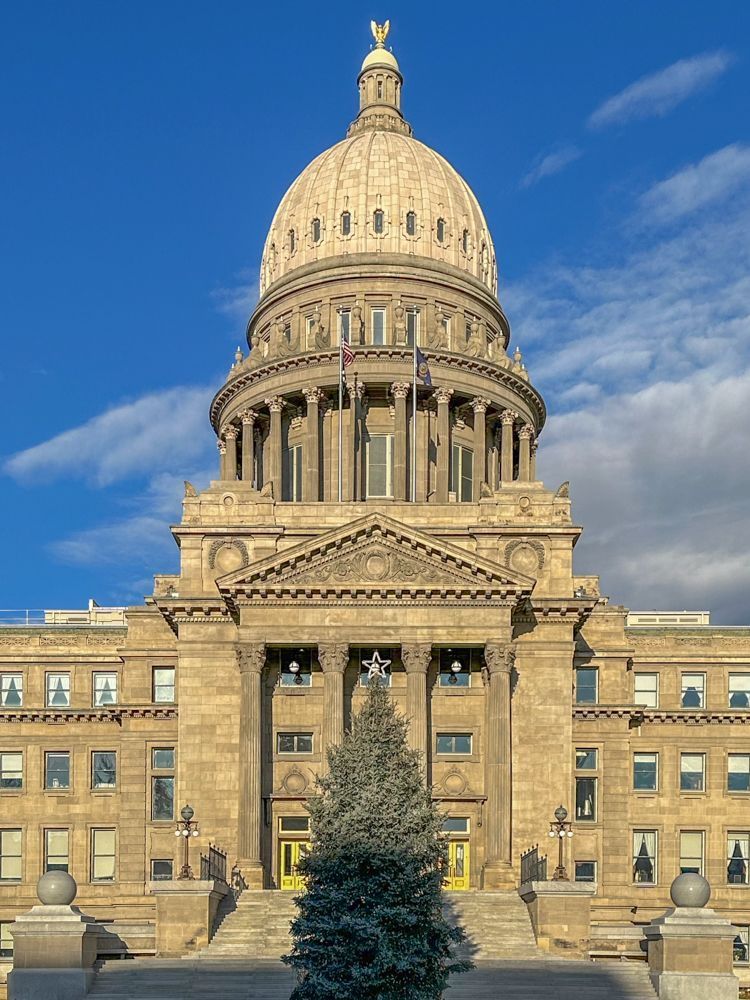
In the 1890s, businessmen began to exploit the local hot springs to generate geothermal heat, creating the first geothermal district in the country. Since then, hundreds of Boise buildings and homes, including the history museum, have joined the geothermal system. Idaho has the only state capitol heated with natural hot water, and Boise features the largest geothermal heating network in the United States.
A special exhibit highlighted the life and career of Bob Hope, entertainer to the troops. I’m still not sure what was the relevance to this museum as he had no particular connection to Idaho. Still it was an interesting story.
Many more topics were covered in this museum, from ecology to politics, but this post is already getting long, so this is a good place to stop.
Tomorrow I plan to visit the Morley Nelson Snake River Birds of Prey National Conservation Area.
61 photo galleries
50 States
- Big Sur
- Salinas
- Laguna Beach
- San Diego
- California
- Grand Canyon
- Sedona
- Utah
- Syracuse
- Moab
- Denver
- Manitou Springs
- Calhan
- Mesa Verde
- Los Alamos
- Santa Fe
- Carlsbad
- New Mexico
- Eureka Springs
- Little Rock
- Birmingham
- Jackson
- Lottie
- Ten Thousand Islands
- Jerome
- Savannah
- White
- Asheville
- Sandstone Falls
- Baltimore
- Timonium
- Maryland
- Berlin
- Milton
- Smyrna
- Ocean City
- Detroit
- Upper Peninsula of Michigan
- Michigan
- Herod
- Ozark
- Two Harbors
- Carlton
- Madison County
- Oakley
- Valentine
- South Dakota
- United States
- Yellowstone National Park
- Lima
- Idaho
- Port Townsend
- Lincoln City
- Newport
- San Francisco