Fort Wayne to Indianapolis
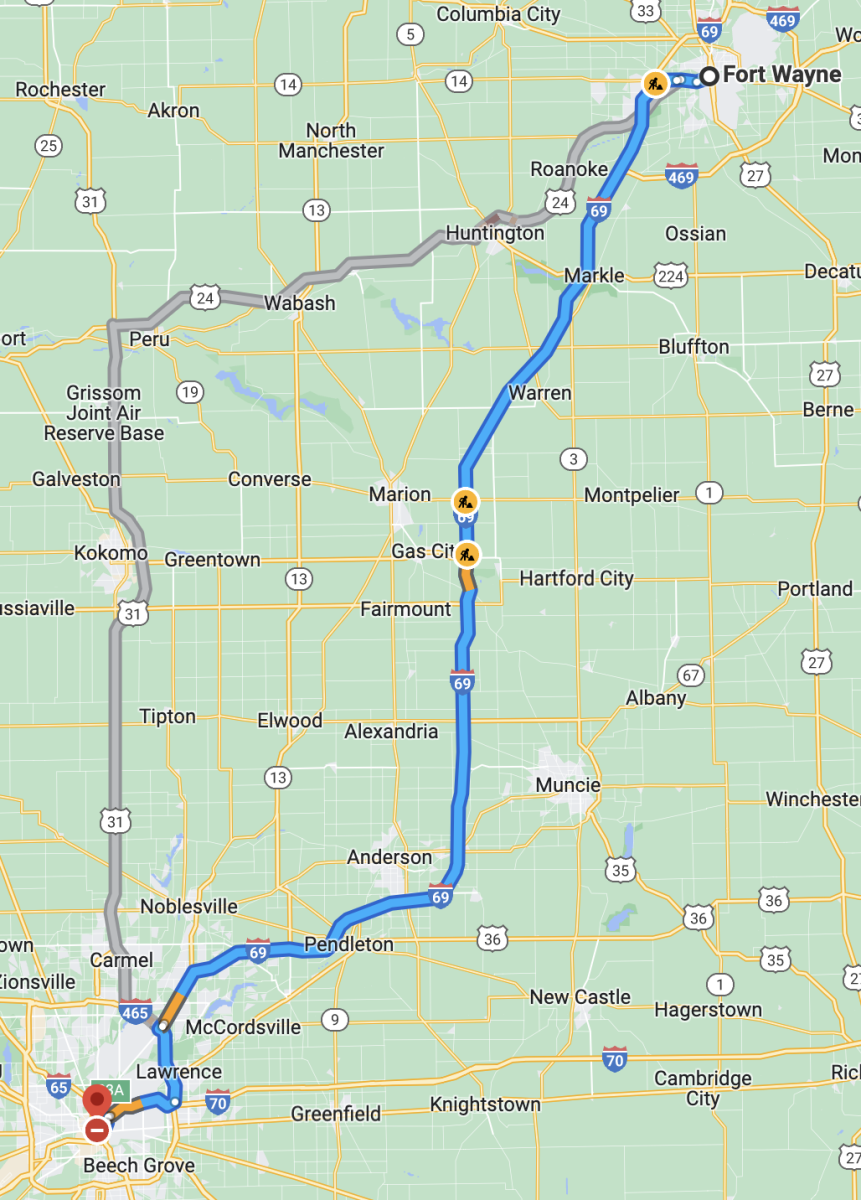
This morning I drove a bit West to Indianapolis. Checking into the Courtyard was one of the more pleasant experiences I have had. Jason and Angel checked me in, including a nice upgrade. Once Jason had heard my story, he waived the $30/night parking fees. That is the first time in this entire trip a hotel manager has even thought to do that for me. Those parking fees have been the bane of my existence - well along with museum schedules and the requirement for pre-paid timed entry tickets. It was a nice start to my visit.
Knowing that afternoon temperatures were predicted to rise to 93 degrees, I was grateful that my first two stops were a fairly short walk from the hotel. My first stop was the Eiteljorg Museum of American Indians and Western Art. This museum is a nice complement to the First Americans Museum that I visited in Oklahoma City. FAM concentrated on history, The Eiteljorg tells the story using art. Not only so they purchase, curate and exhibit Native American art, they sponsor a fellowship that provides a major unrestricted cash award to support the artist. Their exhibits include both contemporary art as well as historical pieces that tell the story of various tribes, including the Miami and Lenape peoples upon whose land the museum sits. A number of video presentations present first person narratives by the artists. Both the historical and contemporary art is captivating, and both are curated and displayed beautifully.
The first floor holds a collection of Western Art. I appreciated that the focus on including artists of many different backgrounds who made art about the West. They are very clear that their mission not only includes presenting the past and present art and stories of Native Peoples, but includes and celebrates diversity not only in the art it presents, but how it comforts itself. I could have spent much more time in this museum, but I wanted to get in one more visit this afternoon.
Next door to the Eiteljorg is the Indiana State Museum. This museum can feel a bit hokey as it obviously has a focus on education, of young people in particular. But it also was very informative. The natural history galleries included an impressive number of fossilized skeletons, including a huge mastodon dug up in someone’s field. The representation of the native peoples originally inhabiting the area was somewhat simplistic. It felt like there had had little input from the descendants of those peoples. However, once the exhibits progressed to descriptions of interactions with colonial settlers, they seemed to be on better footing.
Wiki provides the information that the Hopewell peoples, described in a previous blog post about Ohio, also inhabited the Indiana region. After the collapse of the Hopewell culture, the Mississippian culture arose and inhabited the region, eventually giving way to the Miami and Lenape tribes. It was these peoples who first developed a trading relationship with the French, particularly for furs. After France was defeated by Great Britain in the French and Indian War (Seven Years' War), Britain held the land for more than twenty years, until its defeat in the American Revolutionary War.
The Indiana Territory, which contained present-day Indiana, Illinois, Michigan, Wisconsin and part of Minnesota, was formed in 1800 from the Northwest Territory. Indiana means “Land of the Indians.”
Although the United States gained official possession of the region following the conclusion of the American Revolutionary War, lingering influence British merchants and officials in the area caused native tribes to refuse American authority. This led directly to the Northwest Indian War. The Americans prevailed and the Jay Treaty was signed, calling for a formal evacuation of the British. However they were not fully expelled until the conclusion of the War of 1812.
In 1816, Indiana was granted statehood. Jonathan Jennings, whose motto was "No slavery in Indiana", was elected governor of the state and upon election, he declared Indiana a free state. 1820 Indiana Supreme Court case of Polly v. Lasselle, which stated that even those enslaved before Indiana statehood were now free. The Indiana Supreme Court in 1821 decided that indentured servitude was merely a ruse for slavery and was therefore prohibited. All forms of slavery in Indiana were finally banned by 1830.
In 1818 the Treaty of St. Mary's allowed Indiana to acquire Indian lands south of the Wabash that comprised about one third of the present day area of Indiana, The Miami tribe was restricted to the Big Miami Reserve.
In 1832, construction began on the Wabash and Erie Canal, a project connecting the waterways of the Great Lakes to the Ohio River. Railroads soon made the canal system obsolete. However, these developments in transportation served to economically connect Indiana to the Northern East Coast, rather than relying solely on the natural waterways which connected Indiana to the Mississippi River and Gulf Coast states. Thus, they dubbed themselves the “Crossroads of America”
During the 1840s, Indiana completed the removal of the Native American tribes. The majority of the Potawatomi voluntarily relocated to Kansas in 1838. Those who did not leave were forced to travel to Kansas in what came to be called the Potawatomi Trail of Death, leaving only the Pokagon Band of Potawatomi Indians in the Indiana area.The majority of the Miami tribe left in 1846, although many members of the tribe were permitted to remain in the state on lands they held privately under the terms of the 1818 Treaty of St. Mary's. The other tribes were also convinced to leave the state voluntarily through the payment of subsidies and land grants further west. The Shawnee migrated westward to settle in Missouri, and the Lenape migrated into Canada. Many of the tribes who migrated to Kansas, eventually ended up in Eastern Oklahoma, effectively joining the Trail of Tears.
Many families throughout the State of Indiana provided shelter for runaway slaves both before and during the Civil War. In particular, the farming community of Newport (now Fountain City) became known as the “Grand Central Station of the Underground Railroad” due to Levi and Catherine Coffin’s role in helping more than 2,000 runaway slaves make their way north to freedom. The abolitionist attitude prevalent in Indiana greatly influenced Abraham Lincoln during the 14 years he spent in the state during his boyhood.
Early industrialization in Indiana began wit the mass boom of the 1800s. In 1876, chemist Eli Lilly founded his pharmaceutical company. His initial innovation of gelatin-coating for pills led to a rapid growth of the company that eventually developed as Indiana's largest corporation, and one of the largest corporations in the world. The company developed many widely used drugs, including insulin, and it became the first company to mass-produce penicillin. The company's many advances made Indiana the leading state in the production and development of medicines.
Like the rest of the country, Indiana suffered during the Great Depression, but came roaring back due to the manufacturing boom engendered by WWII. In addition to the GE plant in Fort Wayne (see the post from a couple of days ago), other factories also saw a great increase in production and mass employment and prosperity returned. However, like other industry-based economies, Indiana began to struggle after the recession of 1969-1970. Foreign competition, corporate mergers, automation, and new management strategies lead to downsizing, mass layoffs, diversification, chronic unemployment and increasing poverty. Indianapolis benefited from its namesake Speedway, but other cities and towns in Indiana are still struggling to reinvent themselves in a post-industrial era.
Tomorrow I will visit the Speedway and some other destinations in Indianapolis. Even higher temperatures, predicted in the mid-90s will likely thwart much outdoor photography.
Full disclosure - the cover image is a stock image. I cowered indoors in the two museums all afternoon after I arrived.
Knowing that afternoon temperatures were predicted to rise to 93 degrees, I was grateful that my first two stops were a fairly short walk from the hotel. My first stop was the Eiteljorg Museum of American Indians and Western Art. This museum is a nice complement to the First Americans Museum that I visited in Oklahoma City. FAM concentrated on history, The Eiteljorg tells the story using art. Not only so they purchase, curate and exhibit Native American art, they sponsor a fellowship that provides a major unrestricted cash award to support the artist. Their exhibits include both contemporary art as well as historical pieces that tell the story of various tribes, including the Miami and Lenape peoples upon whose land the museum sits. A number of video presentations present first person narratives by the artists. Both the historical and contemporary art is captivating, and both are curated and displayed beautifully.
The first floor holds a collection of Western Art. I appreciated that the focus on including artists of many different backgrounds who made art about the West. They are very clear that their mission not only includes presenting the past and present art and stories of Native Peoples, but includes and celebrates diversity not only in the art it presents, but how it comforts itself. I could have spent much more time in this museum, but I wanted to get in one more visit this afternoon.
Next door to the Eiteljorg is the Indiana State Museum. This museum can feel a bit hokey as it obviously has a focus on education, of young people in particular. But it also was very informative. The natural history galleries included an impressive number of fossilized skeletons, including a huge mastodon dug up in someone’s field. The representation of the native peoples originally inhabiting the area was somewhat simplistic. It felt like there had had little input from the descendants of those peoples. However, once the exhibits progressed to descriptions of interactions with colonial settlers, they seemed to be on better footing.
Wiki provides the information that the Hopewell peoples, described in a previous blog post about Ohio, also inhabited the Indiana region. After the collapse of the Hopewell culture, the Mississippian culture arose and inhabited the region, eventually giving way to the Miami and Lenape tribes. It was these peoples who first developed a trading relationship with the French, particularly for furs. After France was defeated by Great Britain in the French and Indian War (Seven Years' War), Britain held the land for more than twenty years, until its defeat in the American Revolutionary War.
The Indiana Territory, which contained present-day Indiana, Illinois, Michigan, Wisconsin and part of Minnesota, was formed in 1800 from the Northwest Territory. Indiana means “Land of the Indians.”
Although the United States gained official possession of the region following the conclusion of the American Revolutionary War, lingering influence British merchants and officials in the area caused native tribes to refuse American authority. This led directly to the Northwest Indian War. The Americans prevailed and the Jay Treaty was signed, calling for a formal evacuation of the British. However they were not fully expelled until the conclusion of the War of 1812.
In 1816, Indiana was granted statehood. Jonathan Jennings, whose motto was "No slavery in Indiana", was elected governor of the state and upon election, he declared Indiana a free state. 1820 Indiana Supreme Court case of Polly v. Lasselle, which stated that even those enslaved before Indiana statehood were now free. The Indiana Supreme Court in 1821 decided that indentured servitude was merely a ruse for slavery and was therefore prohibited. All forms of slavery in Indiana were finally banned by 1830.
In 1818 the Treaty of St. Mary's allowed Indiana to acquire Indian lands south of the Wabash that comprised about one third of the present day area of Indiana, The Miami tribe was restricted to the Big Miami Reserve.
In 1832, construction began on the Wabash and Erie Canal, a project connecting the waterways of the Great Lakes to the Ohio River. Railroads soon made the canal system obsolete. However, these developments in transportation served to economically connect Indiana to the Northern East Coast, rather than relying solely on the natural waterways which connected Indiana to the Mississippi River and Gulf Coast states. Thus, they dubbed themselves the “Crossroads of America”
During the 1840s, Indiana completed the removal of the Native American tribes. The majority of the Potawatomi voluntarily relocated to Kansas in 1838. Those who did not leave were forced to travel to Kansas in what came to be called the Potawatomi Trail of Death, leaving only the Pokagon Band of Potawatomi Indians in the Indiana area.The majority of the Miami tribe left in 1846, although many members of the tribe were permitted to remain in the state on lands they held privately under the terms of the 1818 Treaty of St. Mary's. The other tribes were also convinced to leave the state voluntarily through the payment of subsidies and land grants further west. The Shawnee migrated westward to settle in Missouri, and the Lenape migrated into Canada. Many of the tribes who migrated to Kansas, eventually ended up in Eastern Oklahoma, effectively joining the Trail of Tears.
Many families throughout the State of Indiana provided shelter for runaway slaves both before and during the Civil War. In particular, the farming community of Newport (now Fountain City) became known as the “Grand Central Station of the Underground Railroad” due to Levi and Catherine Coffin’s role in helping more than 2,000 runaway slaves make their way north to freedom. The abolitionist attitude prevalent in Indiana greatly influenced Abraham Lincoln during the 14 years he spent in the state during his boyhood.
Early industrialization in Indiana began wit the mass boom of the 1800s. In 1876, chemist Eli Lilly founded his pharmaceutical company. His initial innovation of gelatin-coating for pills led to a rapid growth of the company that eventually developed as Indiana's largest corporation, and one of the largest corporations in the world. The company developed many widely used drugs, including insulin, and it became the first company to mass-produce penicillin. The company's many advances made Indiana the leading state in the production and development of medicines.
Like the rest of the country, Indiana suffered during the Great Depression, but came roaring back due to the manufacturing boom engendered by WWII. In addition to the GE plant in Fort Wayne (see the post from a couple of days ago), other factories also saw a great increase in production and mass employment and prosperity returned. However, like other industry-based economies, Indiana began to struggle after the recession of 1969-1970. Foreign competition, corporate mergers, automation, and new management strategies lead to downsizing, mass layoffs, diversification, chronic unemployment and increasing poverty. Indianapolis benefited from its namesake Speedway, but other cities and towns in Indiana are still struggling to reinvent themselves in a post-industrial era.
Tomorrow I will visit the Speedway and some other destinations in Indianapolis. Even higher temperatures, predicted in the mid-90s will likely thwart much outdoor photography.
Full disclosure - the cover image is a stock image. I cowered indoors in the two museums all afternoon after I arrived.
61 photo galleries
50 States
- Big Sur
- Salinas
- Laguna Beach
- San Diego
- California
- Grand Canyon
- Sedona
- Utah
- Syracuse
- Moab
- Denver
- Manitou Springs
- Calhan
- Mesa Verde
- Los Alamos
- Santa Fe
- Carlsbad
- New Mexico
- Eureka Springs
- Little Rock
- Birmingham
- Jackson
- Lottie
- Ten Thousand Islands
- Jerome
- Savannah
- White
- Asheville
- Sandstone Falls
- Baltimore
- Timonium
- Maryland
- Berlin
- Milton
- Smyrna
- Ocean City
- Detroit
- Upper Peninsula of Michigan
- Michigan
- Herod
- Ozark
- Two Harbors
- Carlton
- Madison County
- Oakley
- Valentine
- South Dakota
- United States
- Yellowstone National Park
- Lima
- Idaho
- Port Townsend
- Lincoln City
- Newport
- San Francisco