Custer
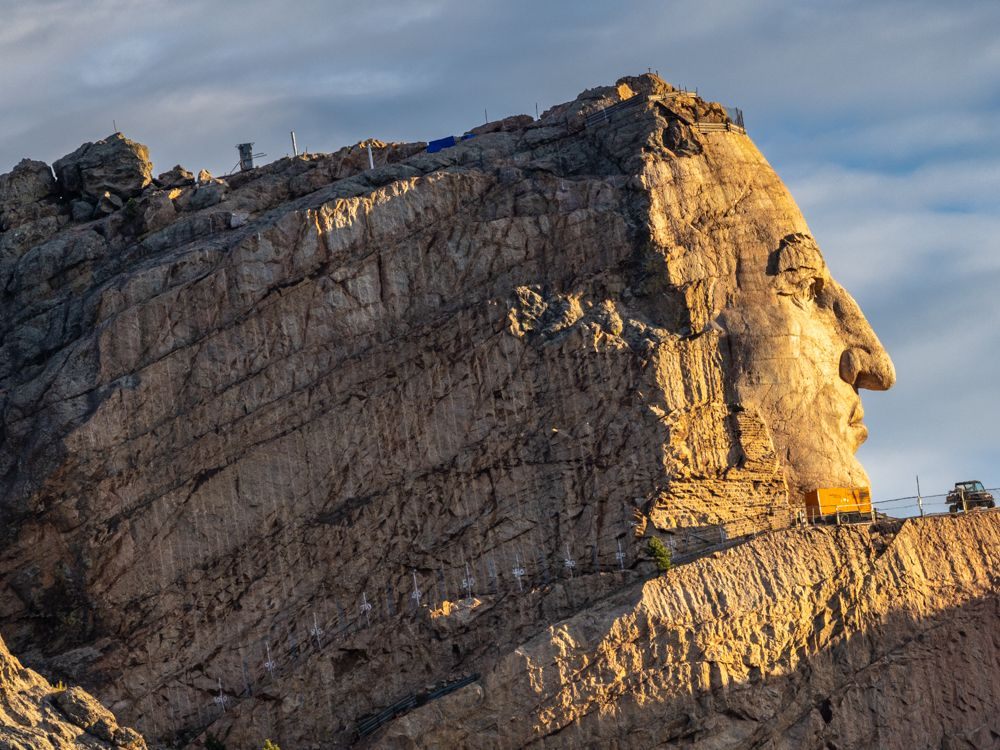
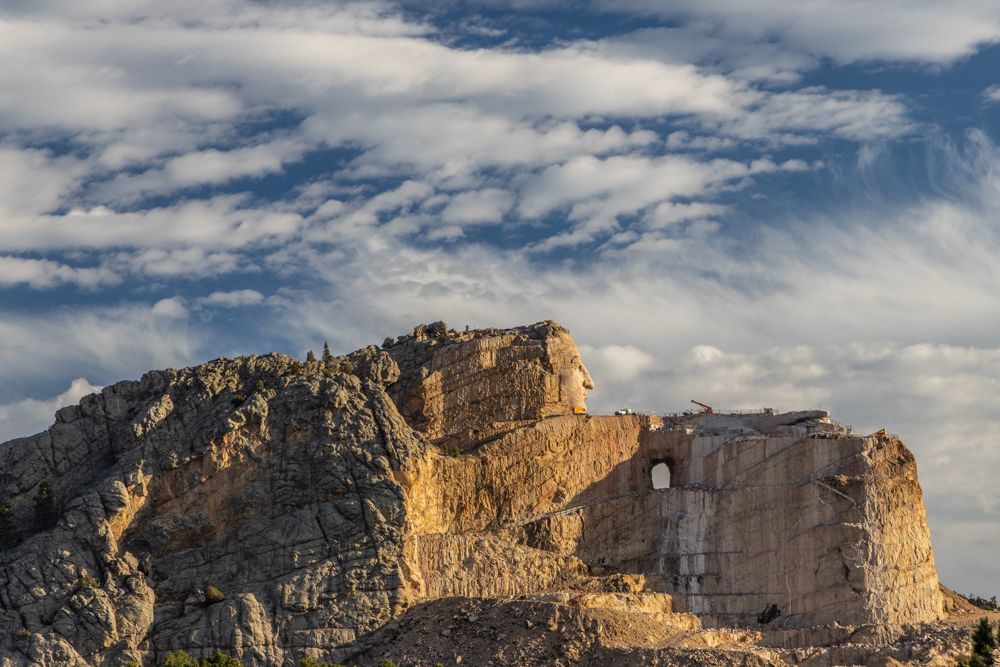
This morning I visited the Crazy Horse Memorial. Much more than a head carved out of a mountain, the Crazy Horse Memorial Foundation has evolved over the decades to include the Indian Museum of North America and the Native American Educational and Cultural Center . The foundation also sponsors the Indian University of North America .
The beginning of the idea was conceived by Chief Brule Lakota Henry Standing Bear . Standing Bear attended Carlisle Indian School in Pennsylvania where he took on the name of "Henry". As a result of attending Carlisle, Standing Bear concluded that in order to best help his people, he would need to learn how to navigate the non-Native world. Ironically, Carlisle, an institution that was designed to assimilate Native Americans out of their indigenous ways, became a source of inspiration to Standing Bear that would shape his enlightened understanding of cross-cultural relationships, as well as to find new ways of preserving his people's culture and history.
In 1933, Standing Bear learned of a monument that was to be constructed at Fort Robinson, Nebraska. The monument was to honor his maternal cousin, Crazy Horse , who was killed at Fort Robinson in 1877 while attempting to negotiate a treaty. Crazy Horse, or Tasunke Witco, born in 1840, was a member of the Oglala Lakota on Rapid Creek about 40 miles northeast of Thunderhead Mountain (now Crazy Horse Mountain). In 1876, in one of the last armed conflicts between Native Americans and European-American settlers, Crazy Horse led a band of Lakota warriors against Custer’s Seventh U.S. Cavalry battalion. The Battle of the Little Bighorn , also known as Custer’s Last Stand, or the Battle of the Greasy Grass led the death of Custer, as well as 289 of his men, in the battle. According to the story, Crazy Horse and his followers were able to limit Native American casualties to 32 by deterring the arrival of U.S. Cavalry reinforcements.
In 1877, under a flag of truce, Crazy Horse went to Fort Robinson to negotiate a treaty. The breakdown in negotiations was blamed on a translator who incorrectly - either by design or accident - mis-translated comments by Crazy Horse. Crazy Horse was quickly escorted toward the jail. Once he realized that the commanding officers were planning on imprisoning him, he struggled and drew his knife. Although Little Big Man, friend and fellow warrior of Crazy Horse, tried to restrain him, he continued to struggle. A guard successfully lunged with a bayonet and inflicted a mortal wound.
Standing Bear wrote to James Cook who was steering the planned memorial project to let him know that he and his fellow Lakota leaders had formed the Crazy Horse Memorial Association and were promoting a carving of Crazy Horse in the sacred Paha Sapa – the Black Hills. James Cook agreed and Standing Bear began the search for a sculptor who would be up to the task.
The man he eventually found would become a full partner in the project and, in fact, devote the rest of his life to it. Korczak Ziolkowski , born in Boston and orphaned at age one, grew up in a series of foster homes. He was a self-taught crafter and sculptor. His Carrara marble portrait, “Paderewski Study of an Immortal,” won first prize by popular vote at the 1939 New York World’s Fair; he was then asked to assist Gutzon Borglum at Mount Rushmore during the summer of 1939. Media reports about Korczak’s World’s Fair prize and work at Mt. Rushmore prompted Standing Bear to appeal to him to create a memorial to Native Americans.
When Korczak accepted the invitation to carve a Mountain Memorial to Native American culture, he determined that it would be an educational and humanitarian project. He wanted Crazy Horse to be much more than “just” a colossal mountain carving. He is famously quoted as saying "By carving Crazy Horse, if I can give back to the Indian some of his pride and create a means to keep alive his culture and heritage, my life will have been worthwhile."
Korczak arrived in the Black Hills in 1947. There was no town, no infrastructure, no civilization. He built himself a house, and eventually married Ruth , who became a full partner in the project. Their 10 children also became involved in the mountain project itself as well as the side businesses they created to support themselves. During his nearly 36 years of working on the Mountain, he refused to take any salary at Crazy Horse Memorial. Ziolkowski knew that a project of this scale could not be completed in one man’s lifetime and he intentionally left detailed specifications for his descendants and the foundation to continue the project. He worked on the sculpture until his death on October 20, 1982, at age 74. He is laid to rest in the tomb that he and his sons blasted from a rock outcropping at the base of the mountain. He wrote his own epitaph for the tomb door and cut the letters from steel plate. It reads: Korczak Storyteller in Stone, May His Remains Be Left Unknown.
I took the van tour up to the base of the Memorial and Mike was my informative and friendly driver and guide. Back at the museum, I walked through all of the buildings that house Katie American artifacts and art, as well as those that memorialize the work and life of Korczak Ziolkowski. I spent some time in the Native American Educational and Cultural Center. Debbie was manning the desk, but of course it was very quiet as I am now officially traveling in the off-season, especially here up north. Debbie explained that, during the tourist season, Native artists are often around to discuss their work and other topics. None of the Tribal members actually work at the center as it is impractical for them - the reservation is two hours south, and the jobs are seasonal.
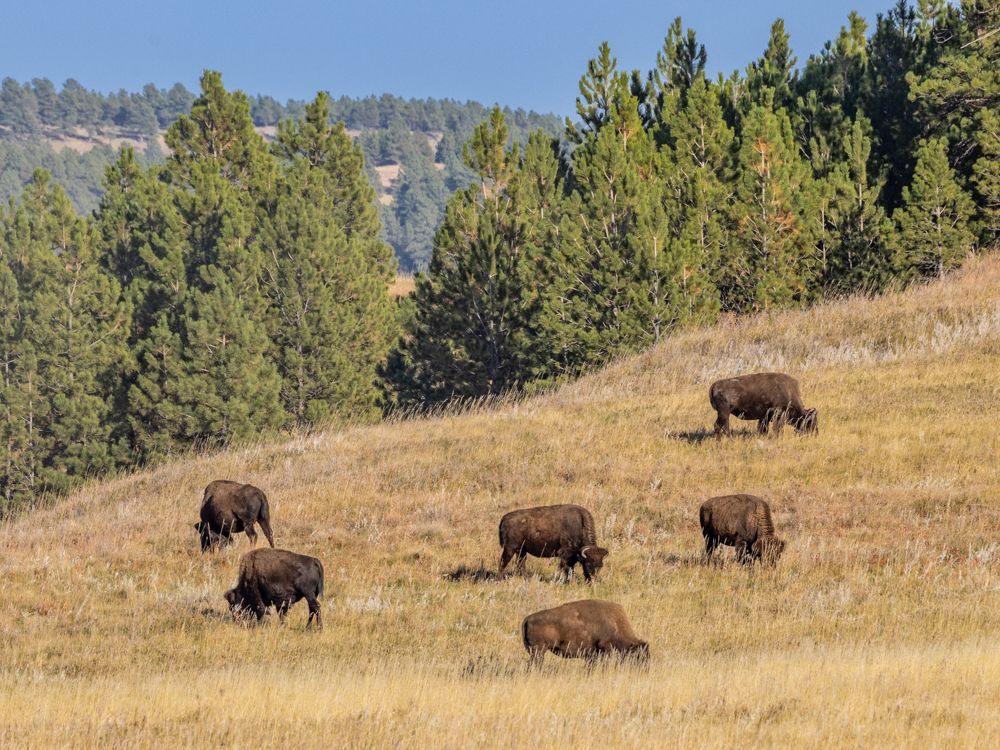
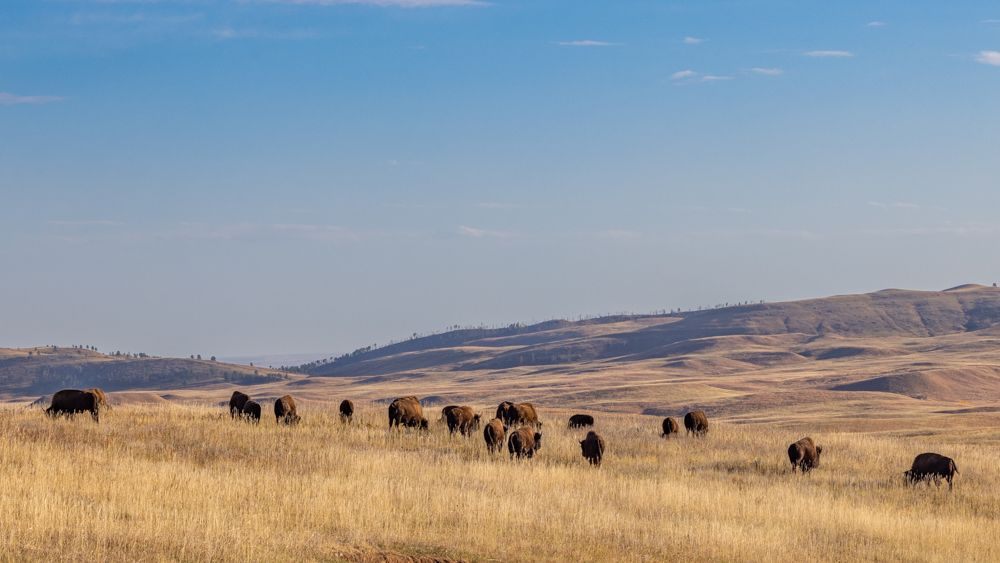
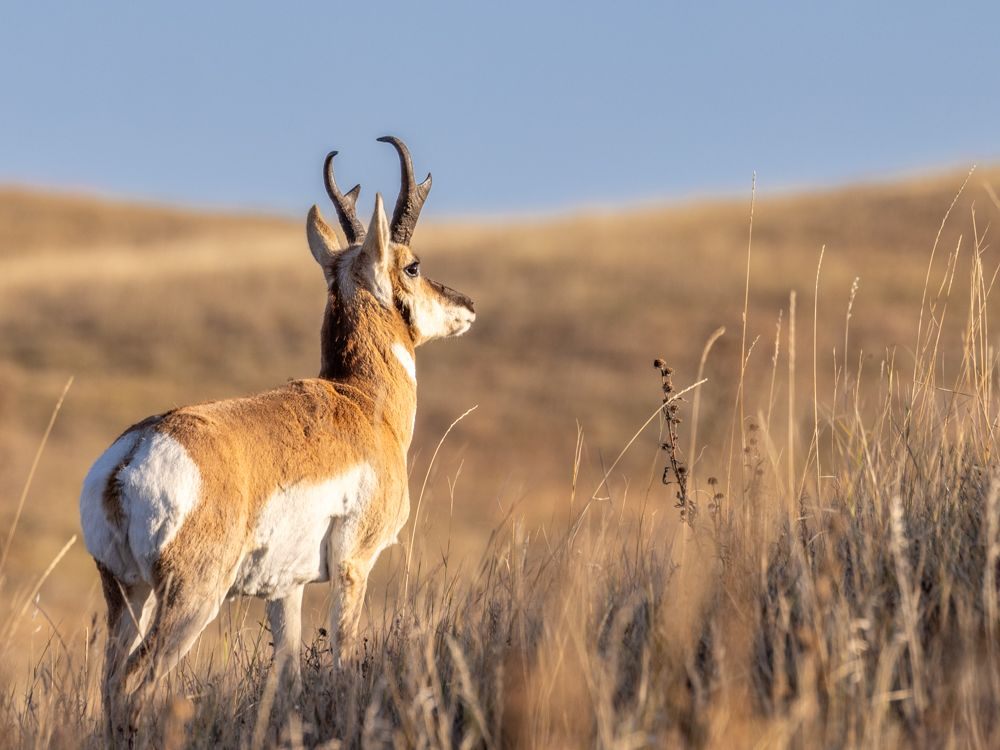
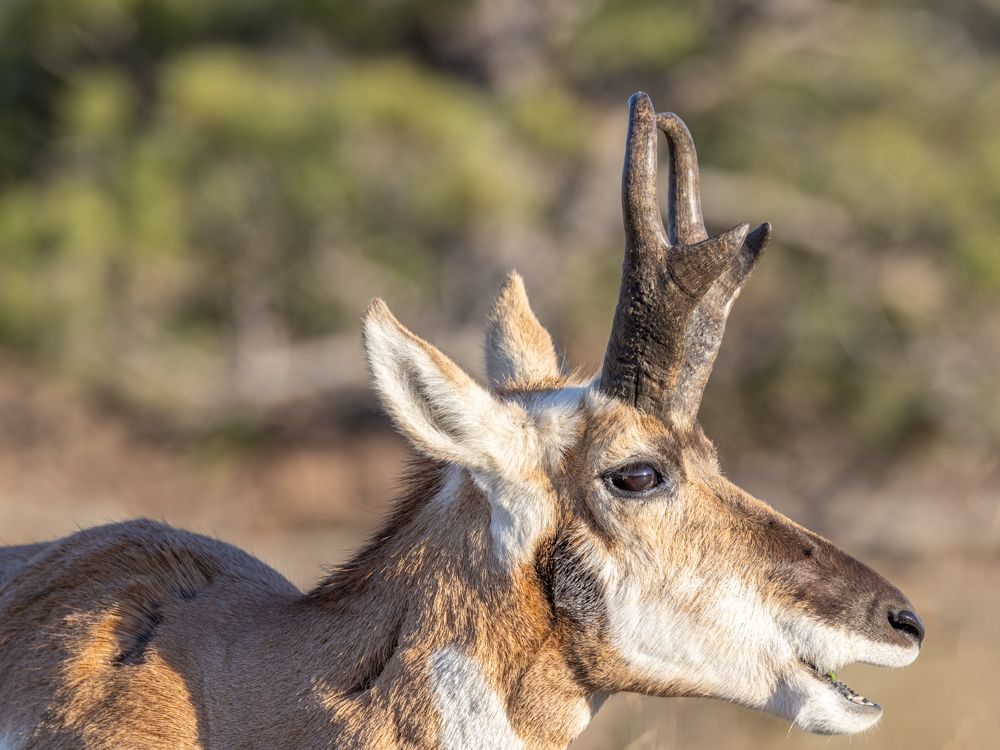
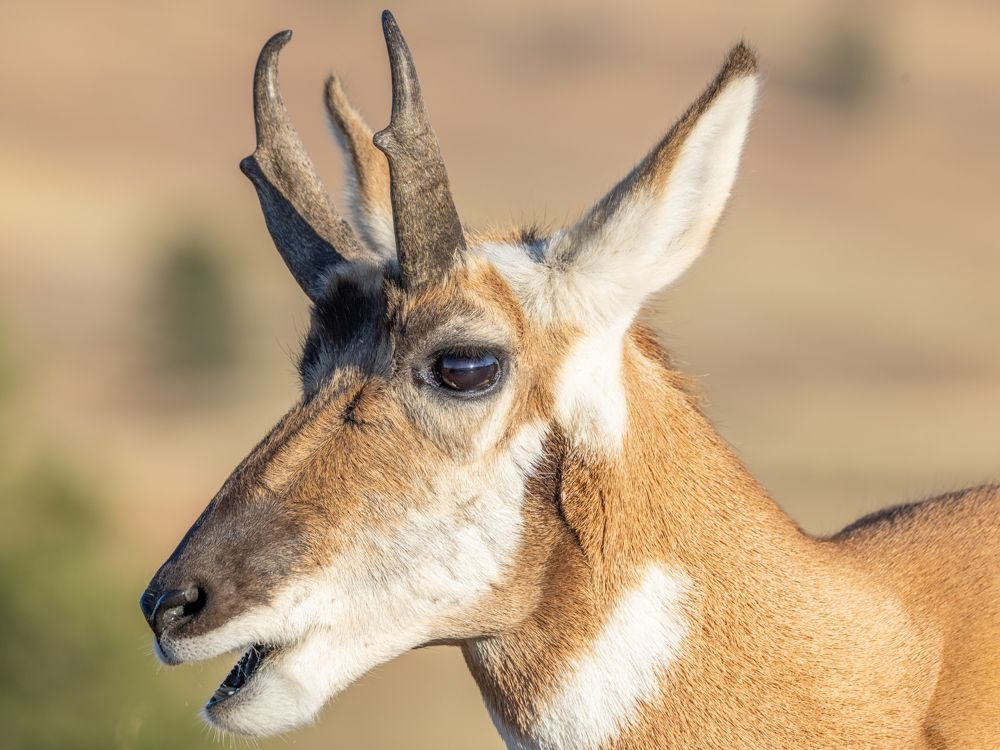
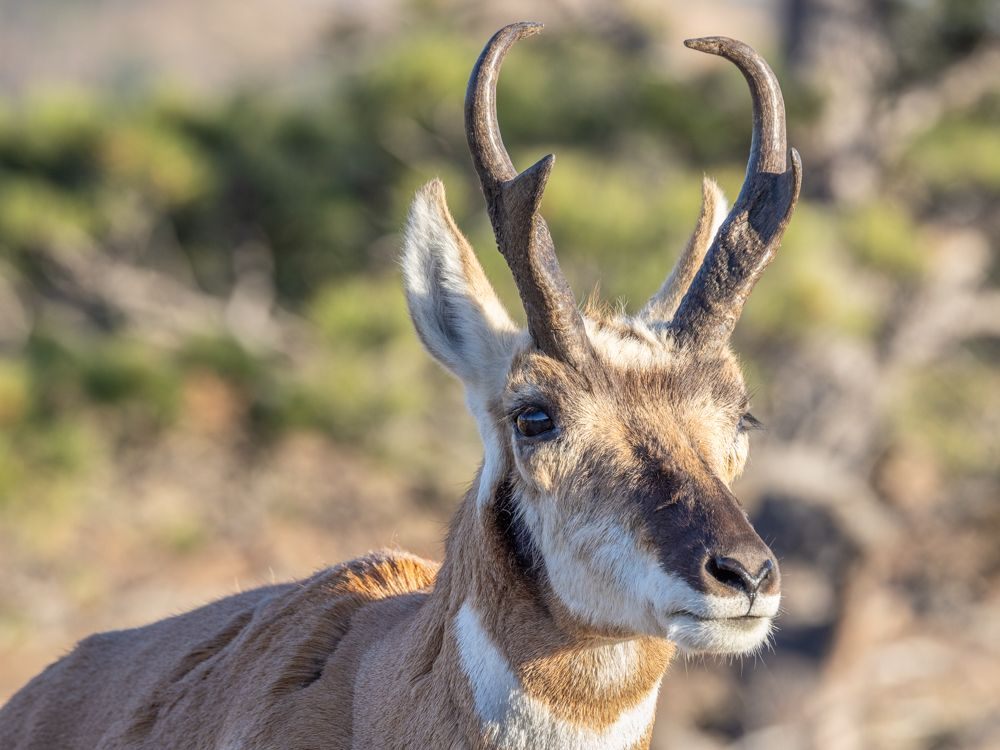
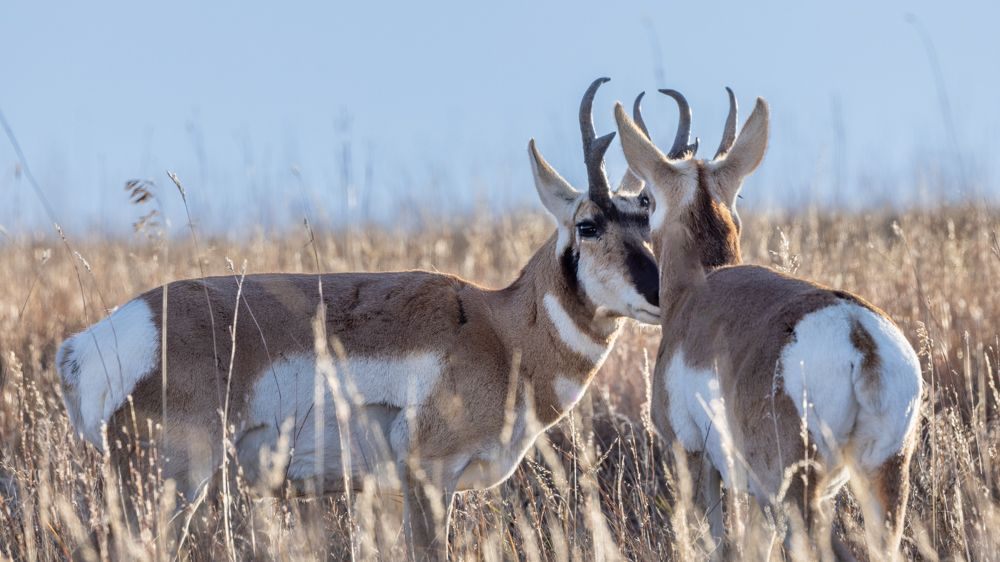
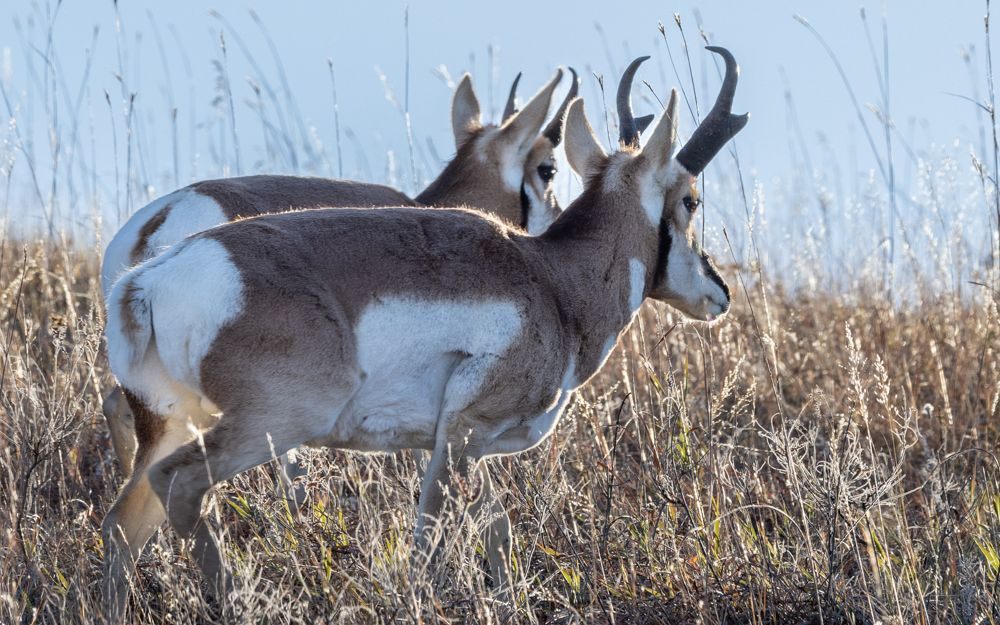
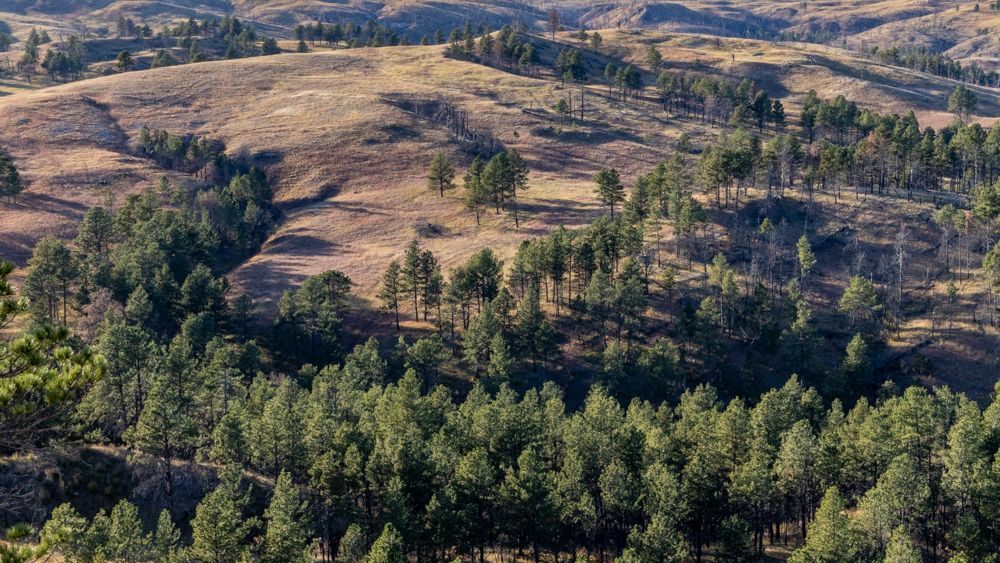
I returned to my room for a personal Zoom appointment before heading back out to Custer State Park . I aimed straight for the wildlife auto tour road. I knew I would have a limited time as it was 3 PM by the time I entered the park and sunset is now at 6 PM. I did see plenty of bison, but no truly optimal photo-ops. Now that I have some experience photographing them, I understand better the challenges. They are dark animal against a light landscape, they spend a lot of time with their heads down grazing and they tend to turn away from vehicles. Although it was late afternoon, the light was still harsh, which exacerbates making images of dark animals. I should have more chances at bison over the next few weeks. I was pleased to encounter some pronghorn antelope. Again, the light was not optimal, but somewhat more acceptable with lighter animals.
I returned to my room just as the sun was setting. I ended up spending most of the evening troubleshooting a variety of house and other issues back home. Some I won’t be able to fully solve until I am physically present. Not long now.
There is so much in the Black Hills, and in South Dakota in general, that I will only be able to scratch the surface in a week’s time. Tomorrow I will continue to explore the area around Custer.
The beginning of the idea was conceived by Chief Brule Lakota Henry Standing Bear . Standing Bear attended Carlisle Indian School in Pennsylvania where he took on the name of "Henry". As a result of attending Carlisle, Standing Bear concluded that in order to best help his people, he would need to learn how to navigate the non-Native world. Ironically, Carlisle, an institution that was designed to assimilate Native Americans out of their indigenous ways, became a source of inspiration to Standing Bear that would shape his enlightened understanding of cross-cultural relationships, as well as to find new ways of preserving his people's culture and history.
In 1933, Standing Bear learned of a monument that was to be constructed at Fort Robinson, Nebraska. The monument was to honor his maternal cousin, Crazy Horse , who was killed at Fort Robinson in 1877 while attempting to negotiate a treaty. Crazy Horse, or Tasunke Witco, born in 1840, was a member of the Oglala Lakota on Rapid Creek about 40 miles northeast of Thunderhead Mountain (now Crazy Horse Mountain). In 1876, in one of the last armed conflicts between Native Americans and European-American settlers, Crazy Horse led a band of Lakota warriors against Custer’s Seventh U.S. Cavalry battalion. The Battle of the Little Bighorn , also known as Custer’s Last Stand, or the Battle of the Greasy Grass led the death of Custer, as well as 289 of his men, in the battle. According to the story, Crazy Horse and his followers were able to limit Native American casualties to 32 by deterring the arrival of U.S. Cavalry reinforcements.
In 1877, under a flag of truce, Crazy Horse went to Fort Robinson to negotiate a treaty. The breakdown in negotiations was blamed on a translator who incorrectly - either by design or accident - mis-translated comments by Crazy Horse. Crazy Horse was quickly escorted toward the jail. Once he realized that the commanding officers were planning on imprisoning him, he struggled and drew his knife. Although Little Big Man, friend and fellow warrior of Crazy Horse, tried to restrain him, he continued to struggle. A guard successfully lunged with a bayonet and inflicted a mortal wound.
Standing Bear wrote to James Cook who was steering the planned memorial project to let him know that he and his fellow Lakota leaders had formed the Crazy Horse Memorial Association and were promoting a carving of Crazy Horse in the sacred Paha Sapa – the Black Hills. James Cook agreed and Standing Bear began the search for a sculptor who would be up to the task.
The man he eventually found would become a full partner in the project and, in fact, devote the rest of his life to it. Korczak Ziolkowski , born in Boston and orphaned at age one, grew up in a series of foster homes. He was a self-taught crafter and sculptor. His Carrara marble portrait, “Paderewski Study of an Immortal,” won first prize by popular vote at the 1939 New York World’s Fair; he was then asked to assist Gutzon Borglum at Mount Rushmore during the summer of 1939. Media reports about Korczak’s World’s Fair prize and work at Mt. Rushmore prompted Standing Bear to appeal to him to create a memorial to Native Americans.
When Korczak accepted the invitation to carve a Mountain Memorial to Native American culture, he determined that it would be an educational and humanitarian project. He wanted Crazy Horse to be much more than “just” a colossal mountain carving. He is famously quoted as saying "By carving Crazy Horse, if I can give back to the Indian some of his pride and create a means to keep alive his culture and heritage, my life will have been worthwhile."
Korczak arrived in the Black Hills in 1947. There was no town, no infrastructure, no civilization. He built himself a house, and eventually married Ruth , who became a full partner in the project. Their 10 children also became involved in the mountain project itself as well as the side businesses they created to support themselves. During his nearly 36 years of working on the Mountain, he refused to take any salary at Crazy Horse Memorial. Ziolkowski knew that a project of this scale could not be completed in one man’s lifetime and he intentionally left detailed specifications for his descendants and the foundation to continue the project. He worked on the sculpture until his death on October 20, 1982, at age 74. He is laid to rest in the tomb that he and his sons blasted from a rock outcropping at the base of the mountain. He wrote his own epitaph for the tomb door and cut the letters from steel plate. It reads: Korczak Storyteller in Stone, May His Remains Be Left Unknown.
I took the van tour up to the base of the Memorial and Mike was my informative and friendly driver and guide. Back at the museum, I walked through all of the buildings that house Katie American artifacts and art, as well as those that memorialize the work and life of Korczak Ziolkowski. I spent some time in the Native American Educational and Cultural Center. Debbie was manning the desk, but of course it was very quiet as I am now officially traveling in the off-season, especially here up north. Debbie explained that, during the tourist season, Native artists are often around to discuss their work and other topics. None of the Tribal members actually work at the center as it is impractical for them - the reservation is two hours south, and the jobs are seasonal.
I returned to my room for a personal Zoom appointment before heading back out to Custer State Park . I aimed straight for the wildlife auto tour road. I knew I would have a limited time as it was 3 PM by the time I entered the park and sunset is now at 6 PM. I did see plenty of bison, but no truly optimal photo-ops. Now that I have some experience photographing them, I understand better the challenges. They are dark animal against a light landscape, they spend a lot of time with their heads down grazing and they tend to turn away from vehicles. Although it was late afternoon, the light was still harsh, which exacerbates making images of dark animals. I should have more chances at bison over the next few weeks. I was pleased to encounter some pronghorn antelope. Again, the light was not optimal, but somewhat more acceptable with lighter animals.
I returned to my room just as the sun was setting. I ended up spending most of the evening troubleshooting a variety of house and other issues back home. Some I won’t be able to fully solve until I am physically present. Not long now.
There is so much in the Black Hills, and in South Dakota in general, that I will only be able to scratch the surface in a week’s time. Tomorrow I will continue to explore the area around Custer.
61 photo galleries
50 States
- Big Sur
- Salinas
- Laguna Beach
- San Diego
- California
- Grand Canyon
- Sedona
- Utah
- Syracuse
- Moab
- Denver
- Manitou Springs
- Calhan
- Mesa Verde
- Los Alamos
- Santa Fe
- Carlsbad
- New Mexico
- Eureka Springs
- Little Rock
- Birmingham
- Jackson
- Lottie
- Ten Thousand Islands
- Jerome
- Savannah
- White
- Asheville
- Sandstone Falls
- Baltimore
- Timonium
- Maryland
- Berlin
- Milton
- Smyrna
- Ocean City
- Detroit
- Upper Peninsula of Michigan
- Michigan
- Herod
- Ozark
- Two Harbors
- Carlton
- Madison County
- Oakley
- Valentine
- South Dakota
- United States
- Yellowstone National Park
- Lima
- Idaho
- Port Townsend
- Lincoln City
- Newport
- San Francisco