Cleveland to Columbus
In spite of today being a travel day, this will be quite a long post. And no photos to distract you. That was just the nature of the day.
First an update on the lens repair. Because nothing is easy, the supposedly ON delivery to the Canon repair facility in VA was delayed. By midday, when I saw that the package had not budged from Ohio, I knew there was an issue. FedEx finally acknowledged a delay at about 3 PM. When I checked into my hotel in Columbus, I saw there was a FedEx store just across the street, so I walked over to see if I could get more information. Word to the wise - it turns out that if you call the store, they can put you through directly to a person in customer service. Recollect that both FedEx and UPS now have chatbots that simply hang up rather than transferring you to customer service. There is literally no way to get a person using the standard 1-800 number.
I actually sat in the store and made the call - it was kind of amusing to watch the person on the other side of the divider pick up the phone. As promised, I was immediately transferred to a customer service rep. Of course, this first level rep barely spoke English and could not do anything other than assure me that the package would be delivered tomorrow. Yeah, and I have a bridge.... At my insistence he transferred me to a supervisor. Surprisingly, the wait time was only a few minutes and Carol was both pleasant and helpful. She was able to determine that some sort of label problem had occurred that prevented it from scanning properly. They were able to generate a new label, but that process resulted in the package missing the flight out to VA. I felt much better knowing exactly what caused the delay and that the package was not in limbo - although yet another day delay is frustrating. Hopefully Canon will be able to turn it around quickly. Stay tuned.
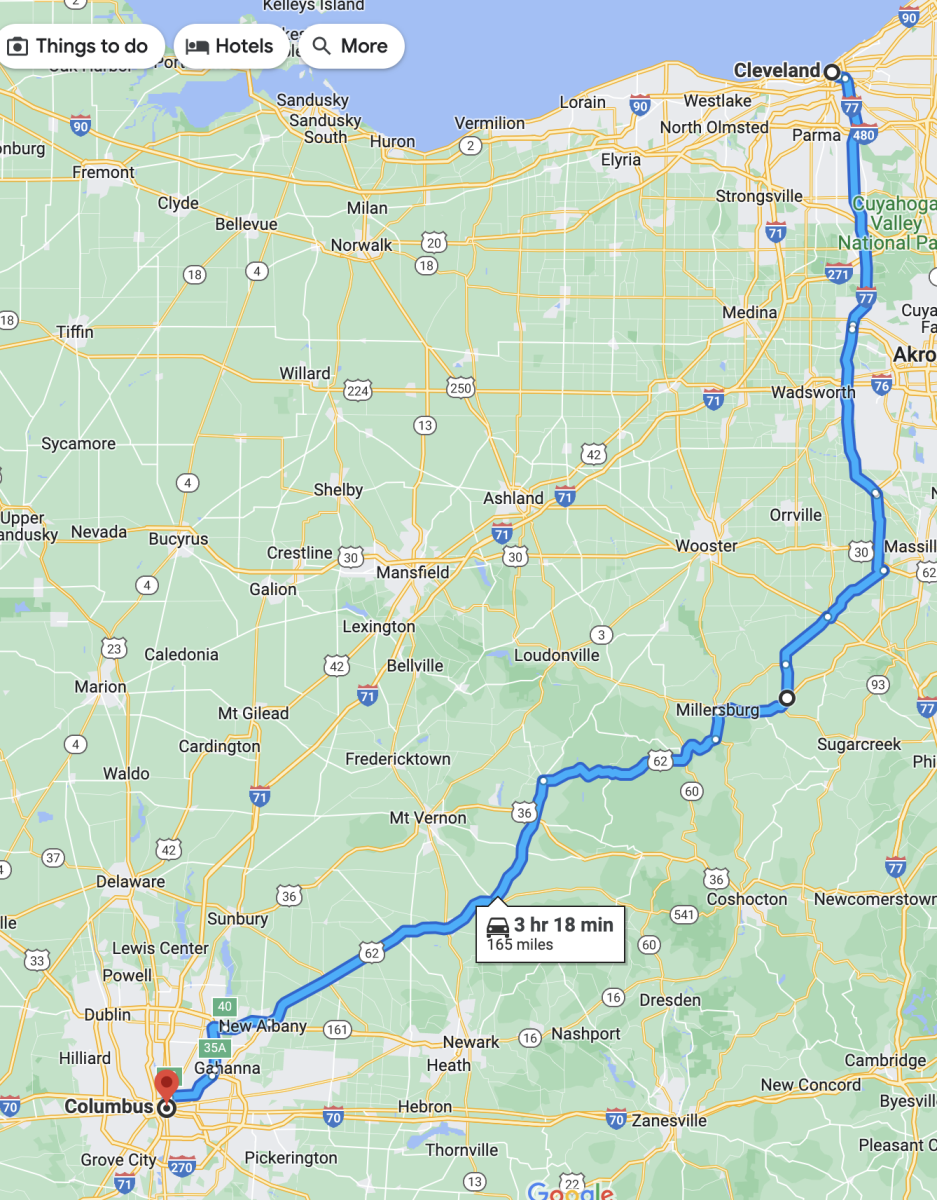
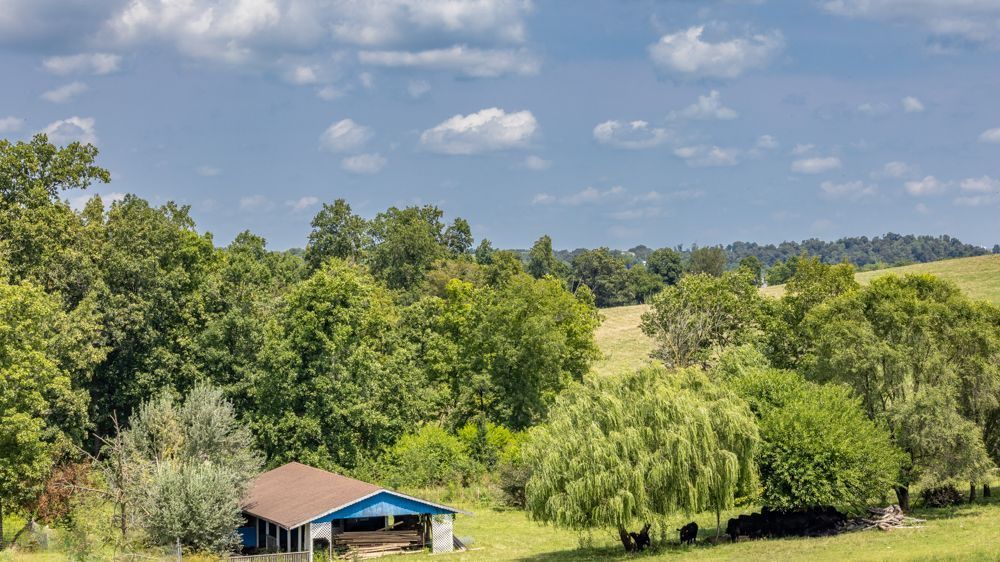
Back to today’s travel, because the drive from Cleveland to Columbus was just over 3 hours, I decided to stop about halfway, in Ohio’s Amish Country. There is a large Amish/Mennonite community in Ohio, apparently much larger even than in Lancaster County, PA, and much more diverse. More on that in a bit. The stop recommended by my sources was Heini’s Cheese Chalet. The possibility of a tour of the facility was mentioned, but I did not see any such possibility when I arrived. Regardless, you could look through the glass windows at the facility, and a wide variety of cheese was available for sale as well as other foodstuffs and gift items. I purchased some cheese, and noticed on my way out a list of other possible destinations. The one that captured my attention was The Amish & Mennonite Heritage Center. It is curious that this destination did not come up as the main place to visit and learn about the history, religion and culture of these peoples. In retrospect, I was very glad that I made the additional stop.
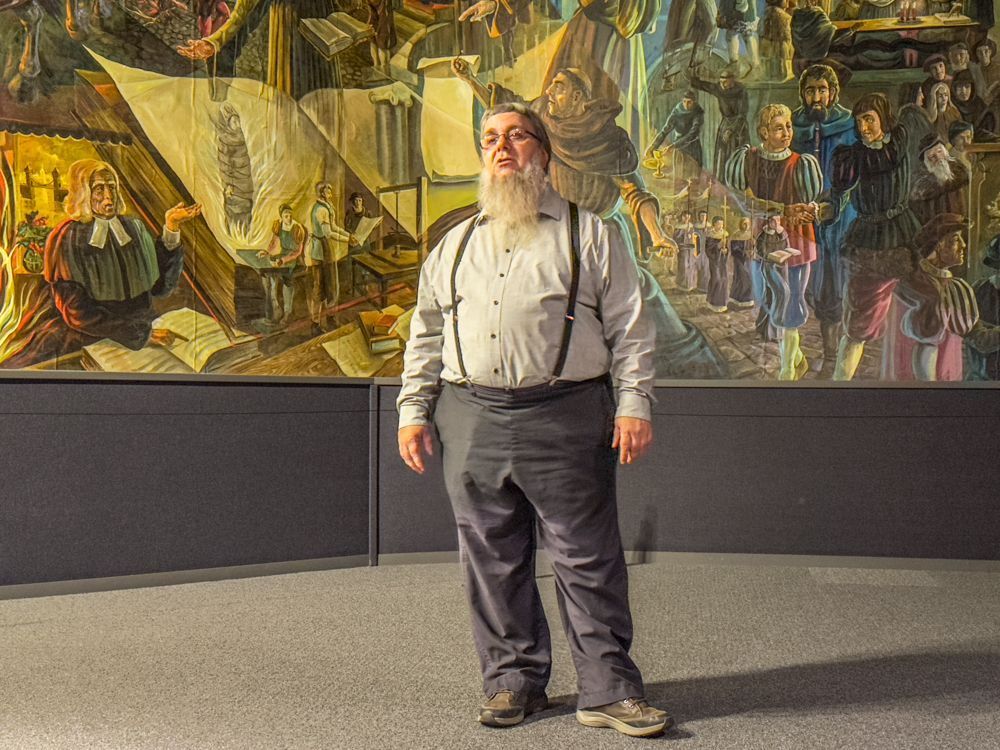
I drove the short distance up the road, found the center and walked in. The main attraction at the center is the Behalt Cyclorama painted by Heinz Gaugel. Behalt, meaning “to keep” or “to remember,” is a 10 ft tall x 265 ft long cyclorama, or mural-in-the-round. Behalt illustrates the heritage of the Amish and Mennonite people from their Anabaptist beginnings in Zürich, Switzerland in 1525 to the present day. For a small fee, I joined a tour led by a a docent from the center. Using the mural, he recited the history covered by the beautiful, complex and exhaustive mural. I learned a lot of history of which I was previously unaware. The Mennonites, Amish and Hutterite peoples all derive from the Anabaptist movement originating in the first documented adult baptisms - or re-baptisms - in Zurich. In all of these sub-religions, baptism is considered a choice that must be made by a young person fully capable of understanding the commitment, rather than a choice made at birth by a responsible adult. This was a major spit with state-sponsored Christianity, which insisted on baptism at birth.
As I understand it, one of the differences that set Hutterites apart is that they have no personal property, all property is communal. I learned that Mennonites are the most diverse group, ranging from fundamentalist to conservative to modern members who drive cars and use computers. The Amish are also becoming diversified and some have adopted more modern customs, especially for business, but their existence is generally simpler and more defined. While the communities interact, they do not intermarry.
Another interesting fact I learned is that a group of Mennonites settled in Ukraine and were responsible for developing agriculture in that region, specifically of wheat, making Ukraine a major breadbasket of the world. This plays into the modern day issue of that wheat supply being disrupted due to the war perpetrated by Vladimir Putin of Russia. Similarly, Hittites who settled in Kansas contributed to the the development of wheat agriculture in that state, marking it as the breadbasket of the U.S.
In general, when Anabaptists migrated to the U.S., like many seeking religious freedom, they were initially attracted to two areas that I have previously written about. Both Rhode Island and Pennsylvania were founded on the idea of religious freedom and tolerance. Hence the prevalence of Anabaptists and Quakers in those states.
On a more practical level, I learned that the Anabaptist communities pay taxes in general, but not social security because they prefer to rely on their communities rather than take state-sponsored assistance. They also do not partake of programs such as medicare and pay medical bills out of pocket. If a person cannot afford a necessarily medical expense, the community helps to cover the payments. While they do have the right to vote, and are active in local politics, they decline to vote in federal elections; because they are exempt from military service based on their pacifist beliefs, they feel it would be hypocritical to vote for a commander in chief.
Of course there was much more, and it was all extremely interesting. Further information can be found here , here , here , here and here .
However we are not done with my time in the Anabaptist community today. I met and spent some time conversing with a very interesting gentleman. For reasons that will become obvious, he shall remain nameless. As well, my reporting of our conversation (with his permission) will also be somewhat circumspect. This gentleman shared with me that he had left the community to study at an Ivy League University, but chose to return. He has also traveled extensively, including outside the U.S., and has experienced relationships outside of the community. This has given him a much broader perspective on the community to which he chose to return. He explained that, although the Anabaptists profess tolerance, this does not necessarily extend to such things as sexual orientation or mental illness. He has experienced first-hand the discomfort of the community in confronting such issues and hopes to effect change from inside the community, one of the reasons he returned. In spite of this, he also believes that the community is a warm, safe and supportive environment. He believes that, with time, tolerance and support can be achieved. In the meantime, he lives with a foot in each world and is comfortable with his choices.
Even leaving out many of the details, you can understand that this was an amazing conversation. I was honored and humbled that this gentlemen chose to trust me with his confidences. I have no doubt that he will effect substantive and meaningful change and help steer his community into the future with intellect and compassion. Meeting and conversing with this gentleman was truly a highlight of this trip.
Tomorrow I will explore the area around Columbus. Hopefully I will have more images for you, even somewhat hamstrung with missing equipment.
First an update on the lens repair. Because nothing is easy, the supposedly ON delivery to the Canon repair facility in VA was delayed. By midday, when I saw that the package had not budged from Ohio, I knew there was an issue. FedEx finally acknowledged a delay at about 3 PM. When I checked into my hotel in Columbus, I saw there was a FedEx store just across the street, so I walked over to see if I could get more information. Word to the wise - it turns out that if you call the store, they can put you through directly to a person in customer service. Recollect that both FedEx and UPS now have chatbots that simply hang up rather than transferring you to customer service. There is literally no way to get a person using the standard 1-800 number.
I actually sat in the store and made the call - it was kind of amusing to watch the person on the other side of the divider pick up the phone. As promised, I was immediately transferred to a customer service rep. Of course, this first level rep barely spoke English and could not do anything other than assure me that the package would be delivered tomorrow. Yeah, and I have a bridge.... At my insistence he transferred me to a supervisor. Surprisingly, the wait time was only a few minutes and Carol was both pleasant and helpful. She was able to determine that some sort of label problem had occurred that prevented it from scanning properly. They were able to generate a new label, but that process resulted in the package missing the flight out to VA. I felt much better knowing exactly what caused the delay and that the package was not in limbo - although yet another day delay is frustrating. Hopefully Canon will be able to turn it around quickly. Stay tuned.
Back to today’s travel, because the drive from Cleveland to Columbus was just over 3 hours, I decided to stop about halfway, in Ohio’s Amish Country. There is a large Amish/Mennonite community in Ohio, apparently much larger even than in Lancaster County, PA, and much more diverse. More on that in a bit. The stop recommended by my sources was Heini’s Cheese Chalet. The possibility of a tour of the facility was mentioned, but I did not see any such possibility when I arrived. Regardless, you could look through the glass windows at the facility, and a wide variety of cheese was available for sale as well as other foodstuffs and gift items. I purchased some cheese, and noticed on my way out a list of other possible destinations. The one that captured my attention was The Amish & Mennonite Heritage Center. It is curious that this destination did not come up as the main place to visit and learn about the history, religion and culture of these peoples. In retrospect, I was very glad that I made the additional stop.
I drove the short distance up the road, found the center and walked in. The main attraction at the center is the Behalt Cyclorama painted by Heinz Gaugel. Behalt, meaning “to keep” or “to remember,” is a 10 ft tall x 265 ft long cyclorama, or mural-in-the-round. Behalt illustrates the heritage of the Amish and Mennonite people from their Anabaptist beginnings in Zürich, Switzerland in 1525 to the present day. For a small fee, I joined a tour led by a a docent from the center. Using the mural, he recited the history covered by the beautiful, complex and exhaustive mural. I learned a lot of history of which I was previously unaware. The Mennonites, Amish and Hutterite peoples all derive from the Anabaptist movement originating in the first documented adult baptisms - or re-baptisms - in Zurich. In all of these sub-religions, baptism is considered a choice that must be made by a young person fully capable of understanding the commitment, rather than a choice made at birth by a responsible adult. This was a major spit with state-sponsored Christianity, which insisted on baptism at birth.
As I understand it, one of the differences that set Hutterites apart is that they have no personal property, all property is communal. I learned that Mennonites are the most diverse group, ranging from fundamentalist to conservative to modern members who drive cars and use computers. The Amish are also becoming diversified and some have adopted more modern customs, especially for business, but their existence is generally simpler and more defined. While the communities interact, they do not intermarry.
Another interesting fact I learned is that a group of Mennonites settled in Ukraine and were responsible for developing agriculture in that region, specifically of wheat, making Ukraine a major breadbasket of the world. This plays into the modern day issue of that wheat supply being disrupted due to the war perpetrated by Vladimir Putin of Russia. Similarly, Hittites who settled in Kansas contributed to the the development of wheat agriculture in that state, marking it as the breadbasket of the U.S.
In general, when Anabaptists migrated to the U.S., like many seeking religious freedom, they were initially attracted to two areas that I have previously written about. Both Rhode Island and Pennsylvania were founded on the idea of religious freedom and tolerance. Hence the prevalence of Anabaptists and Quakers in those states.
On a more practical level, I learned that the Anabaptist communities pay taxes in general, but not social security because they prefer to rely on their communities rather than take state-sponsored assistance. They also do not partake of programs such as medicare and pay medical bills out of pocket. If a person cannot afford a necessarily medical expense, the community helps to cover the payments. While they do have the right to vote, and are active in local politics, they decline to vote in federal elections; because they are exempt from military service based on their pacifist beliefs, they feel it would be hypocritical to vote for a commander in chief.
Of course there was much more, and it was all extremely interesting. Further information can be found here , here , here , here and here .
However we are not done with my time in the Anabaptist community today. I met and spent some time conversing with a very interesting gentleman. For reasons that will become obvious, he shall remain nameless. As well, my reporting of our conversation (with his permission) will also be somewhat circumspect. This gentleman shared with me that he had left the community to study at an Ivy League University, but chose to return. He has also traveled extensively, including outside the U.S., and has experienced relationships outside of the community. This has given him a much broader perspective on the community to which he chose to return. He explained that, although the Anabaptists profess tolerance, this does not necessarily extend to such things as sexual orientation or mental illness. He has experienced first-hand the discomfort of the community in confronting such issues and hopes to effect change from inside the community, one of the reasons he returned. In spite of this, he also believes that the community is a warm, safe and supportive environment. He believes that, with time, tolerance and support can be achieved. In the meantime, he lives with a foot in each world and is comfortable with his choices.
Even leaving out many of the details, you can understand that this was an amazing conversation. I was honored and humbled that this gentlemen chose to trust me with his confidences. I have no doubt that he will effect substantive and meaningful change and help steer his community into the future with intellect and compassion. Meeting and conversing with this gentleman was truly a highlight of this trip.
Tomorrow I will explore the area around Columbus. Hopefully I will have more images for you, even somewhat hamstrung with missing equipment.

61 photo galleries
50 States
- Big Sur
- Salinas
- Laguna Beach
- San Diego
- California
- Grand Canyon
- Sedona
- Utah
- Syracuse
- Moab
- Denver
- Manitou Springs
- Calhan
- Mesa Verde
- Los Alamos
- Santa Fe
- Carlsbad
- New Mexico
- Eureka Springs
- Little Rock
- Birmingham
- Jackson
- Lottie
- Ten Thousand Islands
- Jerome
- Savannah
- White
- Asheville
- Sandstone Falls
- Baltimore
- Timonium
- Maryland
- Berlin
- Milton
- Smyrna
- Ocean City
- Detroit
- Upper Peninsula of Michigan
- Michigan
- Herod
- Ozark
- Two Harbors
- Carlton
- Madison County
- Oakley
- Valentine
- South Dakota
- United States
- Yellowstone National Park
- Lima
- Idaho
- Port Townsend
- Lincoln City
- Newport
- San Francisco