Cleveland (sex, drugs and rock and roll)
My first stop this morning was to drop my 24-105 lens at FedEx for shipment to Canon. I’ve been struggling for some time with some particulate that has gotten in between the elements and results in a large diffuse spot in every single photo. While Canon will repair for free and pay for shipping both ways due to my platinum status, it still means being without my most used lens for a few days. They will even provide a loaner, but not until the lens is received. The might or might not be worth the additional hassle depending on the repair time estimate. In the meantime I will have to rely on my 70-200 and an iPhone for at least a few days for most photo opportunities.
Rain was not originally predicted for today, but that forecast changed this morning. And in the few minutes it took me to drop off the lens, the heavens opened up and it started - yet again - to pour. The amount of rain the Eastern U.S. has gotten this summer is very concerning. Of course, some rain and a few thunderstorms are normal - whatever that means anymore. But this weather pattern, combined with the persistent heat in the South feels ominous.
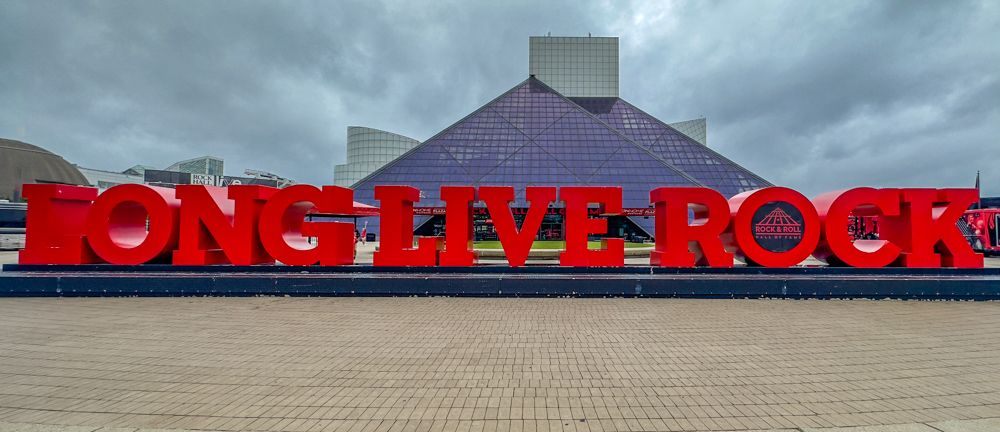
I waited until the downpour let up to simple rain and set off to walk the half mile to the Rock and Roll Hall of Fame, Cleveland’s main museum type attraction. I was grateful to arrive with only wet feet. One of the museum workers actually gave me some wipes to dry off with, which was very kind. And I discovered a use for the horrible blow dryers in the restroom, which I usually avoid.
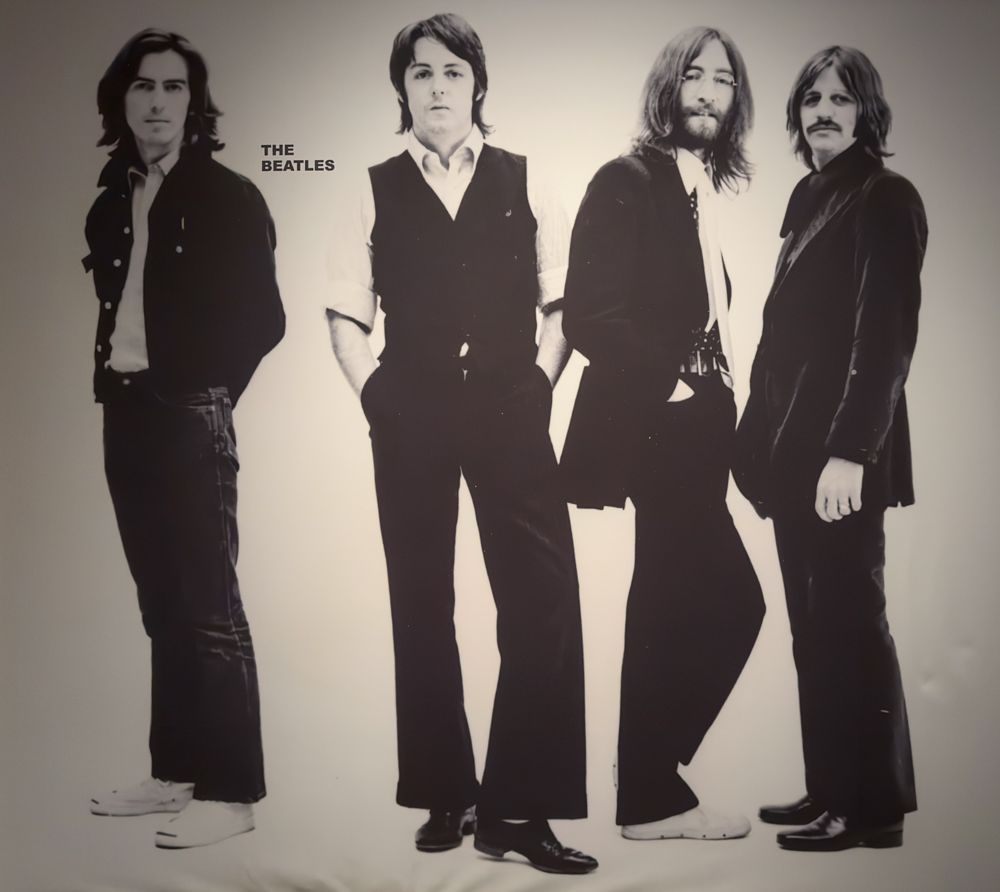
Once relatively dry, I started on the bottom floor of the six level museum. This exhibit gives the history of rock and roll, including early influences such as Woody Guthrie, Pete Seger, Louis Armstrong, Ma Rainey, Billie Holliday, Nat “King” Cole and others. One of the first displays was of the social reaction to what some considered to be the dangerous and amoral influences of Rock and Roll music. Remembering how tame that early music was made me chuckle. Until I was reminded of the how that played out, and how attempts to constrain free speech continue to pervade current society.
In 1985, the senate actually held hearings on the censorship of record labels. I don’t have an independent recollection of them, but I was in the throes of trying to write a graduate thesis around that time and was not paying much attention to the outside world.
On a local level, a San Antonio city councilman suggested that rock and roll was so dangerous that it should be exempt from the first amendment. On a national level, Then senator Al Gore's wife, Tipper, was upset that a Prince album (the soundtrack from the controversial R-rated Purple Rain film) she bought for her daughter had risque lyrics. She gathered her well-connected friends and literally made a federal case out of it. Mrs. Gore spearheaded the formation if Parents Music Resource Center (PMRC) , an organization whose goal was, at a minimum, to rate music and put labels on music warning of explicit content. A senate hearing was convened to investigate the issue.
The unlikeliest trio of musicians — avant-garde composer Frank Zappa, hair-metal howler Dee Snider of Twisted Sister, and the mostly benign (whose worst sin was singing about a Rocky Mountain high) singer-songwriter John Denver — passionately defended artistic freedom before the federal government. Ira Glasser, the then executive director of the ACLU contended that the Senate hearings themselves were unconstitutional. He strongly objected to even debating legislation that would trample on the first amendment; even writing that sounds discordant. But in the end the PMRC got what it wanted. "Objectionable" records received a warning label, and rappers — not heavy-metal bands — were the most likely to be labeled.
It is important to understand that music always reflects, and in fact amplifies, the social issues of the time. And usually this involves minority groups who feel misunderstood and have been disenfranchised and discriminated against. When censorship is attempted, it is these groups who disproportionately bear the brunt of the conflict. Although I grew up with classical music in the home, Rock and Roll was still the soundtrack of my youth, so it is interesting to view these issues in a historical perspective.
Each of the other five floors highlights a different aspect of Rock and Roll, and many artifacts, displays and video presentations are available. One of the floors allows visitors to either experiment with recording their own music, or sing along in sort of a Karaoke style with musicians playing a fixed set. I happened upon this room just before I left, and they were playing “Don’t Stop Believin ',” the rock anthem of my generation. Of course the gathered crowd was singing along. It was a fitting conclusion to my visit.
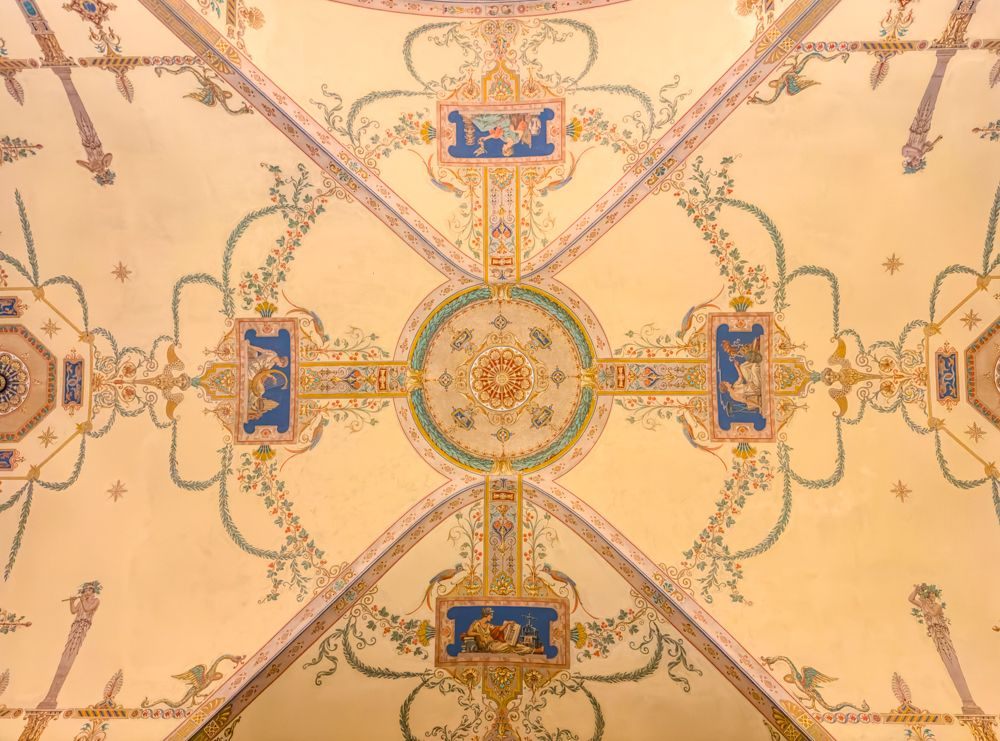
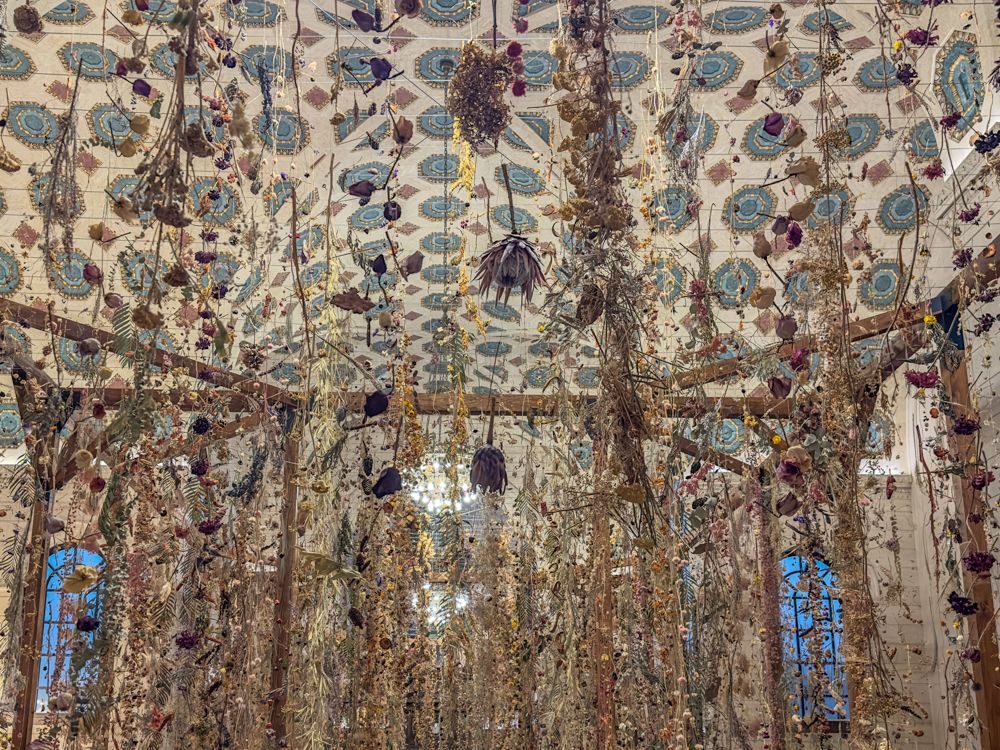
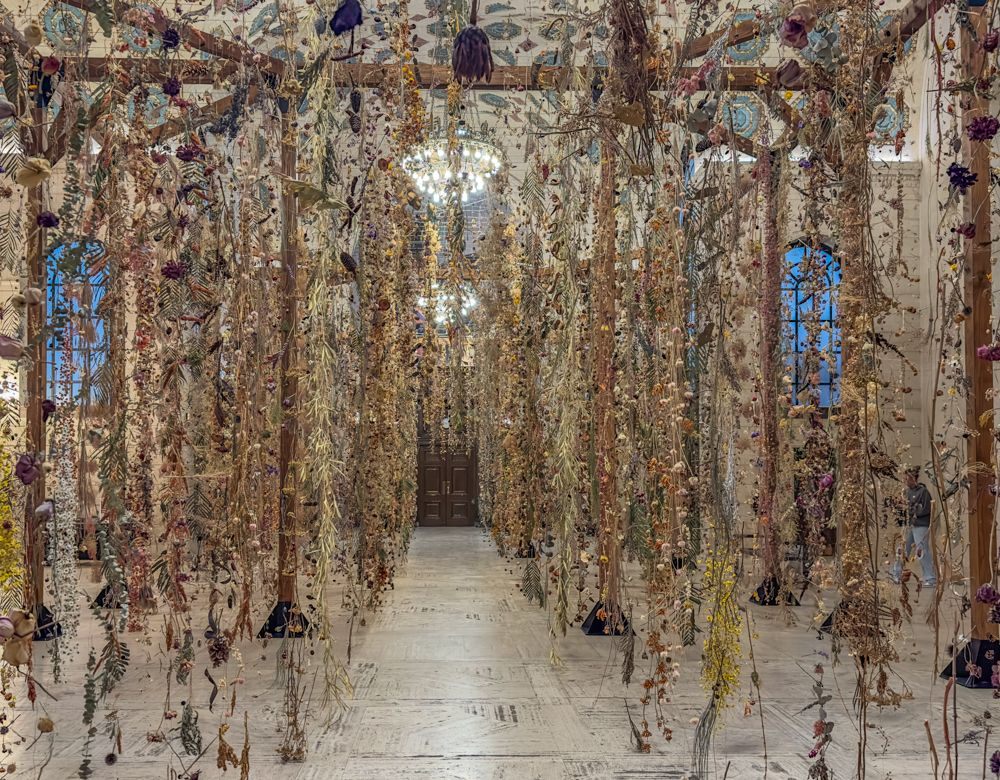
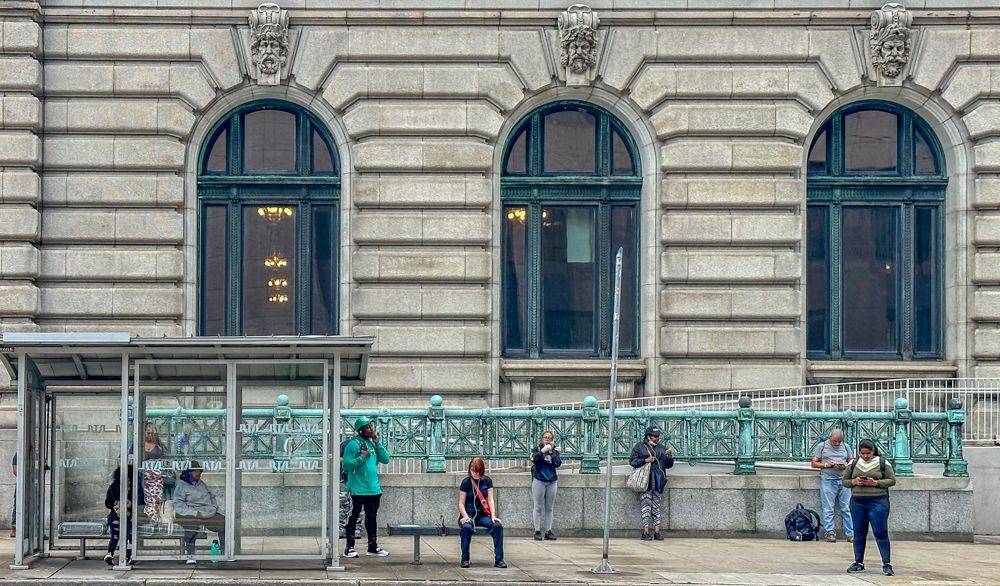
On the way back to my hotel (blessedly made in drizzle rather than a downpour) I stopped at the Cleveland Public Library, literally just across the street from the Public Square. They have a beautifully painted ceiling as well as an impressive installation of hanging curtains “beaded” with various natural materials. The artist, Rebecca Louise Law created “Archive” to explore the complexity of human connection to nature.
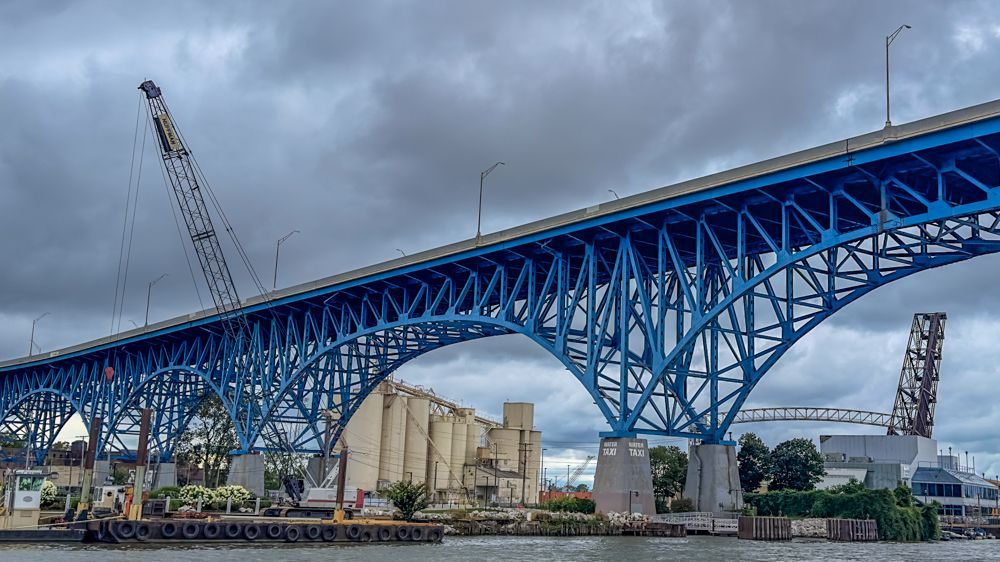
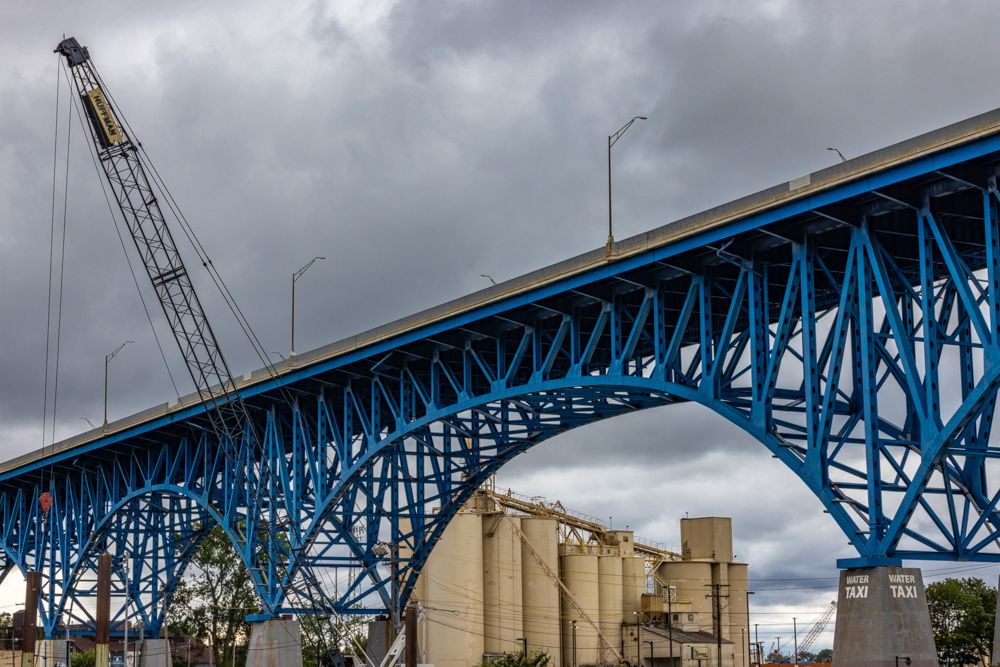
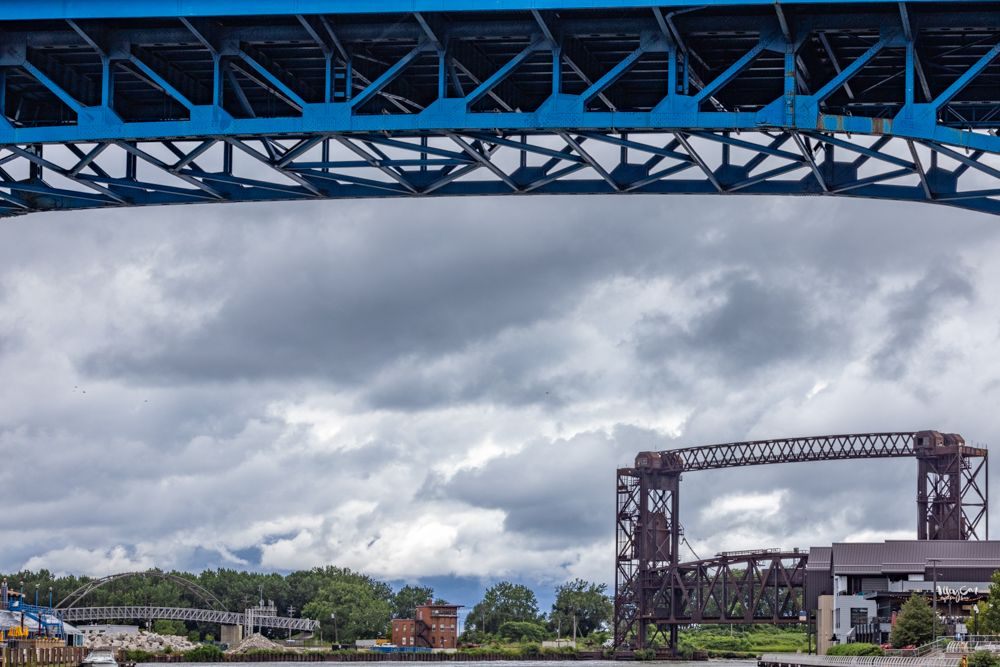
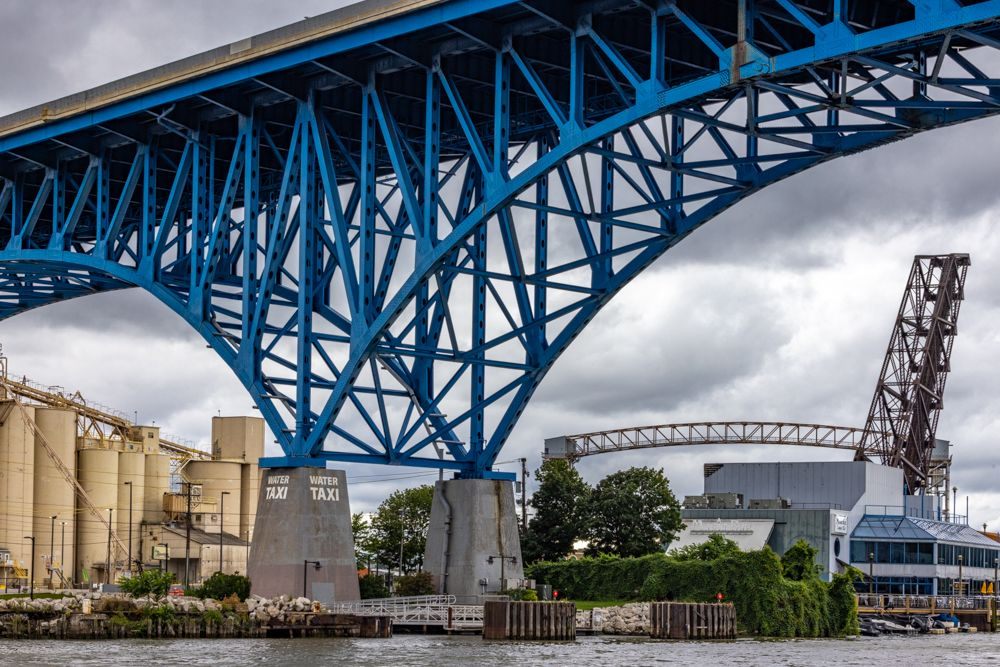
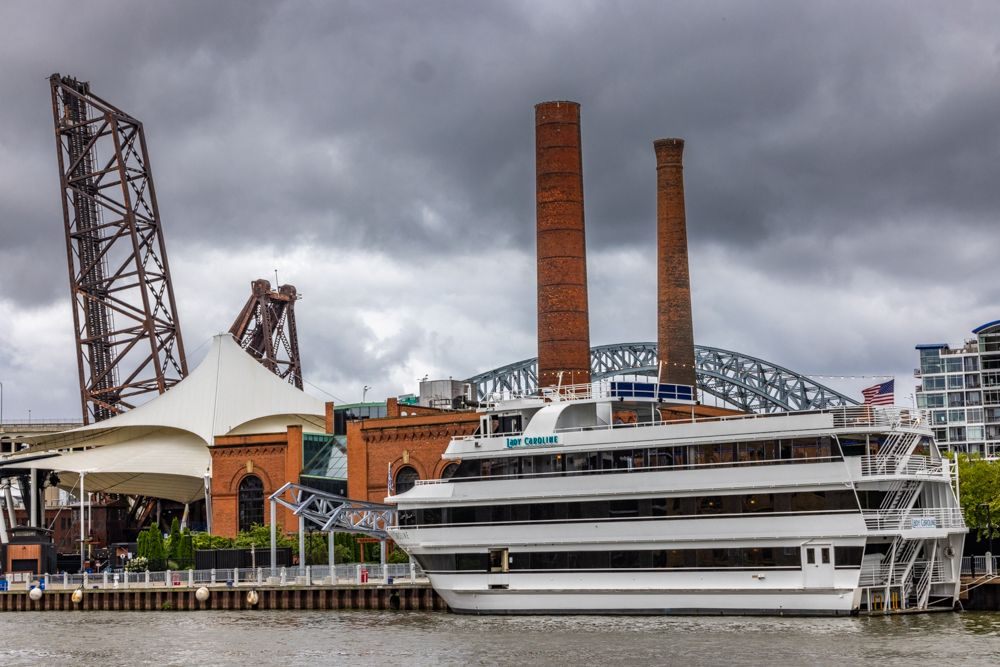
I decided to wait out the rest of the afternoon rain in my room. When I saw that the worst of the rain was abating and only sprinkles were forecast, I decided to walk out to the East Bank of the flats for dinner. I had noticed a brewery called Collision Bend Brewing Company that was situated right on the river. That seemed like the kind of place that I could talk to some locals and also get some different view of the various bridges. It turned out to be an excellent choice.
I sat down at the bar next to Larry, who it turned out was the manager, just taking a break. We got to talking and, after he helped me choose a beer flight and some food, I learned a lot about Cleveland. Larry comes from a military family, so did not grow up here, but it clearly is his adopted home. He explained that the community here has deep roots and people often return after going away for school or work. The people here simultaneously embrace history and progress. While certain areas are being renovated, gentrified and repurposed, the city has deliberately chosen to keep elements of its industrial past, including many of the bridges, even ones that are no longer in use. It gives Cleveland that gritty vibe that really is emblematic of its history. We also chatted about some of the issues that I have encountered during my journey. As Larry is of African American heritage, I appreciated getting his views on the state of the country, as well as some of the state and local concerns. I walked away with a better understanding of Cleveland and a large doggie bag.
Tomorrow I head South to Columbus.
Rain was not originally predicted for today, but that forecast changed this morning. And in the few minutes it took me to drop off the lens, the heavens opened up and it started - yet again - to pour. The amount of rain the Eastern U.S. has gotten this summer is very concerning. Of course, some rain and a few thunderstorms are normal - whatever that means anymore. But this weather pattern, combined with the persistent heat in the South feels ominous.
I waited until the downpour let up to simple rain and set off to walk the half mile to the Rock and Roll Hall of Fame, Cleveland’s main museum type attraction. I was grateful to arrive with only wet feet. One of the museum workers actually gave me some wipes to dry off with, which was very kind. And I discovered a use for the horrible blow dryers in the restroom, which I usually avoid.
Once relatively dry, I started on the bottom floor of the six level museum. This exhibit gives the history of rock and roll, including early influences such as Woody Guthrie, Pete Seger, Louis Armstrong, Ma Rainey, Billie Holliday, Nat “King” Cole and others. One of the first displays was of the social reaction to what some considered to be the dangerous and amoral influences of Rock and Roll music. Remembering how tame that early music was made me chuckle. Until I was reminded of the how that played out, and how attempts to constrain free speech continue to pervade current society.
In 1985, the senate actually held hearings on the censorship of record labels. I don’t have an independent recollection of them, but I was in the throes of trying to write a graduate thesis around that time and was not paying much attention to the outside world.
On a local level, a San Antonio city councilman suggested that rock and roll was so dangerous that it should be exempt from the first amendment. On a national level, Then senator Al Gore's wife, Tipper, was upset that a Prince album (the soundtrack from the controversial R-rated Purple Rain film) she bought for her daughter had risque lyrics. She gathered her well-connected friends and literally made a federal case out of it. Mrs. Gore spearheaded the formation if Parents Music Resource Center (PMRC) , an organization whose goal was, at a minimum, to rate music and put labels on music warning of explicit content. A senate hearing was convened to investigate the issue.
The unlikeliest trio of musicians — avant-garde composer Frank Zappa, hair-metal howler Dee Snider of Twisted Sister, and the mostly benign (whose worst sin was singing about a Rocky Mountain high) singer-songwriter John Denver — passionately defended artistic freedom before the federal government. Ira Glasser, the then executive director of the ACLU contended that the Senate hearings themselves were unconstitutional. He strongly objected to even debating legislation that would trample on the first amendment; even writing that sounds discordant. But in the end the PMRC got what it wanted. "Objectionable" records received a warning label, and rappers — not heavy-metal bands — were the most likely to be labeled.
It is important to understand that music always reflects, and in fact amplifies, the social issues of the time. And usually this involves minority groups who feel misunderstood and have been disenfranchised and discriminated against. When censorship is attempted, it is these groups who disproportionately bear the brunt of the conflict. Although I grew up with classical music in the home, Rock and Roll was still the soundtrack of my youth, so it is interesting to view these issues in a historical perspective.
Each of the other five floors highlights a different aspect of Rock and Roll, and many artifacts, displays and video presentations are available. One of the floors allows visitors to either experiment with recording their own music, or sing along in sort of a Karaoke style with musicians playing a fixed set. I happened upon this room just before I left, and they were playing “Don’t Stop Believin ',” the rock anthem of my generation. Of course the gathered crowd was singing along. It was a fitting conclusion to my visit.
On the way back to my hotel (blessedly made in drizzle rather than a downpour) I stopped at the Cleveland Public Library, literally just across the street from the Public Square. They have a beautifully painted ceiling as well as an impressive installation of hanging curtains “beaded” with various natural materials. The artist, Rebecca Louise Law created “Archive” to explore the complexity of human connection to nature.
I decided to wait out the rest of the afternoon rain in my room. When I saw that the worst of the rain was abating and only sprinkles were forecast, I decided to walk out to the East Bank of the flats for dinner. I had noticed a brewery called Collision Bend Brewing Company that was situated right on the river. That seemed like the kind of place that I could talk to some locals and also get some different view of the various bridges. It turned out to be an excellent choice.
I sat down at the bar next to Larry, who it turned out was the manager, just taking a break. We got to talking and, after he helped me choose a beer flight and some food, I learned a lot about Cleveland. Larry comes from a military family, so did not grow up here, but it clearly is his adopted home. He explained that the community here has deep roots and people often return after going away for school or work. The people here simultaneously embrace history and progress. While certain areas are being renovated, gentrified and repurposed, the city has deliberately chosen to keep elements of its industrial past, including many of the bridges, even ones that are no longer in use. It gives Cleveland that gritty vibe that really is emblematic of its history. We also chatted about some of the issues that I have encountered during my journey. As Larry is of African American heritage, I appreciated getting his views on the state of the country, as well as some of the state and local concerns. I walked away with a better understanding of Cleveland and a large doggie bag.
Tomorrow I head South to Columbus.
61 photo galleries
50 States
- Big Sur
- Salinas
- Laguna Beach
- San Diego
- California
- Grand Canyon
- Sedona
- Utah
- Syracuse
- Moab
- Denver
- Manitou Springs
- Calhan
- Mesa Verde
- Los Alamos
- Santa Fe
- Carlsbad
- New Mexico
- Eureka Springs
- Little Rock
- Birmingham
- Jackson
- Lottie
- Ten Thousand Islands
- Jerome
- Savannah
- White
- Asheville
- Sandstone Falls
- Baltimore
- Timonium
- Maryland
- Berlin
- Milton
- Smyrna
- Ocean City
- Detroit
- Upper Peninsula of Michigan
- Michigan
- Herod
- Ozark
- Two Harbors
- Carlton
- Madison County
- Oakley
- Valentine
- South Dakota
- United States
- Yellowstone National Park
- Lima
- Idaho
- Port Townsend
- Lincoln City
- Newport
- San Francisco