Charleston, WV
After the beautiful day we had yesterday, I saw that rain was predicted for the entire three days I was schedule to be in Charleston. This morning it looked like I would have a few hours before it started in earnest.
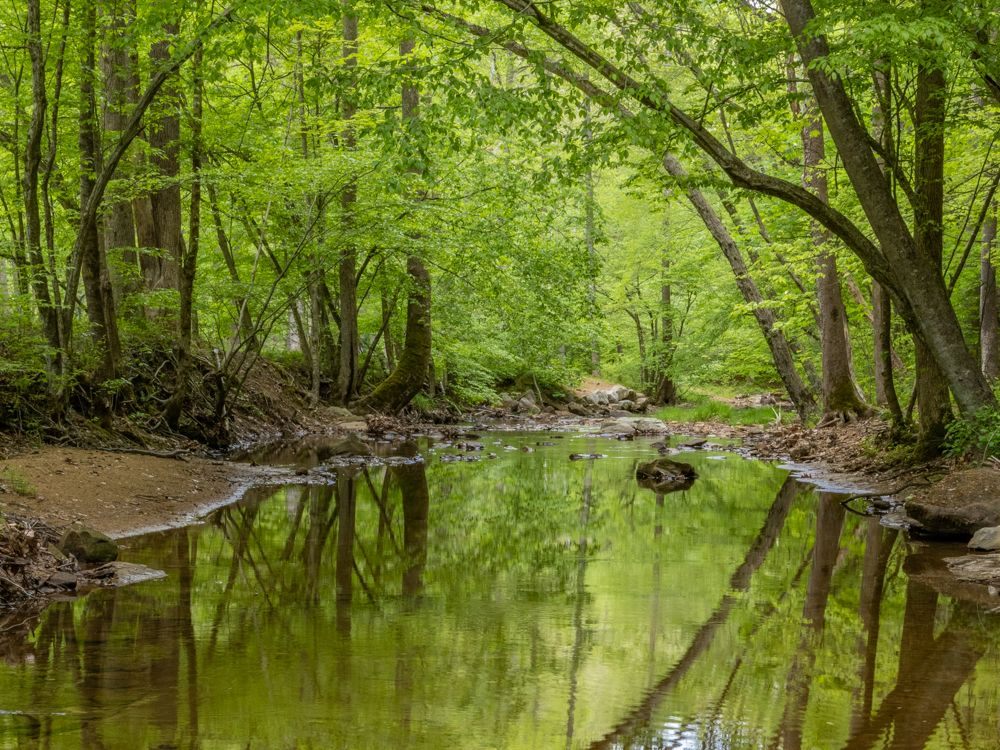
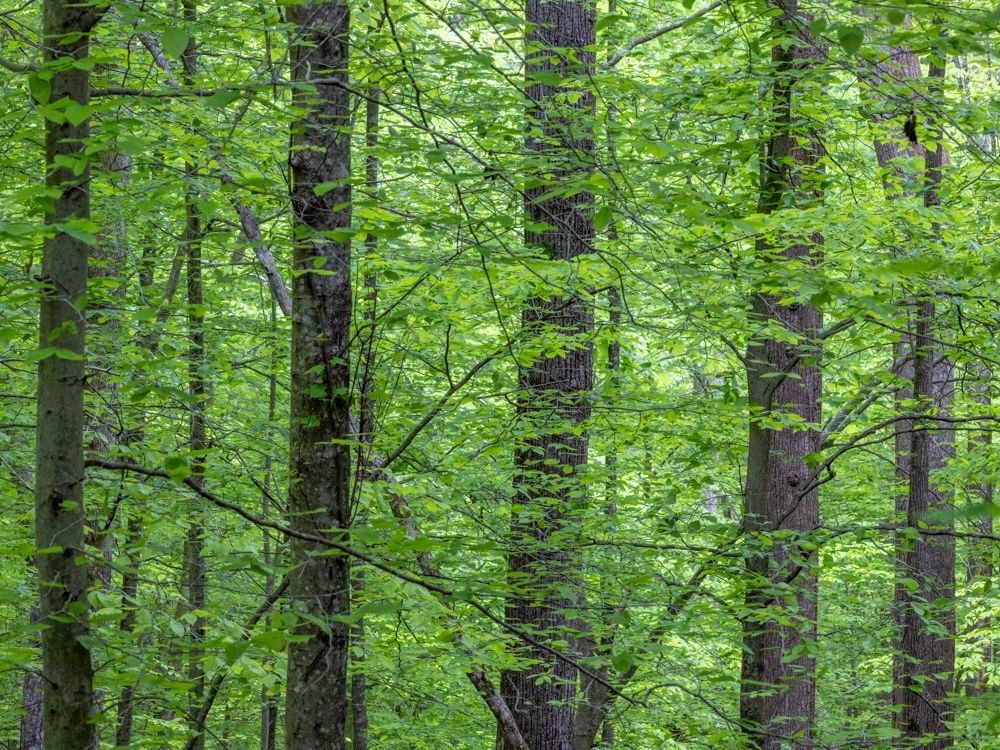
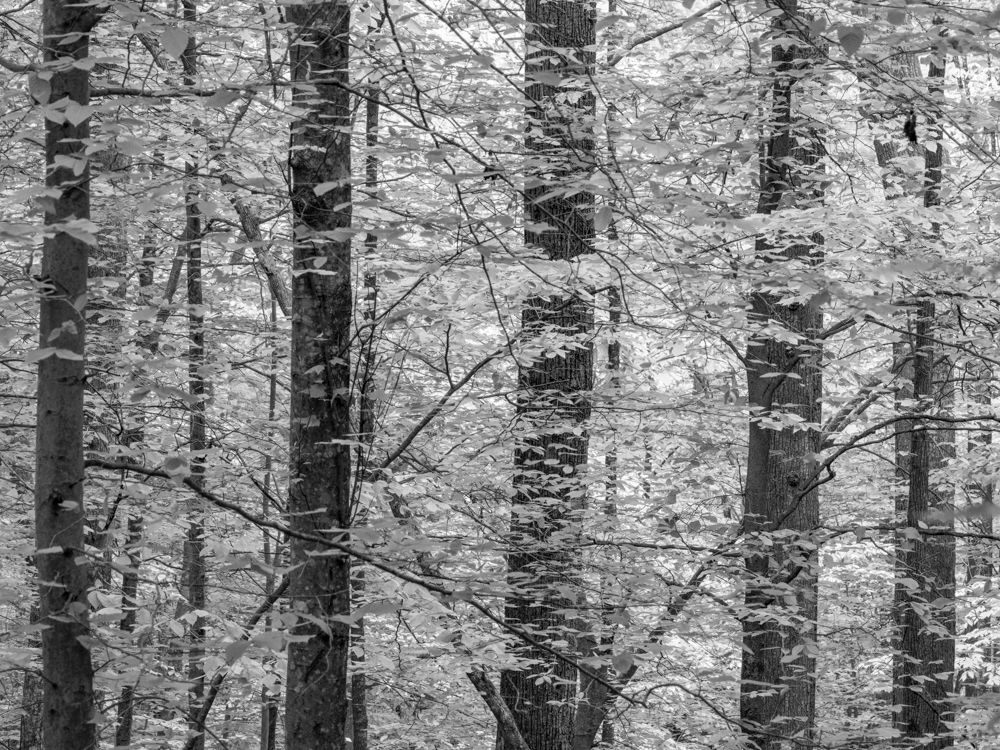
I headed out to Kanawha State Forest , which is only about 15 minutes from town. I drove and hiked around for a couple of hours before a thunderstorm, complete with hail and lightening, chased me out. It looked like it would last all day, so I gave up and decided to take care of some tasks back at the hotel. There was not even anything I could access in town as it is closed up pretty tight on Sunday. As with many other places, especially the smaller cities and towns, both museums and restaurants are closed on Sunday and Monday, sometimes even on Tuesday.
This hotel has free laundry - the first I have seen. Most hotels have laundry facilities, but you have to scavenge quarters. That started, I spent some more time talking to Brendan at the front desk. He has been a truly valuable resource about Charleston and West Virginia. I learned some very interesting history relating to the salt mines in West Virginia, which were a main export even prior to coal. His friend, Cyrus Forman, who is also a Charleston native, has been researching the connection of the early salt industry to slavery for his doctoral dissertation. Brendan directed me to some sites where Cyrus discusses the issue. For even more information, you can download his Master’s thesis on the topic.
Prior to the Civil War, The Kanawha Valley region was the largest salt producer in the U.S. William Dickinson and his brother-in-law Joel Shrewsbury began their salt-making operation around 1817 and were considered two of the four “Salt Kings” of the region. When the partnership dissolved in the 1860s, the Dickinson family continued to make salt as J.Q. Dickinson & Co. until 1945. The Dickinson name is seen all over town and, in fact, the current generation of Dickinsons are investors in the Marriott Courtyard property at which I am staying.
A little-known fact, however, is that enslaved persons were widely used to harvest salt . The region had the highest concentration of slaves in then-western Virginia and about half were leased from plantations in Virginia and brought in specifically for this purpose. Before modern drilling technology, hollowed out gum trees were used to dig down and tap into the brine from the ancient Iapetus Ocean trapped underneath the mountains of Appalachia. A man went down with a bucket and shovel to dig and harvest the brine. The work was brutal as the water was ice cold; apparently it was not uncommon to find dead men down in the hole. Alternatively, enslaved people might work in hot furnaces filled with smoke and chemicals, burning timber and coal (which also had to be mined.)
According to Forman, the dehumanizing economics of slavery went hand in hand with the growth of extraction industries. In a somewhat different model than plantations, it became standard practice in the 1850s to purchase life insurance on a leased slave, so that if an enslaved person died in an accident, the insurer would pay out. If the workplace was almost entirely composed of leased enslaved persons, there was no incentive to try and make the workplace conditions safer — lives lost were simply money that could be replaced by insurance payouts. The practices set by the salt industry carried over when industrialists shifted their attention from salt to coal and gas in the middle of the 19th century.
The irony of this is that West Virginia seceded from Virginia because they supposedly did not support the institution of slavery and insisted that the economics did not benefit them. Forman hopes to highlight the important role of enslaved persons in the success of the extractive industries and ultimately the economic success of the region.
The descendants of Dickinson have revived their family salt-harvesting tradition , now in a more sustainable and humane manner. Present day J.Q Dickinson salt-works produces high-end gourmet finishing salt and other salt-related products.
The further irony is that the rain stopped in the early afternoon and its resumption kept being pushed back. I probably could have gone back out, but by then I was committed to laundry, trip planning etc. At least I had a comfortable room and great hotel staff. A semi-rest day was really not a bad thing. Although rain is again predicted tomorrow, hopefully it will be less intrusive than it was today.
I headed out to Kanawha State Forest , which is only about 15 minutes from town. I drove and hiked around for a couple of hours before a thunderstorm, complete with hail and lightening, chased me out. It looked like it would last all day, so I gave up and decided to take care of some tasks back at the hotel. There was not even anything I could access in town as it is closed up pretty tight on Sunday. As with many other places, especially the smaller cities and towns, both museums and restaurants are closed on Sunday and Monday, sometimes even on Tuesday.
This hotel has free laundry - the first I have seen. Most hotels have laundry facilities, but you have to scavenge quarters. That started, I spent some more time talking to Brendan at the front desk. He has been a truly valuable resource about Charleston and West Virginia. I learned some very interesting history relating to the salt mines in West Virginia, which were a main export even prior to coal. His friend, Cyrus Forman, who is also a Charleston native, has been researching the connection of the early salt industry to slavery for his doctoral dissertation. Brendan directed me to some sites where Cyrus discusses the issue. For even more information, you can download his Master’s thesis on the topic.
Prior to the Civil War, The Kanawha Valley region was the largest salt producer in the U.S. William Dickinson and his brother-in-law Joel Shrewsbury began their salt-making operation around 1817 and were considered two of the four “Salt Kings” of the region. When the partnership dissolved in the 1860s, the Dickinson family continued to make salt as J.Q. Dickinson & Co. until 1945. The Dickinson name is seen all over town and, in fact, the current generation of Dickinsons are investors in the Marriott Courtyard property at which I am staying.
A little-known fact, however, is that enslaved persons were widely used to harvest salt . The region had the highest concentration of slaves in then-western Virginia and about half were leased from plantations in Virginia and brought in specifically for this purpose. Before modern drilling technology, hollowed out gum trees were used to dig down and tap into the brine from the ancient Iapetus Ocean trapped underneath the mountains of Appalachia. A man went down with a bucket and shovel to dig and harvest the brine. The work was brutal as the water was ice cold; apparently it was not uncommon to find dead men down in the hole. Alternatively, enslaved people might work in hot furnaces filled with smoke and chemicals, burning timber and coal (which also had to be mined.)
According to Forman, the dehumanizing economics of slavery went hand in hand with the growth of extraction industries. In a somewhat different model than plantations, it became standard practice in the 1850s to purchase life insurance on a leased slave, so that if an enslaved person died in an accident, the insurer would pay out. If the workplace was almost entirely composed of leased enslaved persons, there was no incentive to try and make the workplace conditions safer — lives lost were simply money that could be replaced by insurance payouts. The practices set by the salt industry carried over when industrialists shifted their attention from salt to coal and gas in the middle of the 19th century.
The irony of this is that West Virginia seceded from Virginia because they supposedly did not support the institution of slavery and insisted that the economics did not benefit them. Forman hopes to highlight the important role of enslaved persons in the success of the extractive industries and ultimately the economic success of the region.
The descendants of Dickinson have revived their family salt-harvesting tradition , now in a more sustainable and humane manner. Present day J.Q Dickinson salt-works produces high-end gourmet finishing salt and other salt-related products.
The further irony is that the rain stopped in the early afternoon and its resumption kept being pushed back. I probably could have gone back out, but by then I was committed to laundry, trip planning etc. At least I had a comfortable room and great hotel staff. A semi-rest day was really not a bad thing. Although rain is again predicted tomorrow, hopefully it will be less intrusive than it was today.
61 photo galleries
50 States
- Big Sur
- Salinas
- Laguna Beach
- San Diego
- California
- Grand Canyon
- Sedona
- Utah
- Syracuse
- Moab
- Denver
- Manitou Springs
- Calhan
- Mesa Verde
- Los Alamos
- Santa Fe
- Carlsbad
- New Mexico
- Eureka Springs
- Little Rock
- Birmingham
- Jackson
- Lottie
- Ten Thousand Islands
- Jerome
- Savannah
- White
- Asheville
- Sandstone Falls
- Baltimore
- Timonium
- Maryland
- Berlin
- Milton
- Smyrna
- Ocean City
- Detroit
- Upper Peninsula of Michigan
- Michigan
- Herod
- Ozark
- Two Harbors
- Carlton
- Madison County
- Oakley
- Valentine
- South Dakota
- United States
- Yellowstone National Park
- Lima
- Idaho
- Port Townsend
- Lincoln City
- Newport
- San Francisco