Cedar Rapids (Czech and Slovak museum)
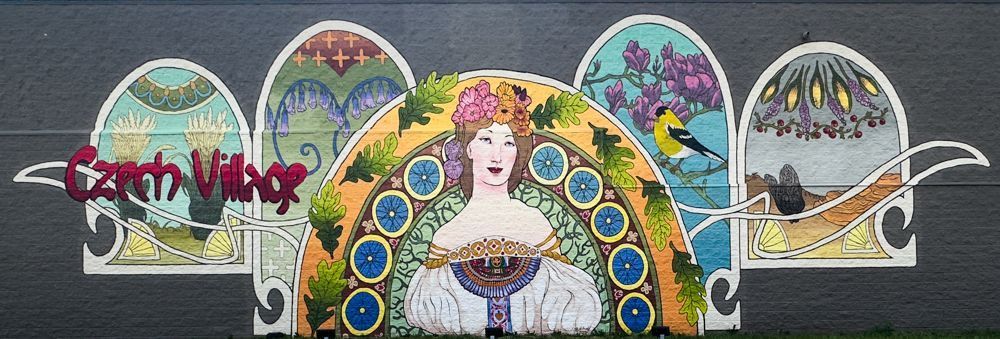
For a variety of reasons, I decided to make this a low-key day. The last week in Minnesota was productive, but also a bit hectic. Pretty much every day was full and I had a couple of late nights, which tend to set me back. As well, two of the museums that I had hoped to visit in Cedar Rapids were not available. The African-American museum is closed for renovation and The History Center is not open on Sunday or Monday. So I contented myself with a visit to the Czech and Slovak Museum and a walk around the Czech Village and New Bohemia.
As some personal background, I visited then Czechoslovakia in the 1970s as part of a youth trip (Most of the visit was a youth orchestra festival in Switzerland - I have no idea why we stopped in Prague - in retrospect I suspect cheaper flights). I returned in 2016 to the Czech Republic to speak at a work conference. Even taking into account my youthful unawareness and lack of understanding, I was still able to appreciate the monumentous changes that had occurred in the city and the country over the four decades between my visits.
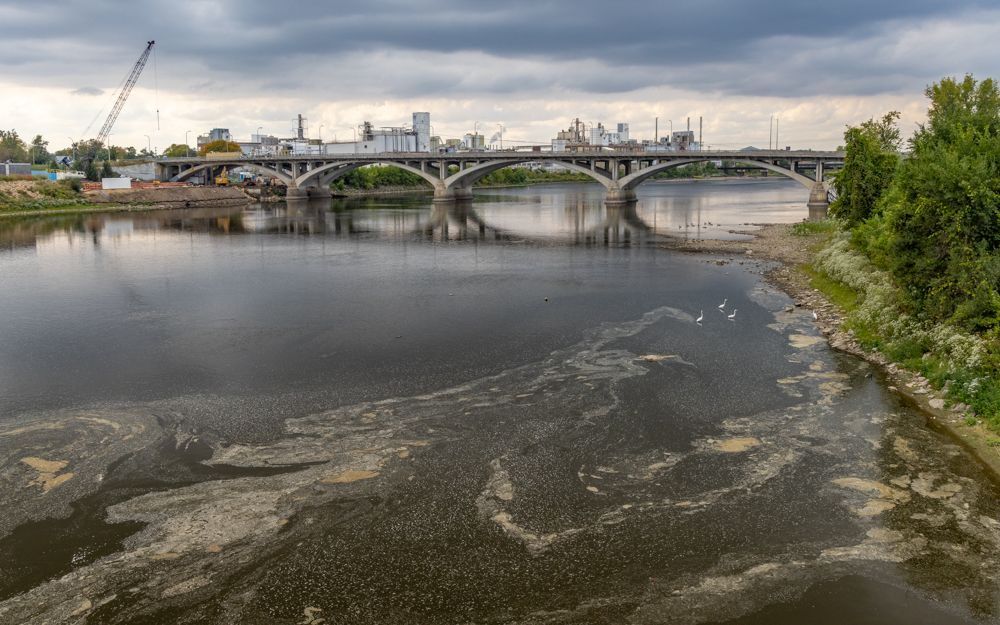
The Czech and Slovak Museum was quite interesting. I was really unaware of many of the complicated historical details of the region. But first, why Cedar Rapids? In 1974, A group of second and third-generation descendants of Czech immigrants founded the Czech Fine Arts Foundation in Cedar Rapids, Iowa, with the purpose of preserving Czech heritage and culture. As the museum grew and expanded over the years, it occupied larger spaces until finally a dedicated building was constructed. In 1995, presidents Bill Clinton of the United States, Václav Havel of the Czech Republic and Michal Kovác of the Slovak Republic presided over the new building’s dedication. In 2008 an epic flood damaged both the structure and portions of the collections. Artifacts and books were cleaned, repaired and restored by the Chicago Conservation Center and the University of Iowa Libraries’ Conservation Lab. In 2011, the entire building was moved almost 500 feet further back from the Cedar River and lifted well above any expected flood level. In 2012 the building re-opened in its new location. The introductory film showed some video of this monumental construction task. In 2018 the museum was designated a Smithsonian Affiliate, and the professionally-designed core exhibit, Homelands: The Story of the Czech and Slovak People, opened.
As mentioned, the history of this region is exceedingly complex. I won’t pretend to have any sort of deep understanding after a couple of hours at the museum and some on-line research. Here is my limited and most definitely simplistic understanding, open, of course. to correction.
The creation of Czechoslovakia in 1918 was the culmination of a struggle for ethnic identity and self-determination that had simmered within the multi-national Austro-Hungarian empire in the 19th century. The Czechs had lived primarily in Bohemia since the 6th century and the Slovaks also had lands there. Repressive religious and ethnic policies pushed the cohesion of the multi-national Austro-Hungarian Empire to the breaking point. Ultimately, WWI caused the internal collapse of the Austro-Hungarian empire and the liberation of subject peoples such as the Czechs and Slovaks.
Although the Czechs and Slovaks speak languages that are very similar, the political and social situation of the Czech and Slovak peoples was very different at the end of the 19th century. Around the start of the 20th century, the idea of a "Czecho-Slovak" entity began to be advocated by some Czech and Slovak leaders. The independence of Czechoslovakia was officially proclaimed in 1918 and the Treaty of St. Germain, signed in September 1919, formally recognized the new republic . However, by 1938, it was clear that the Czechoslovak land would become a target of Hitler’s rapidly expanding land grab . Lands were ceded, not only to Germany, but to Poland, Hungary and Italy in order avoid all out war. In 1938, the truncated state, renamed Czecho-Slovakia (the so-called Second Republic ), was reconstituted in three autonomous units: the Czech lands (i.e. Bohemia and Moravia), Slovakia, and Ruthenia. In 1939, the Slovak State declared its independence as a satellite state.
A Czechoslovak government in exile was formed in London and in 1944, and agreement with Soviet leaders was signed stipulating that Czechoslovak territory liberated by Soviet armies would be placed under Czechoslovak civilian control. The Third Republic came into being in 1945, and now reunited into one state after the war, the Czechs and Slovaks held national elections in the spring of 1946. However, Czechoslovakia soon came to fall within the Soviet sphere of influence and in February 1948, the Communists took power in the Czechoslovak coup d'état . By 1960 socialism had taken root and the Czechoslovak Socialist Republic (CSSR) was formed.
Through the 1960s, as De-Stalinization finally began to take hold, democracy again began to emerge. In the “Prague Spring ” of 1968. Under Alexander Dubček, a Slovak reformer, a program was adopted that set guidelines for a modern, humanistic socialist democracy that would guarantee, among other things, freedom of religion, press, assembly, speech, and travel. This prompted an invasion by Warsaw Pact countries, resulting the purging of Dubček and many of his allies and suppression of the Czechoslovak Social Democratic Party. It also precipitated the student Jan Palach set himself on fire in Prague's Wenceslas Square in 1969 in protest, an event that gained world-wide attention. The country stagnated during much of the 1970s and 1980s and both Czechs and Slovaks began to emigrate to the West in search of better conditions.
The “Velvet Revolution ” began in 1989 with peaceful student demonstrations. Faced with an overwhelming popular repudiation, the Communist Party all but collapsed. Its leaders resigned in December 1989, and Václav Havel was immediately elected President of Czechoslovakia. The astonishing quickness of these events was in part due to the unpopularity of the communist regime and changes in the policies of its Soviet guarantor as well as to the rapid, effective organization of these public initiatives into a viable opposition.
By 1992, Slovak calls for greater autonomy effectively blocked the daily functioning of the federal government. In July 1992, President Havel resigned and in the latter half of 1992, an agreement allowed for the dissolution of Czechoslovakia . In January 1993, the Czech Republic and Slovakia were simultaneously and peacefully established as independent states.
And that is the short story, which is obviously incomplete and almost certainly contains inaccuracies.
As I was wandering around the museum, I met John and Ronie. John’s mother had always referred to herself as a Czechoslovak and he was as interested in understanding the history as I was. John and Rosie are from Minnesota and we enjoyed chatting about my time there as well as about other topics that stemmed from my experiences in MN and on the rest of my trip.
Tomorrow I will drive down to visit the Amana Colonies.
As some personal background, I visited then Czechoslovakia in the 1970s as part of a youth trip (Most of the visit was a youth orchestra festival in Switzerland - I have no idea why we stopped in Prague - in retrospect I suspect cheaper flights). I returned in 2016 to the Czech Republic to speak at a work conference. Even taking into account my youthful unawareness and lack of understanding, I was still able to appreciate the monumentous changes that had occurred in the city and the country over the four decades between my visits.
The Czech and Slovak Museum was quite interesting. I was really unaware of many of the complicated historical details of the region. But first, why Cedar Rapids? In 1974, A group of second and third-generation descendants of Czech immigrants founded the Czech Fine Arts Foundation in Cedar Rapids, Iowa, with the purpose of preserving Czech heritage and culture. As the museum grew and expanded over the years, it occupied larger spaces until finally a dedicated building was constructed. In 1995, presidents Bill Clinton of the United States, Václav Havel of the Czech Republic and Michal Kovác of the Slovak Republic presided over the new building’s dedication. In 2008 an epic flood damaged both the structure and portions of the collections. Artifacts and books were cleaned, repaired and restored by the Chicago Conservation Center and the University of Iowa Libraries’ Conservation Lab. In 2011, the entire building was moved almost 500 feet further back from the Cedar River and lifted well above any expected flood level. In 2012 the building re-opened in its new location. The introductory film showed some video of this monumental construction task. In 2018 the museum was designated a Smithsonian Affiliate, and the professionally-designed core exhibit, Homelands: The Story of the Czech and Slovak People, opened.
As mentioned, the history of this region is exceedingly complex. I won’t pretend to have any sort of deep understanding after a couple of hours at the museum and some on-line research. Here is my limited and most definitely simplistic understanding, open, of course. to correction.
The creation of Czechoslovakia in 1918 was the culmination of a struggle for ethnic identity and self-determination that had simmered within the multi-national Austro-Hungarian empire in the 19th century. The Czechs had lived primarily in Bohemia since the 6th century and the Slovaks also had lands there. Repressive religious and ethnic policies pushed the cohesion of the multi-national Austro-Hungarian Empire to the breaking point. Ultimately, WWI caused the internal collapse of the Austro-Hungarian empire and the liberation of subject peoples such as the Czechs and Slovaks.
Although the Czechs and Slovaks speak languages that are very similar, the political and social situation of the Czech and Slovak peoples was very different at the end of the 19th century. Around the start of the 20th century, the idea of a "Czecho-Slovak" entity began to be advocated by some Czech and Slovak leaders. The independence of Czechoslovakia was officially proclaimed in 1918 and the Treaty of St. Germain, signed in September 1919, formally recognized the new republic . However, by 1938, it was clear that the Czechoslovak land would become a target of Hitler’s rapidly expanding land grab . Lands were ceded, not only to Germany, but to Poland, Hungary and Italy in order avoid all out war. In 1938, the truncated state, renamed Czecho-Slovakia (the so-called Second Republic ), was reconstituted in three autonomous units: the Czech lands (i.e. Bohemia and Moravia), Slovakia, and Ruthenia. In 1939, the Slovak State declared its independence as a satellite state.
A Czechoslovak government in exile was formed in London and in 1944, and agreement with Soviet leaders was signed stipulating that Czechoslovak territory liberated by Soviet armies would be placed under Czechoslovak civilian control. The Third Republic came into being in 1945, and now reunited into one state after the war, the Czechs and Slovaks held national elections in the spring of 1946. However, Czechoslovakia soon came to fall within the Soviet sphere of influence and in February 1948, the Communists took power in the Czechoslovak coup d'état . By 1960 socialism had taken root and the Czechoslovak Socialist Republic (CSSR) was formed.
Through the 1960s, as De-Stalinization finally began to take hold, democracy again began to emerge. In the “Prague Spring ” of 1968. Under Alexander Dubček, a Slovak reformer, a program was adopted that set guidelines for a modern, humanistic socialist democracy that would guarantee, among other things, freedom of religion, press, assembly, speech, and travel. This prompted an invasion by Warsaw Pact countries, resulting the purging of Dubček and many of his allies and suppression of the Czechoslovak Social Democratic Party. It also precipitated the student Jan Palach set himself on fire in Prague's Wenceslas Square in 1969 in protest, an event that gained world-wide attention. The country stagnated during much of the 1970s and 1980s and both Czechs and Slovaks began to emigrate to the West in search of better conditions.
The “Velvet Revolution ” began in 1989 with peaceful student demonstrations. Faced with an overwhelming popular repudiation, the Communist Party all but collapsed. Its leaders resigned in December 1989, and Václav Havel was immediately elected President of Czechoslovakia. The astonishing quickness of these events was in part due to the unpopularity of the communist regime and changes in the policies of its Soviet guarantor as well as to the rapid, effective organization of these public initiatives into a viable opposition.
By 1992, Slovak calls for greater autonomy effectively blocked the daily functioning of the federal government. In July 1992, President Havel resigned and in the latter half of 1992, an agreement allowed for the dissolution of Czechoslovakia . In January 1993, the Czech Republic and Slovakia were simultaneously and peacefully established as independent states.
And that is the short story, which is obviously incomplete and almost certainly contains inaccuracies.
As I was wandering around the museum, I met John and Ronie. John’s mother had always referred to herself as a Czechoslovak and he was as interested in understanding the history as I was. John and Rosie are from Minnesota and we enjoyed chatting about my time there as well as about other topics that stemmed from my experiences in MN and on the rest of my trip.
Tomorrow I will drive down to visit the Amana Colonies.
61 photo galleries
50 States
- Big Sur
- Salinas
- Laguna Beach
- San Diego
- California
- Grand Canyon
- Sedona
- Utah
- Syracuse
- Moab
- Denver
- Manitou Springs
- Calhan
- Mesa Verde
- Los Alamos
- Santa Fe
- Carlsbad
- New Mexico
- Eureka Springs
- Little Rock
- Birmingham
- Jackson
- Lottie
- Ten Thousand Islands
- Jerome
- Savannah
- White
- Asheville
- Sandstone Falls
- Baltimore
- Timonium
- Maryland
- Berlin
- Milton
- Smyrna
- Ocean City
- Detroit
- Upper Peninsula of Michigan
- Michigan
- Herod
- Ozark
- Two Harbors
- Carlton
- Madison County
- Oakley
- Valentine
- South Dakota
- United States
- Yellowstone National Park
- Lima
- Idaho
- Port Townsend
- Lincoln City
- Newport
- San Francisco